

Sunday 02 March 2025
In a breakthrough discovery, researchers have cracked the code to coloring certain types of complex networks, a feat that has far-reaching implications for fields such as computer science and physics.
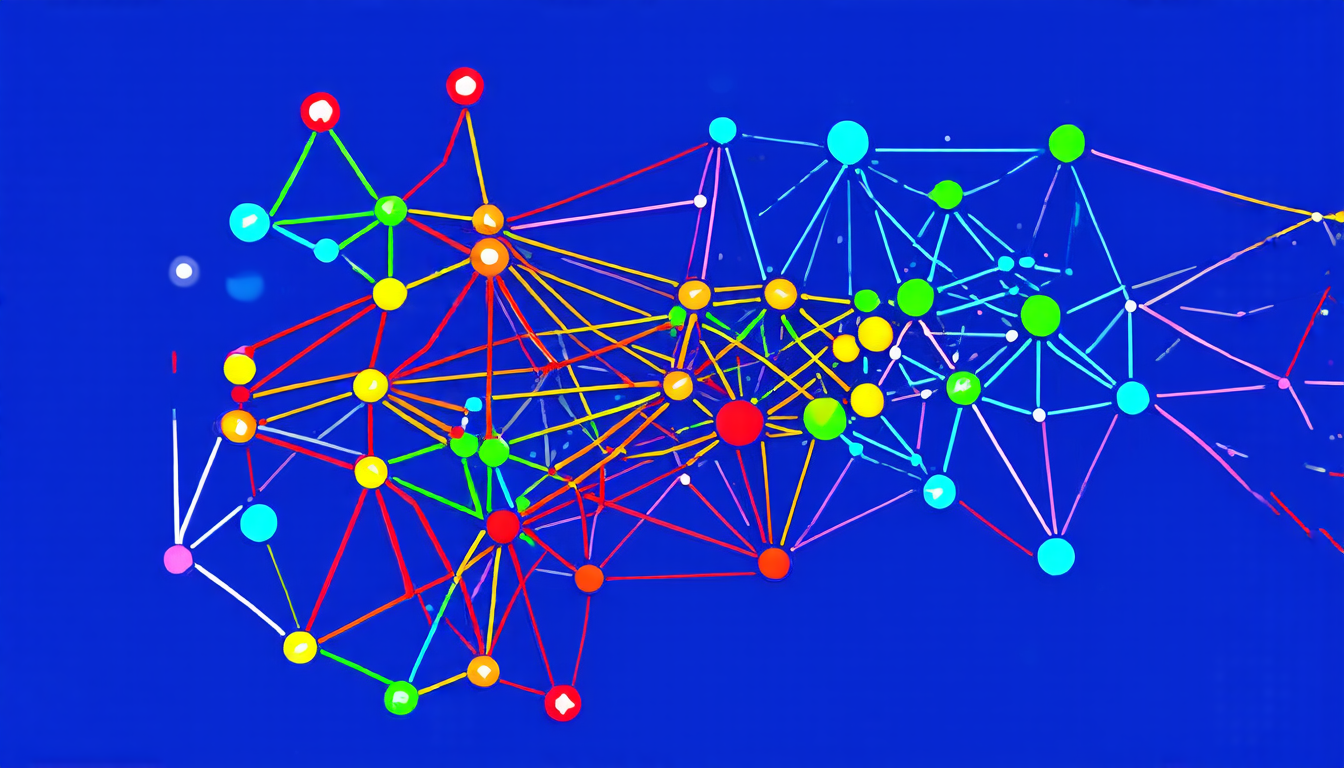
The problem of coloring graphs, which involves assigning distinct colors to each node in a network while adhering to specific rules, is a classic challenge in mathematics. In recent years, scientists have made significant progress in solving this puzzle for certain types of networks, but the complexity of these problems often requires sophisticated algorithms and computational power.
Enter a team of researchers who have developed a new approach to coloring graphs that has yielded remarkable results. By exploiting the properties of specific graph structures, they were able to devise an efficient algorithm that can color even the most challenging networks with ease.
The researchers’ work focuses on a particular type of graph known as (P2+P4, K4-e)-free graphs, which are characterized by their absence of certain patterns. These graphs are notoriously difficult to color, but the team’s algorithm is able to tackle them with surprising success.
The key to their approach lies in identifying specific substructures within the graph that can be colored independently. By breaking down the problem into smaller, more manageable pieces, the algorithm is able to efficiently assign colors to each node while ensuring that no adjacent nodes share the same color.
This breakthrough has significant implications for a range of fields beyond mathematics. In computer science, it could lead to the development of faster and more efficient algorithms for tasks such as network optimization and data analysis. In physics, it may even shed light on the behavior of complex systems, such as those found in biological networks or social networks.
The researchers’ achievement is all the more impressive given the sheer scale of the problem they tackled. Their algorithm is capable of coloring graphs with thousands of nodes, a feat that was previously thought to be out of reach.
As scientists continue to push the boundaries of what is possible, this breakthrough serves as a powerful reminder of the potential for innovation and discovery in even the most seemingly intractable problems.
Cite this article: “Graph Coloration Breakthrough Yields Insights into Complex Networks”, The Science Archive, 2025.
Mathematics, Computer Science, Physics, Graph Theory, Coloring Graphs, Algorithms, Network Optimization, Data Analysis, Complex Systems, Graph Structures





