

Sunday 02 March 2025
In a breakthrough study, researchers have made significant strides in improving social skills in children with autism spectrum disorder (ASD) using an innovative robotic intervention. The findings, published in Science Robotics, highlight the potential of robots to play a crucial role in enhancing the social and communication abilities of individuals with ASD.
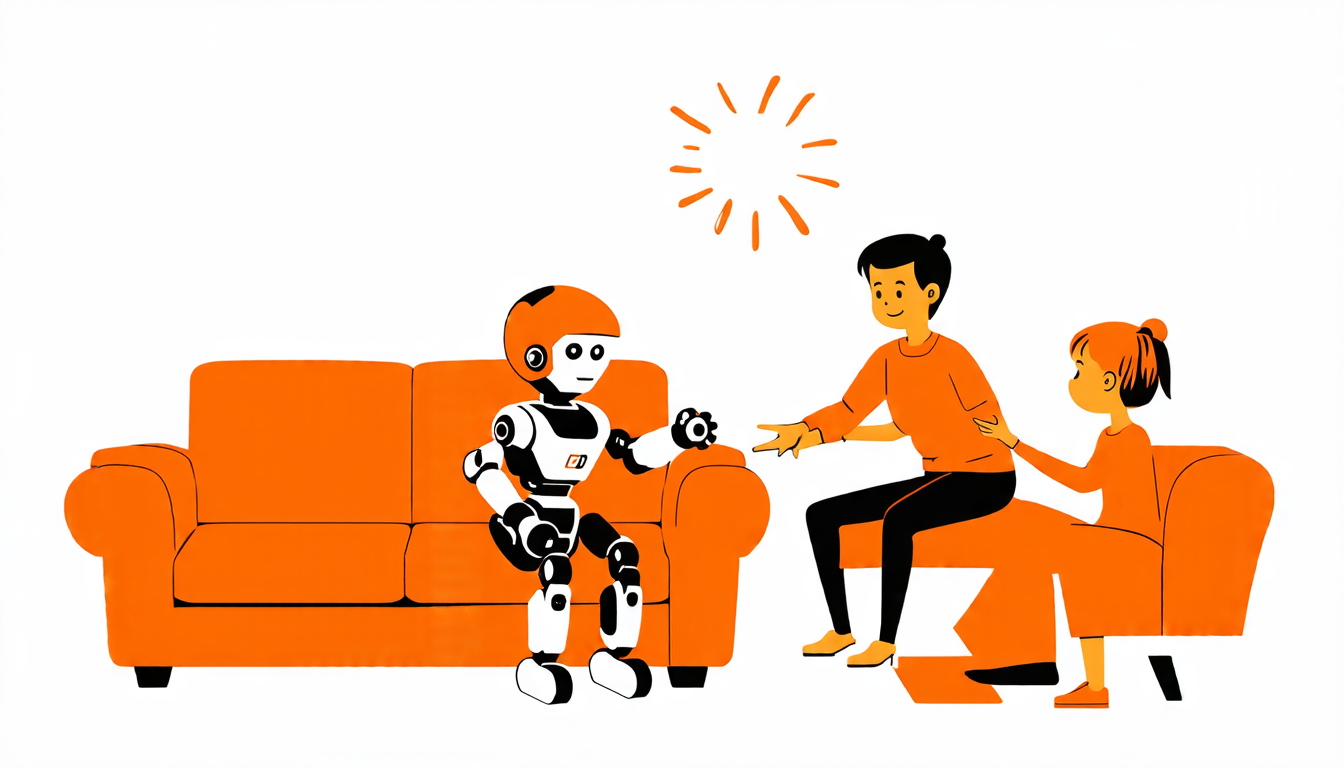
The research team, led by Brian Scassellati from Yale University, designed a month-long, in-home social robot intervention aimed at promoting triadic interactions between children with ASD, their caregivers, and a social robot. The study involved 13 children with high-functioning ASD and their caregivers, who were asked to engage with the robot for approximately an hour each day.
The results show that the intervention was successful in improving various aspects of gaze behavior, a key indicator of social skills in individuals with ASD. Specifically, the study found that children with ASD demonstrated increased instances of spontaneous mutual gaze with their caregivers, as well as longer durations of shared gaze over time. This suggests that the robot-assisted intervention helped to facilitate more frequent and sustained eye contact between children with ASD and their caregivers.
Moreover, the researchers observed significant improvements in joint attention skills, which are critical for social communication and understanding. Joint attention refers to the ability to coordinate one’s gaze and attention with others to focus on a specific object or event. The study found that children with ASD showed increased joint attention with both the robot and their caregivers, indicating enhanced social understanding and collaboration.
The findings also highlight the importance of clinical measures in predicting behavioral outcomes for individuals with ASD. Specifically, the researchers discovered that diagnostic scores such as the Autism Diagnostic Interview-Revised (ADI-R) and the Developmental, Dimensional and Diagnostic Scale (DDDS-II) were strong predictors of gaze behavior changes over time. This suggests that these measures can be used to identify individuals with ASD who are likely to benefit from social robot interventions.
The study’s results have significant implications for the development of social skills interventions for children with ASD. The use of robots in social skills training has been gaining popularity in recent years, and this research provides valuable insights into their effectiveness. Furthermore, the findings suggest that robots may be particularly effective in enhancing gaze behavior and joint attention skills, which are essential for social communication and understanding.
The researchers’ innovative approach to social skills intervention offers a promising new avenue for improving the lives of individuals with ASD.
Cite this article: “Robots Enhance Social Skills in Children with Autism Spectrum Disorder”, The Science Archive, 2025.
Autism, Robots, Social Skills, Children, Intervention, Gaze Behavior, Joint Attention, Asd, Research, Science





