

Sunday 02 March 2025
Mathematicians have long been fascinated by a particular type of symmetry, known as Reidemeister symmetry, which is found in certain groups of mathematical objects called free nilpotent groups. These groups are important in many areas of mathematics and physics, but understanding their properties can be challenging.
Recently, researchers have made significant progress in determining the Reidemeister spectrum of these groups, which is a measure of how symmetrical they are. The spectrum is composed of numbers that represent the number of ways in which elements of the group can be conjugated, or transformed, into each other.
The researchers used a combination of mathematical techniques and computer algorithms to study the Reidemeister spectra of free nilpotent groups with different properties. They found that the spectra are closely related to certain types of symmetric functions, known as Schur functions, which are used in many areas of mathematics and physics.
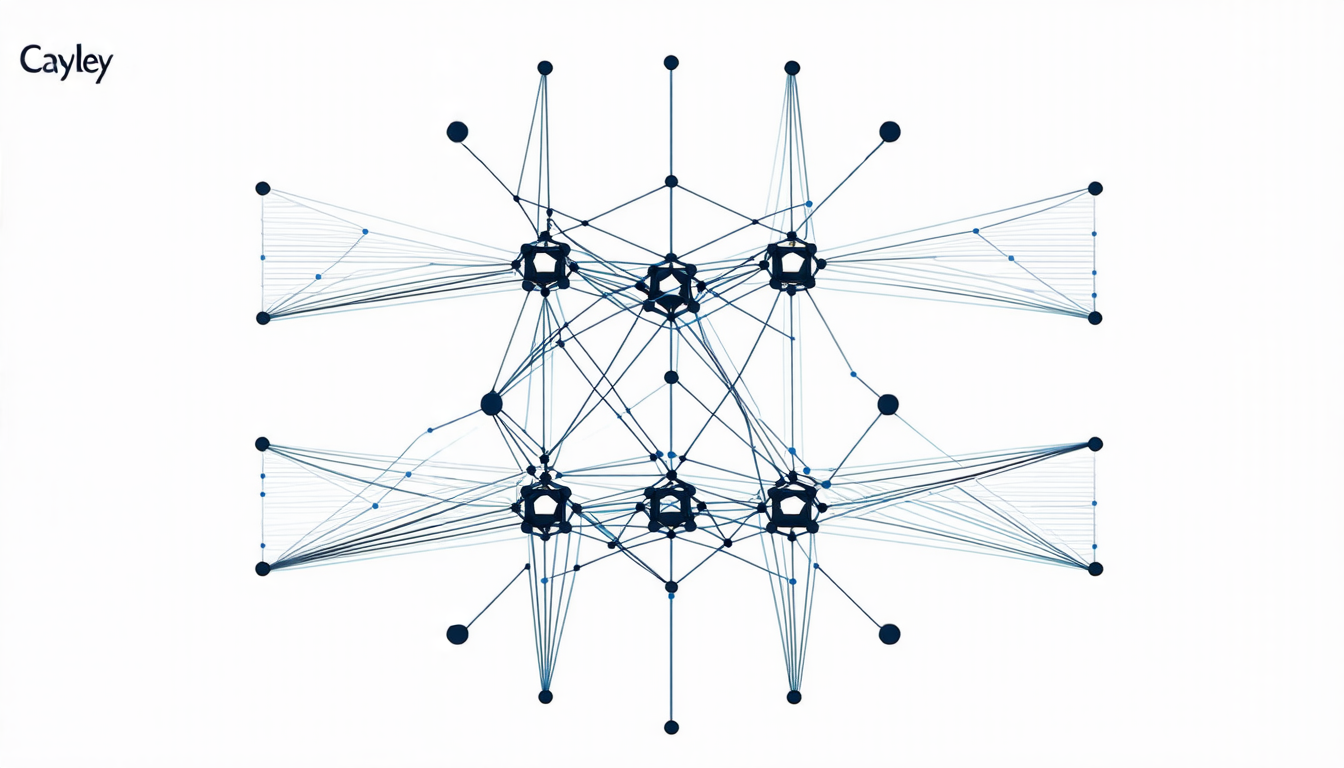
One of the key findings was that the Reidemeister spectrum of a free nilpotent group is determined by the way in which its elements are arranged in a particular geometric structure called a Cayley graph. This graph represents the relationships between the elements of the group, and it turns out that the symmetries of the graph are closely related to the symmetries of the group.
The researchers also found that certain types of plethysms, which are mathematical operations that combine symmetric functions in a particular way, play a crucial role in determining the Reidemeister spectrum. Plethysms have been studied extensively in mathematics and physics, but their connection to free nilpotent groups was previously unknown.
These findings have significant implications for our understanding of free nilpotent groups and their applications in mathematics and physics. They also highlight the importance of studying symmetric functions and plethysms in these areas.
In addition to its theoretical significance, this research has practical applications in computer science and cryptography. For example, it can be used to develop more efficient algorithms for solving certain types of mathematical problems, and it may help to improve the security of encryption methods.
Overall, this research represents an important step forward in our understanding of free nilpotent groups and their properties. It highlights the power of mathematics to uncover hidden patterns and relationships, and it demonstrates the importance of interdisciplinary collaboration between mathematicians, computer scientists, and physicists.
Cite this article: “Unlocking the Secrets of Free Nilpotent Groups”, The Science Archive, 2025.
Free Nilpotent Groups, Reidemeister Symmetry, Schur Functions, Cayley Graph, Plethysms, Symmetric Functions, Group Theory, Mathematical Physics, Computer Science, Cryptography





