

Sunday 02 March 2025
The Lasso algorithm, a staple of machine learning and data science, has been under scrutiny lately for its ability to accurately predict outcomes. A new study sheds light on the algorithm’s limitations, revealing that its performance is directly tied to the sparsity of the data.
For those unfamiliar, the Lasso algorithm is a type of regression analysis that uses regularization techniques to prevent overfitting in models. By adding a penalty term to the cost function, the algorithm encourages the model to choose simpler solutions and reduce the number of features used. This makes it particularly useful for high-dimensional data where the number of features far exceeds the number of samples.
However, researchers have long known that the Lasso’s performance can be affected by the underlying structure of the data. In particular, they’ve observed that the algorithm tends to perform poorly when the true regression vector is sparse – i.e., it has a large number of zero entries. This can happen in many real-world scenarios, such as in recommender systems where users may not interact with most items.
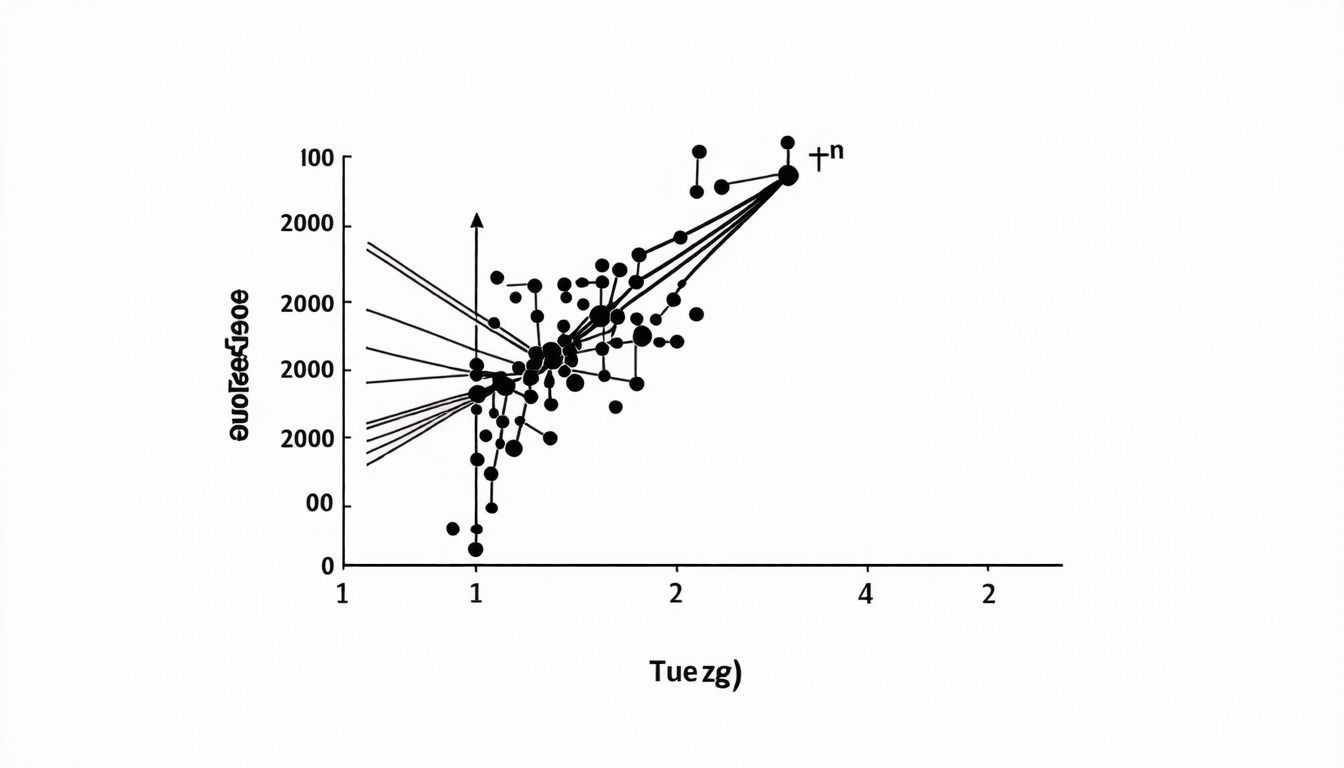
The new study aims to provide a more comprehensive understanding of this phenomenon by analyzing the Lasso’s behavior under various conditions. The researchers use mathematical tools from probability theory and convex analysis to show that the algorithm’s risk (i.e., its prediction error) is bounded if and only if the number of non-zero entries in the true regression vector is bounded away from the sample size.
In other words, the study finds that the Lasso’s performance is directly tied to the sparsity of the data. When the true regression vector is sparse, the algorithm tends to overfit and perform poorly. On the other hand, when the vector is dense – i.e., has a large number of non-zero entries – the algorithm tends to underfit and also perform poorly.
This result has significant implications for practitioners who rely on the Lasso in their work. It suggests that they may need to consider alternative algorithms or regularization techniques if they’re working with sparse data. Additionally, it highlights the importance of understanding the underlying structure of the data before selecting a particular algorithm.
The study’s findings also shed light on the trade-offs involved in using regularization techniques like the Lasso. While these techniques can help prevent overfitting and improve model generalization, they can also lead to suboptimal performance if not carefully tuned. By acknowledging the limitations of the Lasso and other algorithms, researchers can develop more effective strategies for dealing with complex data sets.
Cite this article: “Limitations of the Lasso Algorithm Revealed: Sparsity Matters”, The Science Archive, 2025.
Machine Learning, Lasso Algorithm, Data Science, Regression Analysis, Regularization Techniques, Overfitting, Sparsity, High-Dimensional Data, Recommender Systems, Convex Analysis





