

Sunday 02 March 2025
Scientists have made a significant breakthrough in understanding how fibers orient themselves during the manufacturing process of polymer composites, which are used in a wide range of applications, from car parts to medical devices.
The study focused on the behavior of short fibers, such as those found in injection-molded plastics, which are commonly used in everyday products. These fibers are typically much shorter than human hair and can be thought of as tiny rods that are dispersed throughout the plastic material.
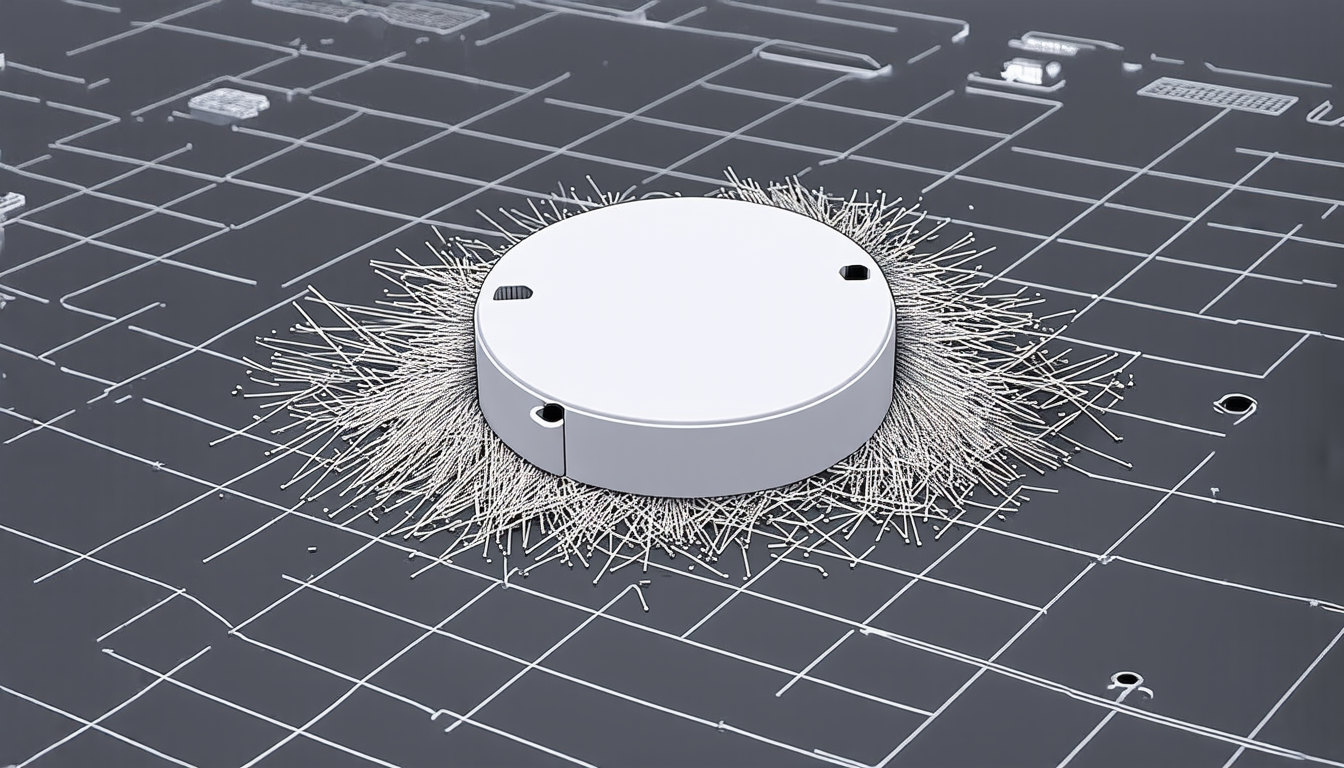
When these fibers are mixed with molten plastic, they tend to align themselves in a particular direction, a process known as fiber orientation. This is important because it affects the final properties of the composite material, such as its strength, stiffness, and durability.
Researchers have long struggled to accurately predict how fibers will orient themselves during manufacturing, as this can be influenced by many factors, including the type of plastic used, the temperature and pressure applied, and even the shape of the mold. To address this challenge, scientists developed a new model that takes into account these various factors and uses it to simulate the fiber orientation process.
The team used advanced computer simulations to test their model against real-world data collected from laboratory experiments. They found that the simulated results closely matched the experimental findings, providing strong evidence for the accuracy of their approach.
One key advantage of this new model is its ability to capture complex interactions between fibers and the surrounding plastic material. This allows researchers to better understand how different manufacturing conditions can affect fiber orientation and ultimately the properties of the final product.
The implications of this breakthrough are significant. For example, manufacturers may be able to use the new model to optimize their production processes, allowing them to create materials with improved performance and reduced waste. Additionally, the development of new polymer composites with tailored properties could open up new opportunities for innovation in industries such as aerospace, automotive, and medical devices.
In addition to its practical applications, this research also highlights the importance of interdisciplinary collaboration between scientists from different fields, including materials science, mechanical engineering, and mathematics. By combining their expertise, researchers can tackle complex problems like fiber orientation and develop innovative solutions that have far-reaching impacts.
The study demonstrates the power of simulation-based modeling in advancing our understanding of complex physical phenomena and has important implications for the development of new materials and manufacturing processes.
Cite this article: “Unlocking the Secrets of Fiber Orientation in Polymer Composites”, The Science Archive, 2025.
Polymer Composites, Fiber Orientation, Injection-Molding, Plastics, Simulation Modeling, Materials Science, Mechanical Engineering, Mathematics, Manufacturing Processes, Composite Materials





