

Sunday 02 March 2025
Computer systems that break down can be frustrating, but what if a new approach could help diagnose and fix problems more efficiently? A team of researchers has made significant progress in developing an innovative technique to analyze complex computer systems, like those used in cloud computing or social media platforms.
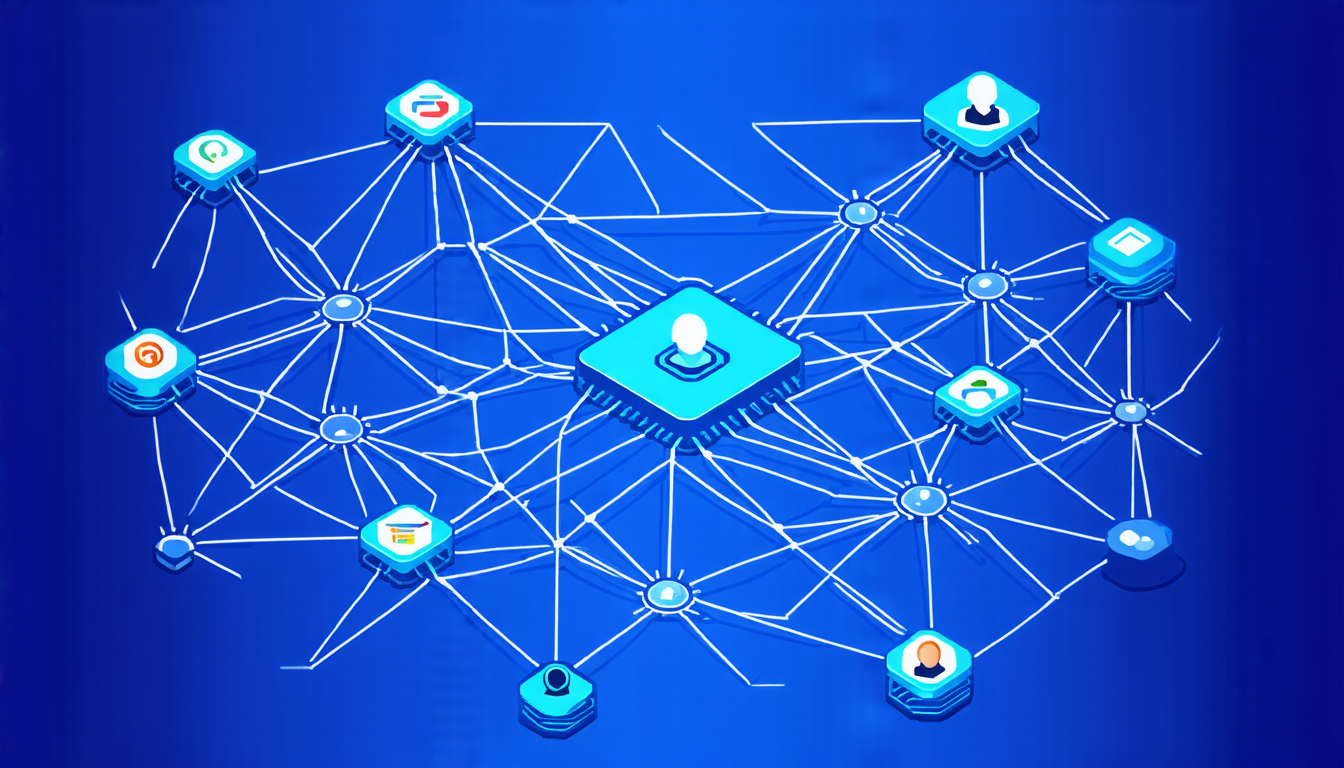
These systems are composed of numerous interconnected components, making it challenging to identify the root cause of issues. Traditional methods rely on human intuition and manual analysis, which can be time-consuming and prone to errors. The new approach uses a type of artificial intelligence called graph neural networks (GNNs) to analyze the complex relationships between system components.
In traditional computer systems, data is structured in a linear fashion, making it easier to understand and analyze. However, modern systems often involve multiple types of data, such as logs, metrics, and traces, which are highly interconnected. GNNs are designed to handle this complexity by creating a graph representation of the system, where each node represents a component and edges indicate relationships between them.
The researchers developed a new model called DiagMLP, which uses a simpler approach than traditional GNNs. Instead of relying on complex graph structures, DiagMLP combines multiple types of data into a single representation, making it easier to analyze and diagnose problems. This approach has been shown to be effective in detecting and localizing issues in complex computer systems.
The team tested their model on five public datasets, including social media platforms and cloud computing services. The results were impressive, with DiagMLP achieving competitive or even superior performance compared to state-of-the-art methods that rely on GNNs. This suggests that the simplicity of DiagMLP may be a key factor in its success.
The implications of this research are significant. With DiagMLP, computer system administrators can quickly and accurately diagnose problems, reducing downtime and improving overall system reliability. This could have a major impact on industries that rely heavily on complex computer systems, such as finance, healthcare, or e-commerce.
In the future, the researchers plan to continue refining their approach and exploring its applications in other fields. As our reliance on complex computer systems continues to grow, innovative solutions like DiagMLP will be essential for ensuring their reliability and performance.
Cite this article: “Efficient Diagnosis of Complex Computer Systems with DiagMLP”, The Science Archive, 2025.
Computer Systems, Artificial Intelligence, Graph Neural Networks, Gnns, Diagmlp, Cloud Computing, Social Media Platforms, Complex Relationships, Data Analysis, System Diagnosis





