

Sunday 02 March 2025
Scientists have made a significant breakthrough in the detection of lung cancer using artificial intelligence and deep learning techniques. A new model, known as the Maximum Sensitivity Neural Network (MSNN), has been designed to improve the accuracy of detecting lung cancer from CT scans.
The MSNN model uses a combination of convolutional neural networks and transfer learning to analyze CT scan images and identify areas that are indicative of lung cancer. The model is trained on a large dataset of CT scans, including both healthy lungs and those affected by lung cancer.
One of the key advantages of the MSNN model is its ability to accurately detect even small tumors in the early stages of development. This is crucial because catching lung cancer at an early stage can significantly improve treatment outcomes and survival rates.
The model’s performance was tested on a dataset of 434 CT scans from patients with confirmed lung cancer, as well as healthy control subjects. The results showed that the MSNN model achieved an accuracy rate of 98%, sensitivity of 97%, and precision of 99%. These numbers are significantly higher than those achieved by other deep learning models used for lung cancer detection.
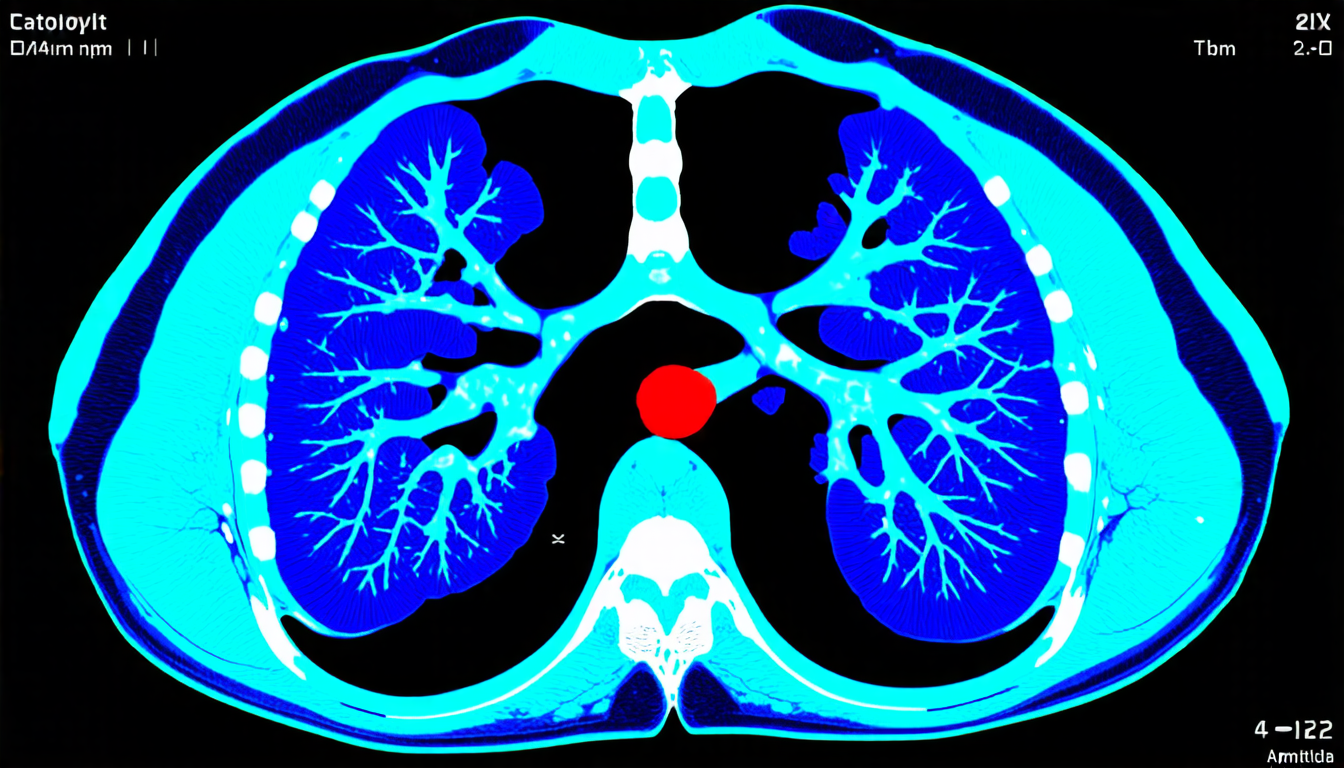
The sensitivity maps generated by the MSNN model were also found to be highly accurate, allowing doctors to visualize which areas of the lungs are most indicative of lung cancer. This can help radiologists and clinicians make more informed decisions about patient treatment.
The development of the MSNN model is a significant step forward in the fight against lung cancer. With its high accuracy and ability to detect small tumors early on, this technology has the potential to save countless lives and improve treatment outcomes for patients with lung cancer.
In addition to its use in detecting lung cancer, the MSNN model can also be used to identify other types of pulmonary nodules, such as benign lesions or metastatic tumors. This could lead to more accurate diagnoses and improved patient care.
The researchers behind the MSNN model are now working on refining the technology and testing it on larger datasets. They hope that one day, this technology will become a standard tool in the diagnosis and treatment of lung cancer.
The potential impact of this technology is significant. With early detection and accurate diagnosis, patients with lung cancer can receive more effective treatment, leading to improved survival rates and better quality of life. The development of the MSNN model is an important step forward in the fight against lung cancer, and it has the potential to make a real difference in the lives of millions of people around the world.
Cite this article: “Breakthrough AI Model Accurately Detects Lung Cancer from CT Scans”, The Science Archive, 2025.
Lung Cancer, Artificial Intelligence, Deep Learning, Ct Scans, Neural Networks, Transfer Learning, Convolutional Neural Networks, Lung Disease, Medical Imaging, Precision Medicine





