

Sunday 02 March 2025
A nuanced understanding of the chiral magnetic effect, a phenomenon that has long fascinated physicists, has taken another step forward thanks to a new study published in Physical Review C.
The chiral magnetic effect is a process where an external magnetic field induces electric charge separation in matter. This effect was first predicted by theorists in the 1980s and has since been observed in high-energy particle collisions, such as those produced at the Relativistic Heavy Ion Collider (RHIC) and the Large Hadron Collider (LHC).
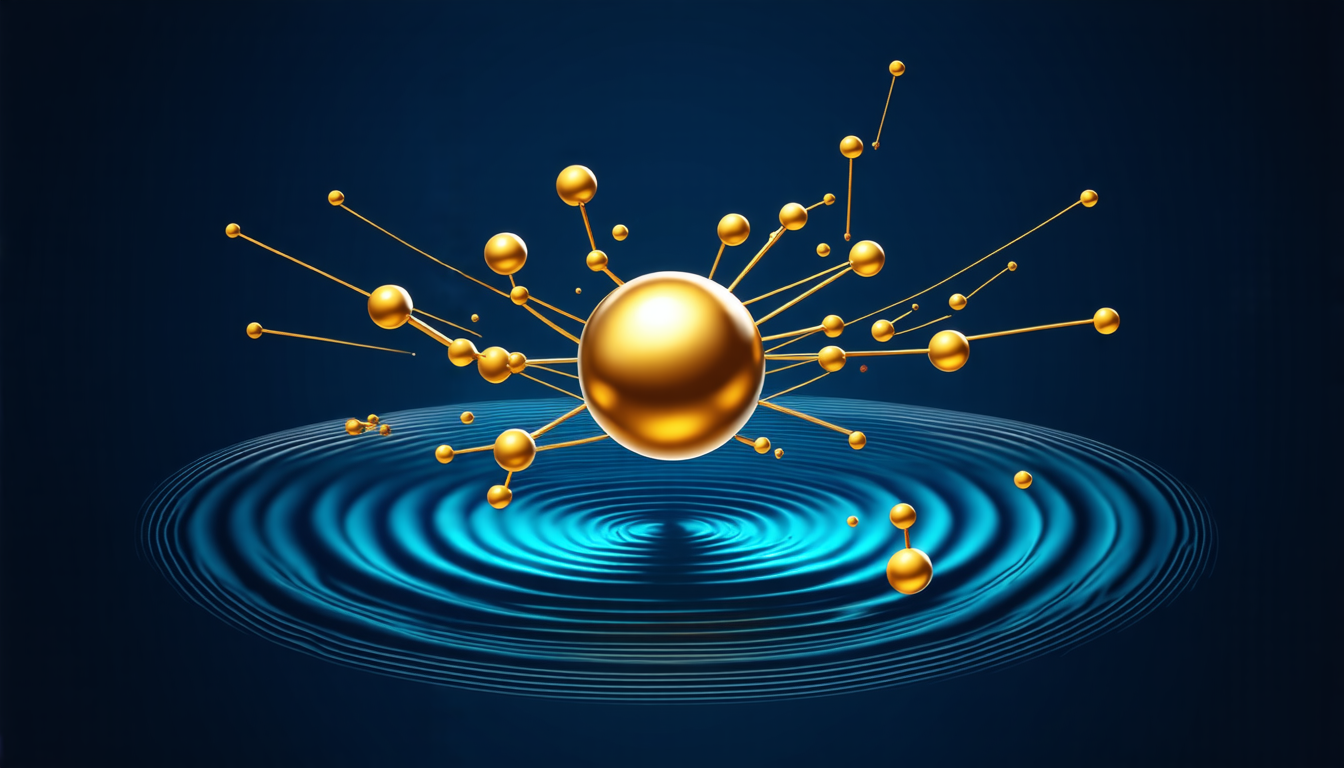
In this latest study, researchers from China have used a multiphase transport model to investigate the chiral magnetic effect in Au+Au collisions, which involve two gold nuclei colliding at extremely high energies. The team has discovered that the ratio of the signal-to-background noise for the effect is significantly smaller in Au+Au collisions than previously thought.
The researchers achieved this by comparing the results of their simulations with experimental data from the RHIC. By doing so, they were able to refine their understanding of how the chiral magnetic effect manifests itself in different collision systems.
One key finding was that the effect is more pronounced when measured relative to the spectator plane, a concept that refers to the direction perpendicular to the reaction plane. This suggests that the chiral magnetic effect is indeed sensitive to the orientation of the magnetic field, as predicted by theory.
The study also found that the signal-to-background ratio for the effect is larger in Au+Au collisions than in isobar collisions, which involve systems with different proton numbers but identical atomic masses. This highlights the importance of considering the system size and composition when studying the chiral magnetic effect.
The implications of this research are far-reaching, as they shed new light on our understanding of the fundamental forces that govern the behavior of matter at high energies. The discovery also has significant consequences for future experimental searches, which will now need to take into account the nuances of the chiral magnetic effect in different collision systems.
In essence, this study marks an important milestone in the quest to understand one of the most fascinating phenomena in modern physics, and its findings will undoubtedly shape the course of future research in this field.
Cite this article: “Refining Our Understanding of the Chiral Magnetic Effect”, The Science Archive, 2025.
Chiral Magnetic Effect, High-Energy Particle Collisions, Relativistic Heavy Ion Collider, Large Hadron Collider, Multiphase Transport Model, Gold Nuclei Collisions, Signal-To-Background Ratio, Spectator Plane, Orientation Of Magnetic Field, Isobar Collisions





