

Sunday 02 March 2025
Researchers have made a significant breakthrough in developing more accurate autonomous driving systems by combining camera and lidar data. The innovative approach, known as Camera-Lidar Fusion Transformer (CLFT), uses a deep learning model to integrate the strengths of both sensing technologies.
Traditionally, autonomous vehicles rely on either cameras or lidars to navigate their surroundings. Cameras provide high-resolution images, but are limited in low-light conditions or when visibility is poor. Lidars, on the other hand, use laser light to create detailed 3D maps, but can be affected by weather conditions and are often expensive.
The CLFT model addresses these limitations by fusing the strengths of both cameras and lidars. The approach uses a transformer architecture, originally developed for natural language processing, to analyze the data from both sensors simultaneously. This allows the system to learn patterns and relationships between the camera and lidar data, enabling it to make more accurate decisions.
The researchers tested the CLFT model on a dataset of images and lidar point clouds captured in various weather conditions, including sunny days, rainy nights, and foggy mornings. The results showed significant improvements in object detection and segmentation accuracy compared to traditional approaches that rely on single-sensor data.
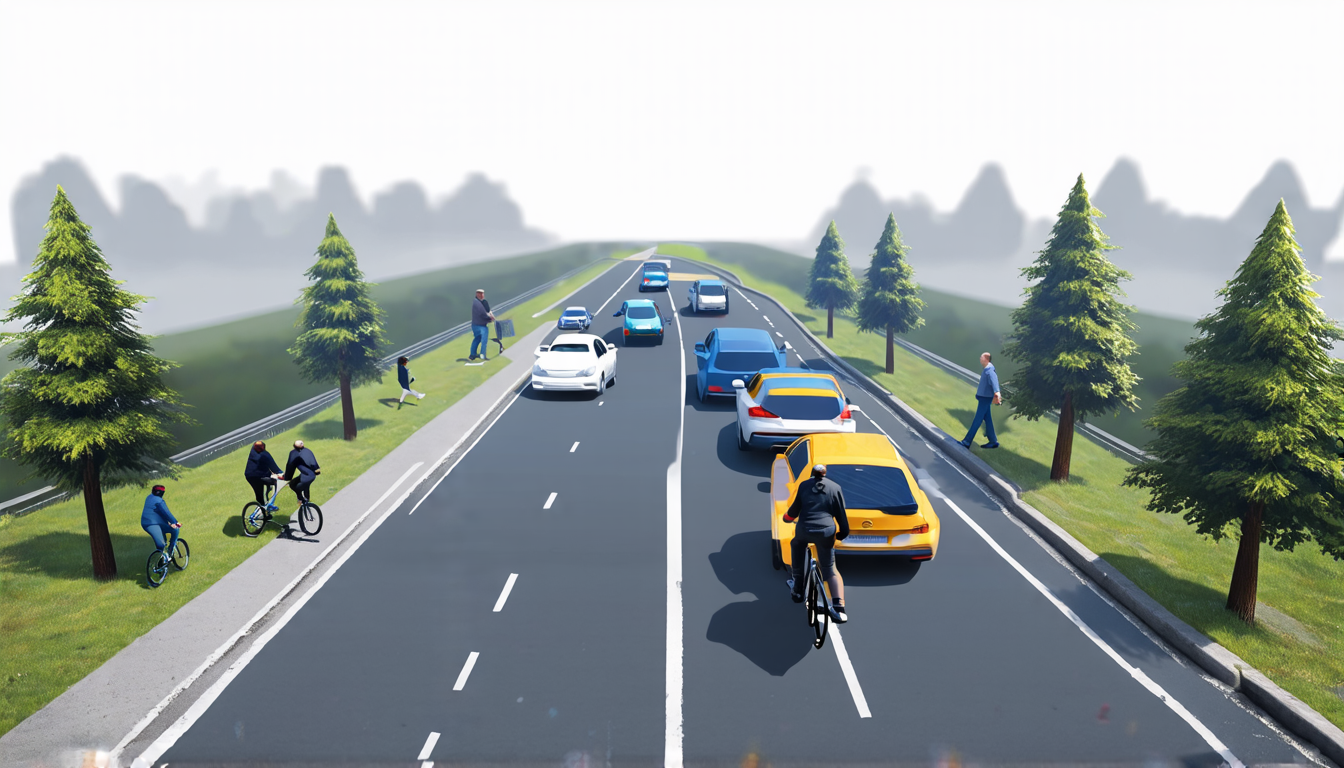
For example, the CLFT model achieved an IoU (intersection over union) score of 64% for detecting cyclists, pedestrians, and traffic signs, outperforming camera-only and lidar-only models. The system also demonstrated improved performance in low-light conditions, where traditional cameras struggle to provide accurate information.
The potential applications of the CLFT technology are vast. Autonomous vehicles could use this approach to improve their ability to navigate complex environments, such as urban streets or construction zones, where visibility is limited. Additionally, the technique could be applied to other fields, such as robotics and surveillance, where accurate object detection and segmentation are crucial.
The development of the CLFT model highlights the importance of interdisciplinary research in artificial intelligence. By combining knowledge from computer vision, machine learning, and robotics, researchers can create innovative solutions that address real-world challenges. As autonomous technologies continue to evolve, this breakthrough has significant implications for the future of transportation and beyond.
Cite this article: “Breakthrough in Autonomous Driving: Combining Camera and Lidar Data for More Accurate Navigation”, The Science Archive, 2025.
Autonomous Driving, Camera-Lidar Fusion Transformer, Deep Learning Model, Object Detection, Segmentation Accuracy, Iou Score, Computer Vision, Machine Learning, Robotics, Interdisciplinary Research





