

Sunday 02 March 2025
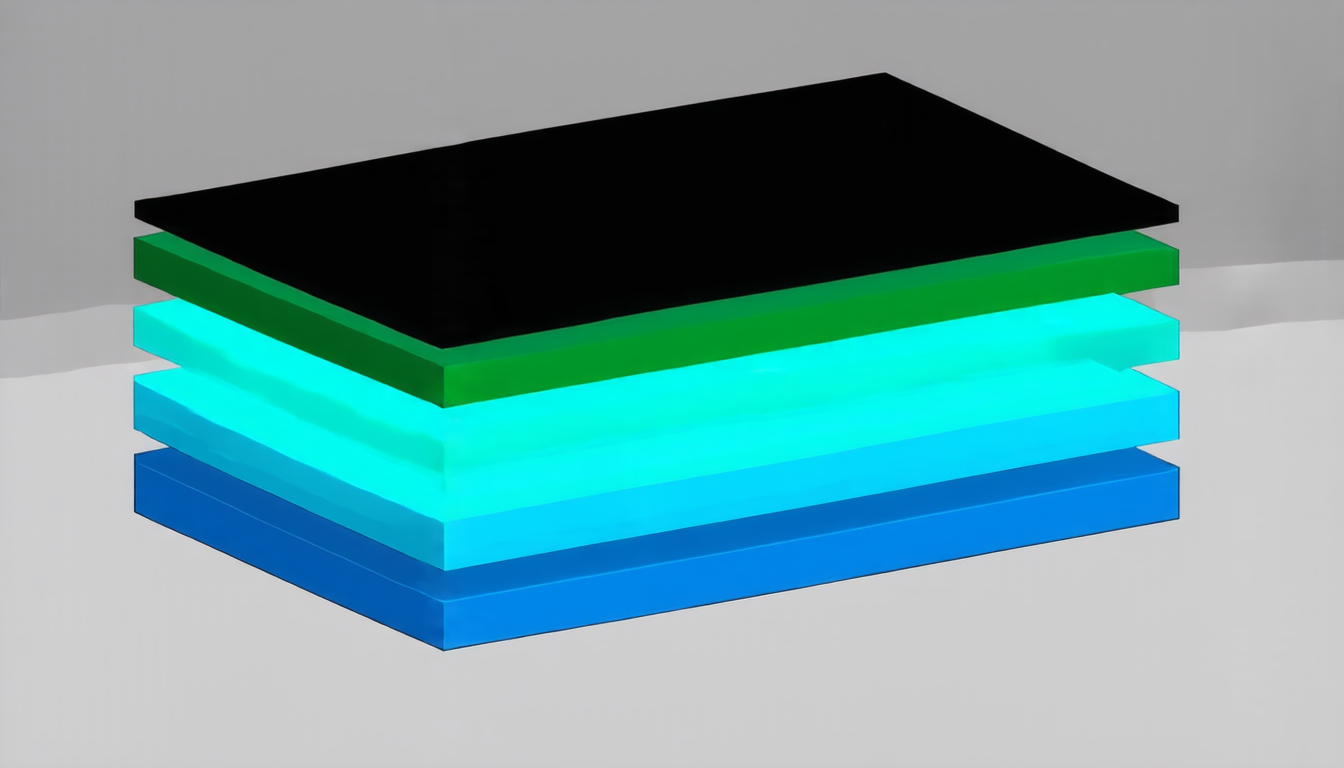
A peculiar class of materials has long fascinated scientists: misfit layered compounds, or MLCs for short. These substances are created by stacking alternating layers of different materials, resulting in a unique structure that can exhibit unusual properties.
One such MLC is (PbS)1.13TaS2, which has recently been studied in detail. This compound consists of layers of lead sulfide and tantalum disulfide, arranged in an alternating pattern. The researchers who investigated this material discovered some remarkable features, including a superconducting state that emerges at relatively high temperatures.
Superconductivity is a phenomenon where certain materials can conduct electricity with zero resistance when cooled to extremely low temperatures. However, (PbS)1.13TaS2 exhibits this property at a relatively balmy 3.05 Kelvin (-269.95°C), making it an attractive subject for study.
The researchers used a variety of techniques to probe the properties of (PbS)1.13TaS2, including measurements of its electrical resistance, magnetic field responses, and specific heat capacity. These experiments revealed that the material’s superconducting state is characterized by two distinct energy gaps, which are thought to arise from separate electronic bands.
This finding has important implications for our understanding of superconductivity in MLCs. In traditional superconductors, a single energy gap is typically observed, whereas (PbS)1.13TaS2’s dual-gap structure suggests that these materials may exhibit more complex behavior.
Further research into the properties of (PbS)1.13TaS2 and other MLCs could lead to new insights into the underlying physics of superconductivity. This knowledge could potentially be used to develop more efficient and practical applications for this phenomenon, such as high-temperature superconducting materials or novel electronic devices.
The study of misfit layered compounds like (PbS)1.13TaS2 is an exciting area of research that continues to uncover new and fascinating properties. As scientists delve deeper into the mysteries of these materials, they may yet discover even more surprising secrets hidden within their unique structures.
Cite this article: “Unraveling the Secrets of Misfit Layered Compounds”, The Science Archive, 2025.
Superconductivity, Misfit Layered Compounds, Lead Sulfide, Tantalum Disulfide, Electrical Resistance, Magnetic Fields, Specific Heat Capacity, Energy Gaps, Electronic Bands, High-Temperature Superconductors





