

Sunday 02 March 2025
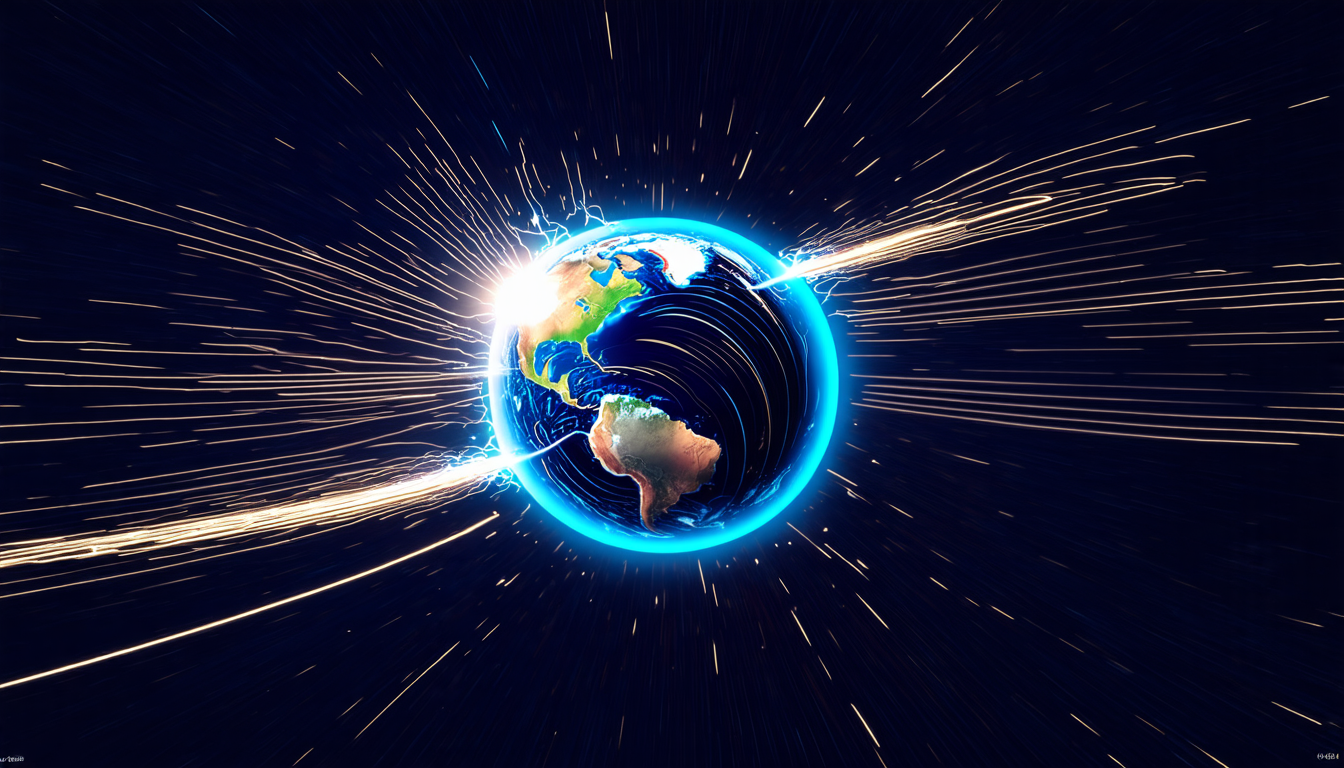
The solar wind is a constant companion, buffeting our planet’s magnetic field and influencing the aurora borealis. But despite its omnipresence, the solar wind remains poorly understood. Scientists have long struggled to accurately categorize different types of solar wind, leading to inconsistencies in their research.
A new study sheds light on this problem by analyzing data from NASA’s Advanced Composition Explorer (ACE) spacecraft. By applying machine learning techniques to the data, researchers were able to identify seven distinct types of solar wind, each with its own unique characteristics.
One of the most interesting findings is that the traditional classification system for solar wind, which relies on fixed thresholds for certain parameters, can be misleading. The study shows that these thresholds are often better suited for one phase of the solar cycle than another. For example, a threshold that works well during periods of high solar activity may not be as effective during times of low activity.
The researchers also found that different types of solar wind have distinct properties, such as speed and temperature. By identifying these properties, scientists can better understand how the solar wind interacts with our planet’s magnetic field and atmosphere.
The study has important implications for space weather forecasting. Accurate predictions of solar wind behavior are crucial for protecting satellites and communication systems from damaging radiation storms.
The researchers used a machine learning algorithm called k-means to identify the seven types of solar wind. This algorithm works by grouping similar data points together based on their characteristics. In this case, the algorithm was trained on over 10 years’ worth of data from ACE, which allowed it to identify patterns and relationships that might not be immediately apparent.
The study’s findings are a testament to the power of machine learning in scientific research. By applying these techniques to large datasets, scientists can uncover new insights and make more accurate predictions.
In the future, the researchers plan to continue analyzing the data from ACE and other spacecraft to better understand the solar wind. They hope that their work will ultimately lead to improved space weather forecasting and a deeper understanding of our planet’s place in the universe.
Cite this article: “Unraveling the Solar Winds Mysteries Through Machine Learning”, The Science Archive, 2025.
Solar Wind, Nasa, Ace, Machine Learning, Space Weather, Magnetic Field, Aurora Borealis, Solar Cycle, K-Means Algorithm, Space Weather Forecasting





