

Sunday 02 March 2025
In recent years, artificial intelligence has made tremendous strides in understanding and processing vast amounts of data. One particularly exciting area of research is graph neural networks (GNNs), which have shown remarkable ability to learn from complex patterns and relationships within large datasets.
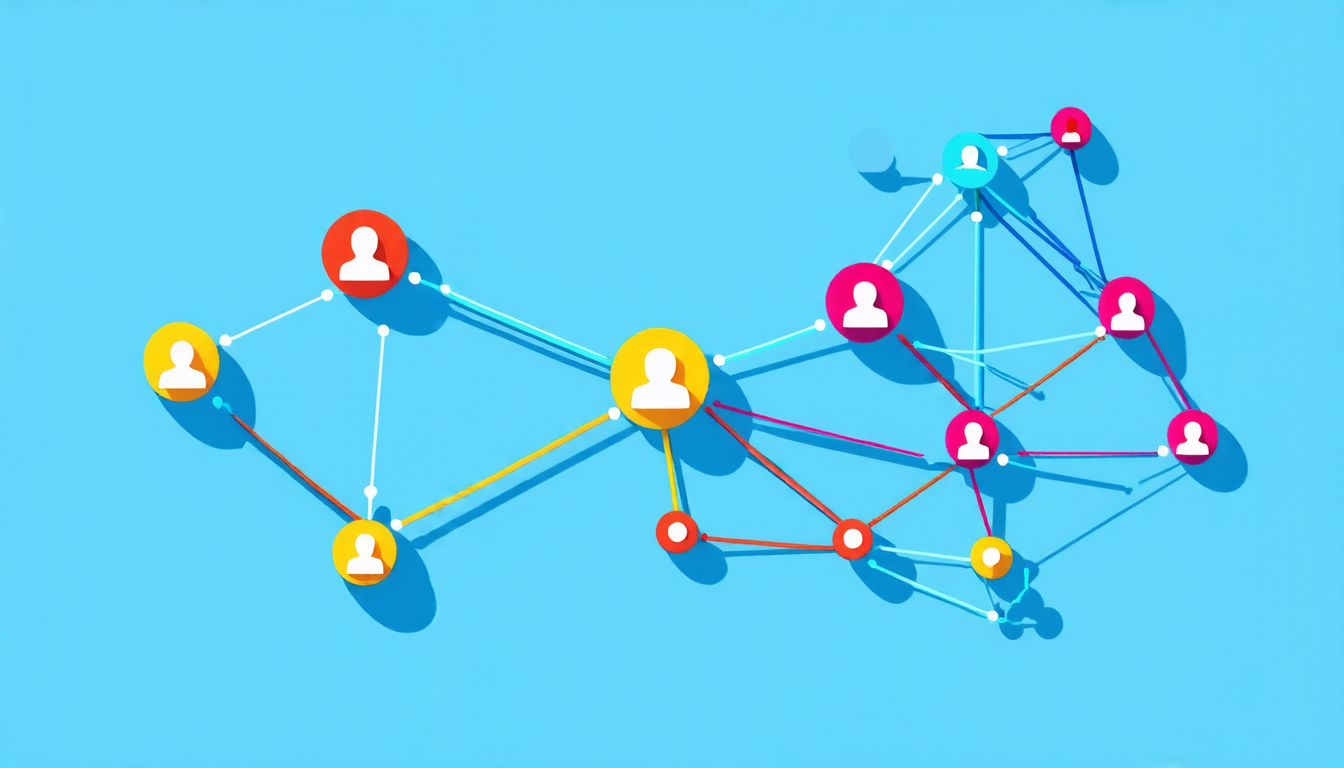
These networks are designed to handle the unique challenges of graph-structured data, where nodes and edges represent entities and their connections. This format is commonly used in social networks, recommendation systems, and even biological networks like protein interactions.
One of the key limitations of traditional GNNs, however, is that they rely heavily on low-pass filters to smooth out feature representations. While this approach works well for homophilic graphs (where connected nodes tend to share similar features), it can struggle with heterophilic graphs (where nodes are diverse and require more nuanced representation).
Enter LOHA, a novel framework designed to address this issue by leveraging the inherent opposition between low-pass and high-pass views of graph data. By minimizing the similarities between these two perspectives, LOHA encourages the model to maximize its specialties and learn more robust feature representations.
The authors of LOHA propose a simple yet effective self-supervised contrastive learning approach that combines both low-pass and high-pass filters in a way that enhances filter effectiveness and improves representation learning. This is achieved through the introduction of a novel high-dimensional feature, spectral signal trends, which serves as an extra feature that encourages feature reunion for individual nodes.
Experiments on nine real-world datasets demonstrate the superiority of LOHA over runner-up models, with average performance improvements of 2.8%. Notably, LOHA even surpasses fully-supervised models on several datasets, underscoring its potential to advance the efficacy of spectral GNNs for diverse graph structures.
The authors also conduct an ablation study to investigate the impact of each component in the LOHA framework. The results show that while each part contributes to the model’s effectiveness, their combination is particularly powerful, achieving optimal results by balancing the strengths of each.
This research has significant implications for a wide range of applications, from social network analysis and recommendation systems to bioinformatics and traffic prediction. By developing more sophisticated graph neural networks like LOHA, researchers can unlock new insights and improve decision-making capabilities in these domains.
Cite this article: “Enhancing Graph Neural Networks with LOHA: A Novel Framework for Robust Feature Representations”, The Science Archive, 2025.
Artificial Intelligence, Graph Neural Networks, Gnns, Data Processing, Complex Patterns, Relationships, Graph-Structured Data, Protein Interactions, Social Networks, Recommendation Systems.





