

Sunday 02 March 2025
A team of researchers has made a significant breakthrough in developing a unified modeling framework for reconfigurable battery systems (RBSs). This innovative approach enables the efficient optimization of RBS performance, which is crucial for the widespread adoption of renewable energy sources.
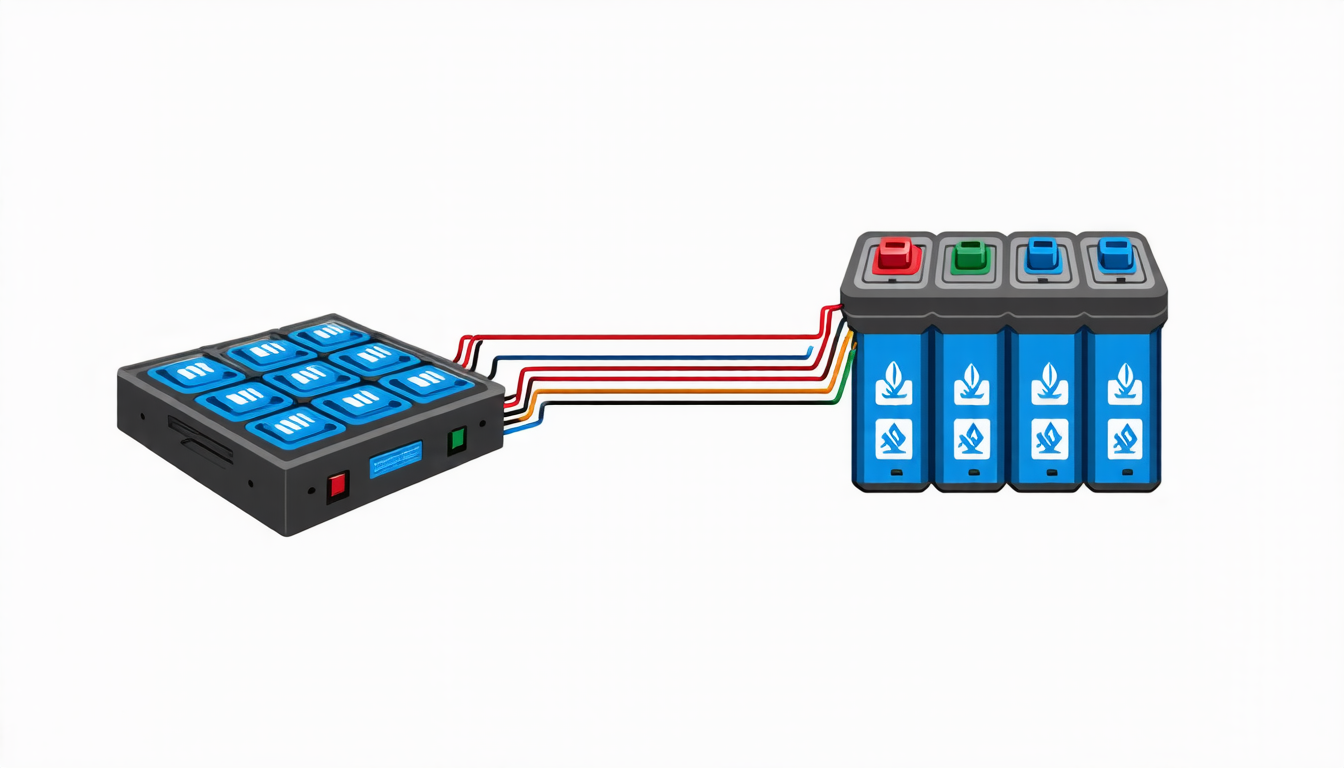
Reconfigurable battery systems are designed to improve the efficiency and flexibility of energy storage. They allow batteries to be connected and disconnected dynamically, enabling the system to adapt to changing power demands. However, this flexibility comes with a significant challenge: optimizing the configuration of the batteries to maximize performance while minimizing complexity.
The researchers developed a novel approach by creating a unified modeling framework that can represent various RBS designs and configurations. This framework allows for the efficient formulation of optimal control problems for RBSs, which is essential for achieving optimal performance.
One of the key benefits of this approach is its ability to reduce computational time and storage requirements. By eliminating the need to repeatedly reconstruct the system plant during dynamic reconfiguration, the researchers were able to develop a more efficient optimization algorithm.
The team tested their model using experimental data from a 10-cell RBS with varying terminal voltage levels. The results showed that the proposed model accurately simulated current and voltage distributions within the system. This level of accuracy is crucial for ensuring the safe and efficient operation of RBSs.
To further enhance search efficiency, the researchers developed an algorithm to narrow the complete search space to only feasible solutions. This approach eliminates configurations that could result in battery faults or unacceptable terminal voltages, significantly reducing the computational burden.
The development of this unified modeling framework has significant implications for the widespread adoption of renewable energy sources. By enabling the efficient optimization of RBS performance, it can help improve fault tolerance, optimize energy storage and delivery, enhance charge balance, and extend the remaining useful life of batteries.
In the future, this innovative approach could be applied to a wide range of applications, from electric vehicles to grid-scale energy storage systems. As the demand for renewable energy continues to grow, the development of efficient and flexible energy storage solutions is critical for ensuring a sustainable energy future.
Cite this article: “Unified Modeling Framework Enhances Efficiency of Reconfigurable Battery Systems”, The Science Archive, 2025.
Reconfigurable Battery Systems, Energy Storage, Renewable Energy, Optimization, Modeling Framework, Unified Approach, Dynamic Reconfiguration, Control Problems, Computational Time, Battery Performance





