

Sunday 02 March 2025
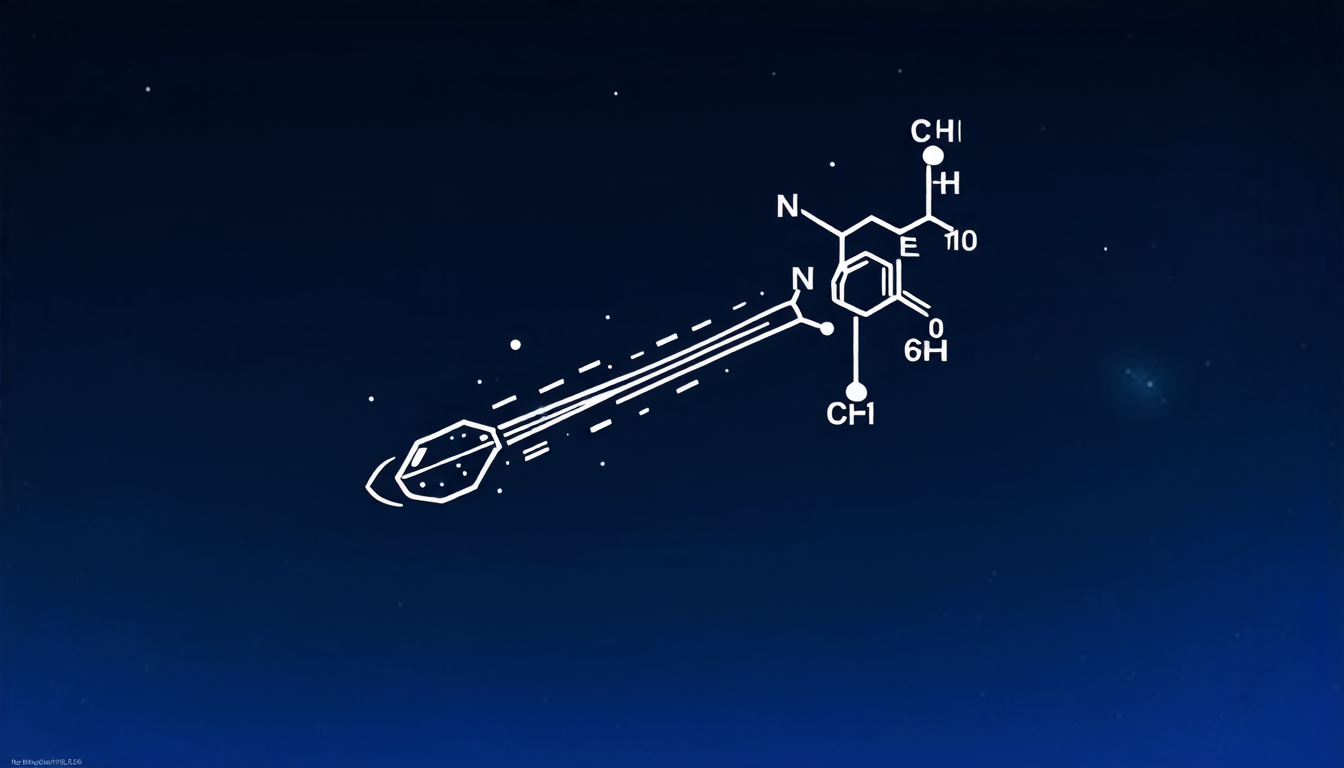
Scientists have made a significant breakthrough in understanding how complex organic molecules are formed in space. By simulating the conditions found in interstellar clouds, researchers were able to create linear alkanes – simple hydrocarbons that are building blocks of life – through a process called solid-state hydrogenation.
The team used a combination of ultraviolet light and atomic hydrogen to trigger a chemical reaction between carbon-rich molecules, resulting in the formation of longer-chain hydrocarbons. These reactions occur at extremely low temperatures, just 10 Kelvin (−263°C), which is much colder than the surface of Pluto.
One of the key findings was that the presence of triple bonds in the starting materials, known as polyynes, played a crucial role in the reaction. The researchers discovered that these triple bonds allowed for more efficient hydrogenation, leading to the formation of longer-chain hydrocarbons.
The study’s authors also explored the implications of their findings on our understanding of the origins of life on Earth. They suggest that similar processes may have occurred on our planet billions of years ago, providing a possible explanation for the presence of complex organic molecules in ancient sediments.
The team used a mass spectrometer to analyze the products of the reaction and detected a range of linear alkanes, including C4H10 and C6H14. These molecules are similar to those found in comets and asteroids, which suggests that they may have been formed through similar processes in space.
While this study provides valuable insights into the formation of complex organic molecules, it also raises new questions about the origins of life on Earth. If these reactions occurred in interstellar clouds, could they have played a role in seeding life on our planet? And what implications does this have for our understanding of the evolution of life?
The findings of this study have significant implications for astrobiology and the search for extraterrestrial life. By better understanding how complex organic molecules are formed in space, scientists can gain valuable insights into the origins of life on Earth and potentially identify signs of life elsewhere in the universe.
In the future, researchers plan to expand their experiments to explore other reaction conditions and starting materials, which could provide further insights into the formation of complex organic molecules. The study’s authors also hope to use advanced computational models to simulate these reactions and better understand the underlying mechanisms.
As scientists continue to unravel the mysteries of the universe, this breakthrough provides a fascinating glimpse into the origins of life on Earth and potentially beyond.
Cite this article: “Unlocking the Secrets of Life in Space: Breakthrough Discovery on Molecule Formation”, The Science Archive, 2025.
Organic Molecules, Space, Hydrogenation, Interstellar Clouds, Carbon-Rich Molecules, Ultraviolet Light, Atomic Hydrogen, Triple Bonds, Astrobiology, Life Origins





