
Sunday 02 March 2025
The quest for a reliable way to measure the distance between two probability distributions has been ongoing in the field of machine learning and statistics for decades. Now, researchers have made significant progress in this area by developing new methods that can accurately estimate this distance while reducing computational complexity.
One of the most popular methods for measuring distributional differences is the Wasserstein distance, also known as the Earth Mover’s distance. This method works by finding the optimal transportation plan between two distributions, which can be computationally expensive and difficult to scale up to high-dimensional data sets.
To address this issue, researchers have developed a new method called Sliced Wasserstein Distance (SWD). SWD uses random projections to map high-dimensional data onto one-dimensional spaces, effectively reducing the computational complexity of the Wasserstein distance calculation. This approach allows for faster computation and more accurate estimation of the distributional differences.
Another popular method for measuring distributional differences is the Maximum Mean Discrepancy (MMD). MMD measures the difference between two distributions by comparing their mean embeddings in a reproducing kernel Hilbert space (RKHS). While MMD has been widely used, its computational complexity can be high due to the need to compute the kernel matrix.
To address this issue, researchers have developed a new method called Random Fourier Features (RFF) for approximating the MMD. RFF uses random frequencies and offsets to approximate the Fourier transform of the kernel function, reducing the computational complexity from O(n2d) to O(nd), where n is the sample size and d is the dimensionality of the data.
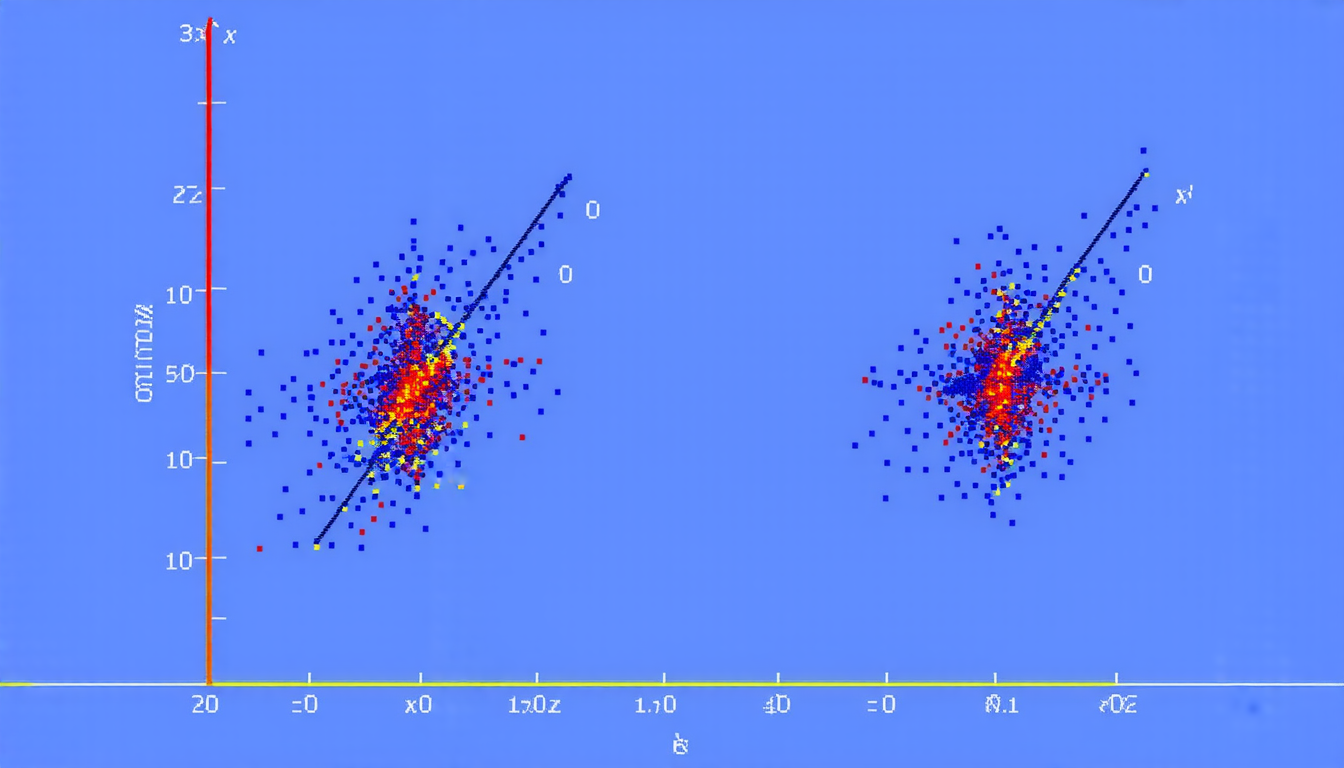
The new methods have been tested on a range of datasets, including multi-modal Gaussian distributions and real-world data sets. The results show that SWD and RFF-MMD are able to accurately estimate distributional differences while reducing computational complexity. For example, one experiment used two multi-modal Gaussian distributions with clear spatial separation characteristics in the two-dimensional plane. The results showed that the RFF-MMD estimates exhibited good convergence properties as the random feature dimension was increased from 10 to 1000.
The development of these new methods has significant implications for machine learning and statistics. They provide a reliable way to measure distributional differences, which is essential for many applications in data analysis, such as clustering, classification, and regression. The reduced computational complexity also makes it possible to apply these methods to large-scale data sets, opening up new possibilities for research and applications.
Cite this article: “Advances in Measuring Distributional Differences: New Methods and Applications”, The Science Archive, 2025.
Machine Learning, Statistics, Probability Distributions, Wasserstein Distance, Sliced Wasserstein Distance, Random Fourier Features, Maximum Mean Discrepancy, Kernel Functions, Computational Complexity