

Sunday 02 March 2025
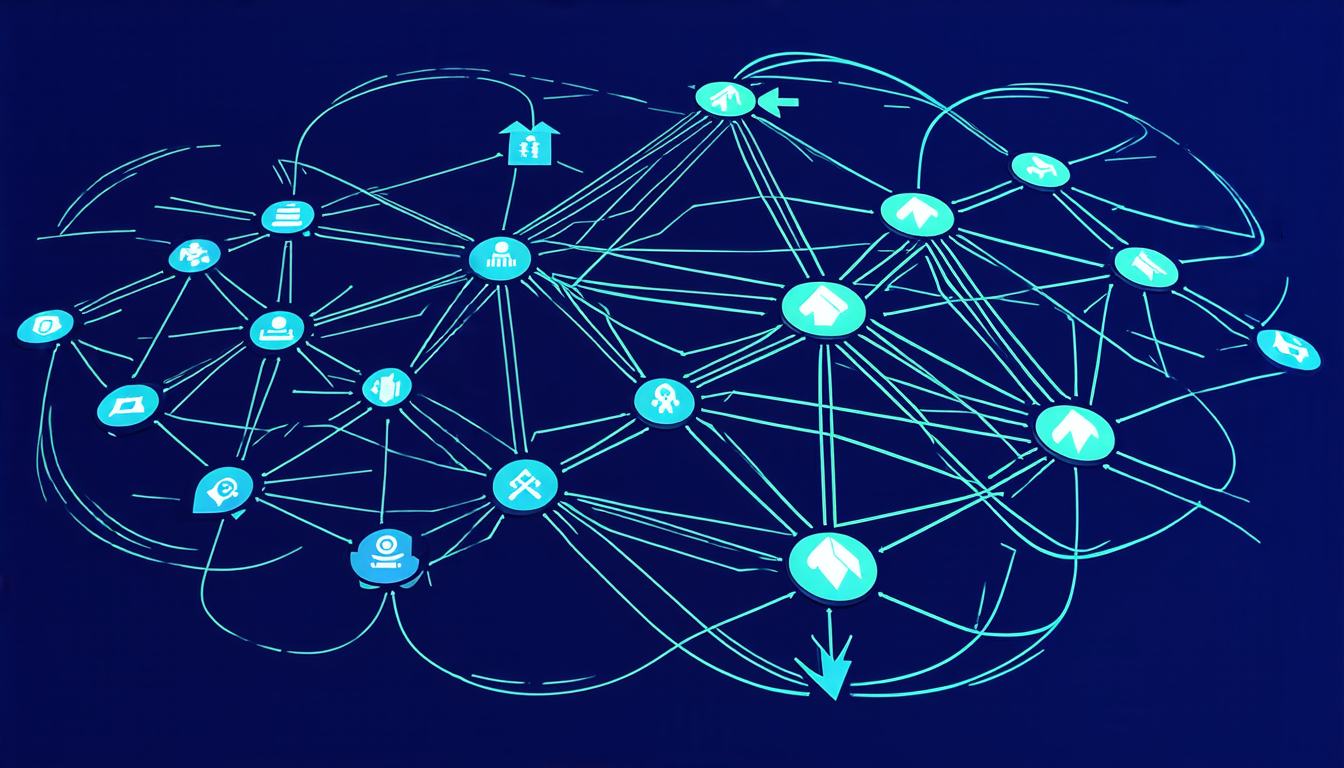
A new approach to decentralized deep learning has emerged, one that promises to speed up the training of complex neural networks by leveraging the collective power of multiple agents. This innovative method, dubbed DRT diffusion, relies on a clever combination of consensus optimization and trust-based communication to facilitate efficient information exchange among the participating nodes.
At its core, DRT diffusion is an algorithm designed to tackle the challenges posed by decentralized learning environments, where data is distributed across multiple agents that need to cooperate to achieve a common goal. The key insight behind this approach lies in recognizing that, instead of relying solely on averaging the parameters of each agent’s neural network, it’s more effective to focus on consensus optimization – ensuring that all agents agree on the optimal solution.
This may seem counterintuitive at first, as one might expect averaging to be the natural choice for decentralized learning. However, DRT diffusion demonstrates that by promoting consensus in the function space (i.e., the output of each agent’s neural network), rather than solely relying on parameter agreement, significant improvements can be achieved.
To achieve this, the algorithm employs a novel combination of local gradient descent and trust-based communication. Each agent maintains its own neural network and updates it using a stochastic approximation of the true local gradient. The twist comes when these agents communicate with one another to adjust their parameters based on the outputs produced by each other’s networks.
This trust-based approach allows DRT diffusion to effectively navigate the complexities of decentralized learning, where communication between agents can be imperfect or delayed. By promoting consensus in the function space, the algorithm is able to adapt to these imperfections and still achieve high-quality solutions.
Theoretical analysis has shown that DRT diffusion exhibits fast convergence rates, even in the presence of noisy data and imperfect communication. Empirical results confirm this, demonstrating significant performance improvements over traditional decentralized learning methods.
One notable aspect of DRT diffusion is its ability to scale well with increasing numbers of agents. As more nodes join the network, the algorithm’s convergence rate remains relatively stable, making it an attractive solution for large-scale distributed learning applications.
The potential implications of DRT diffusion are far-reaching, with applications in areas such as edge computing, autonomous vehicles, and smart grids. By enabling efficient decentralized learning at scale, this approach has the potential to revolutionize the way complex systems are designed and optimized.
In the coming months, researchers will undoubtedly continue to refine and extend this innovative approach, exploring new ways to apply DRT diffusion to a wide range of challenging problems.
Cite this article: “Decentralized Deep Learning with DRT Diffusion: A New Approach to Efficient Training”, The Science Archive, 2025.
Decentralized Deep Learning, Consensus Optimization, Trust-Based Communication, Neural Networks, Distributed Learning, Edge Computing, Autonomous Vehicles, Smart Grids, Parallel Processing, Scalable Algorithms





