
Sunday 02 March 2025
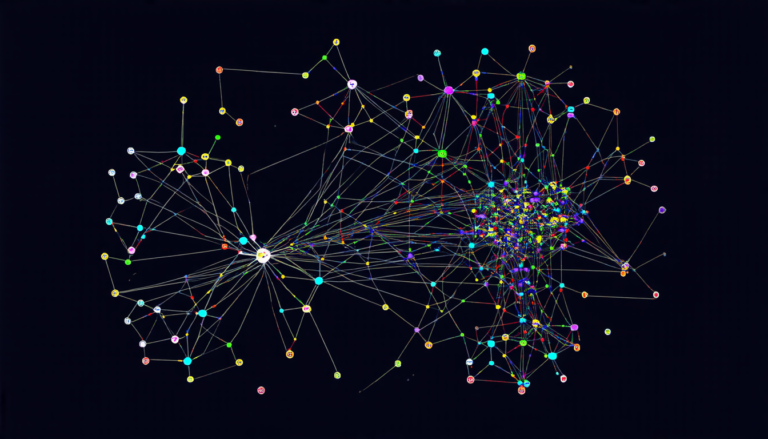
The quest for transparency in artificial intelligence has led scientists to a breakthrough: a new method that can explain why AI models make certain predictions. This achievement is significant because it addresses one of the biggest concerns about AI – its lack of accountability.
Artificial intelligence, or AI, has revolutionized many industries and aspects of our lives. From virtual assistants like Siri and Alexa to self-driving cars and medical diagnosis systems, AI plays a crucial role in making decisions for us. However, these models are often black boxes that operate without transparency, making it difficult to understand why they make certain choices.
To address this issue, researchers have been working on developing methods that can explain how AI models arrive at their predictions. This is known as model interpretability. In the past, scientists have developed various techniques to achieve model interpretability, such as feature attribution and saliency maps. However, these methods often require significant computational resources and may not always provide accurate explanations.
The new method, called Pre-trained Language Model Rationalization (PLMR), has been designed specifically for natural language processing tasks like sentiment analysis and text classification. PLMR uses a combination of techniques, including attention mechanisms and dimensionality reduction, to identify the most important words or phrases in the input text that contribute to the model’s prediction.
According to recent studies, PLMR outperforms existing methods in terms of both accuracy and interpretability. For instance, when applied to sentiment analysis tasks, PLMR was able to correctly identify the aspects of a product review that influenced the overall sentiment, such as the quality of the product or the customer service.
The implications of this breakthrough are far-reaching. With PLMR, developers can now create more transparent AI models that provide clear explanations for their predictions. This is particularly important in industries like healthcare and finance, where AI models make critical decisions that affect people’s lives.
Moreover, PLMR has the potential to improve the trustworthiness of AI systems. When users understand how an AI model arrives at its predictions, they are more likely to accept and rely on those predictions. In contrast, opaque AI models may be viewed with skepticism or even mistrust.
While PLMR is a significant step forward in achieving transparency in AI, there is still much work to be done. Future research will focus on adapting this method for other types of AI models and tasks, as well as exploring ways to improve its performance and scalability.
Cite this article: “Unlocking Transparency in Artificial Intelligence”, The Science Archive, 2025.
Artificial Intelligence, Transparency, Model Interpretability, Pre-Trained Language Model Rationalization, Natural Language Processing, Sentiment Analysis, Text Classification, Attention Mechanisms, Dimensionality Reduction, Explainable Ai