

Monday 03 March 2025
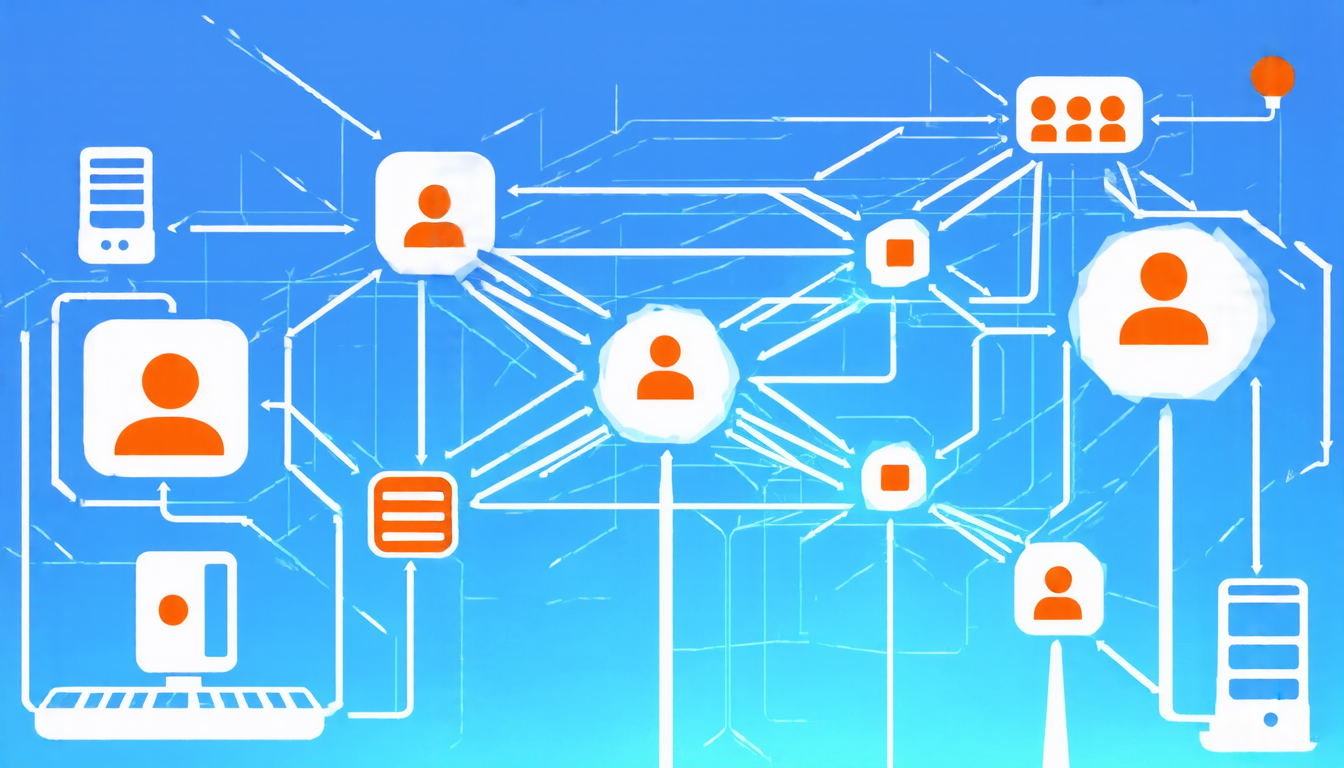
The quest for decentralized machine learning has taken a major leap forward, thanks to a new study that sheds light on the challenges and opportunities of federated learning. This innovative approach allows multiple devices or organizations to jointly train a model without sharing their individual data, preserving privacy while still achieving impressive results.
Federated learning is a tantalizing prospect, as it could enable applications such as personalized medicine, smart grids, and autonomous vehicles, all while maintaining the confidentiality of sensitive information. However, the complexity of this approach has hindered its widespread adoption, until now.
Researchers have identified two primary hurdles to overcome: communication overhead and non-independent identically distributed (non-IID) data. The former refers to the enormous amounts of data that need to be transmitted between devices during training, while the latter describes the situation where each device has a unique set of data that doesn’t follow the same distribution as others.
To combat these challenges, the researchers proposed two innovative solutions: lossy compression and bound-aware modeling. Lossy compression involves reducing the amount of data transferred by compressing it using techniques like quantization, which can significantly reduce the size of the model’s parameters without sacrificing accuracy. Bound-aware modeling, on the other hand, takes into account the varying distribution of data across devices to create a more robust and accurate model.
In their experiments, the researchers demonstrated that lossy compression can be used to reduce communication overhead by up to 75% while still maintaining a high level of accuracy. They also showed that bound-aware modeling can improve performance on non-IID data by up to 10%.
These findings have significant implications for the development of federated learning systems. By addressing the challenges of communication overhead and non-IID data, researchers can create more efficient and effective models that can be used in a wide range of applications.
One potential application is in the field of healthcare, where personalized medicine could be developed using decentralized machine learning algorithms. This would allow patients to receive tailored treatment plans without sharing their sensitive medical information with third-party organizations.
Another potential application is in the development of smart grids, which could use federated learning to optimize energy distribution and consumption patterns. This would enable utilities to create more efficient and sustainable energy systems while maintaining the confidentiality of customer data.
The future of federated learning looks bright, thanks to the innovative solutions proposed by this study.
Cite this article: “Advancing Federated Learning: Overcoming Challenges and Unlocking New Opportunities”, The Science Archive, 2025.
Machine Learning, Federated Learning, Decentralized Data, Data Privacy, Communication Overhead, Non-Iid Data, Lossy Compression, Bound-Aware Modeling, Personalized Medicine, Smart Grids
Reference: Karthik Mohan, “A study on performance limitations in Federated Learning” (2025).





