

Monday 03 March 2025
The quest for seamless medical imaging registration has long been a challenge in the field of radiology. For decades, clinicians have relied on manual processes, which can be time-consuming and prone to errors. The introduction of artificial intelligence (AI) has shown promise in automating this process, but most methods have focused solely on intensity-based similarity metrics, neglecting the importance of structural alignment.
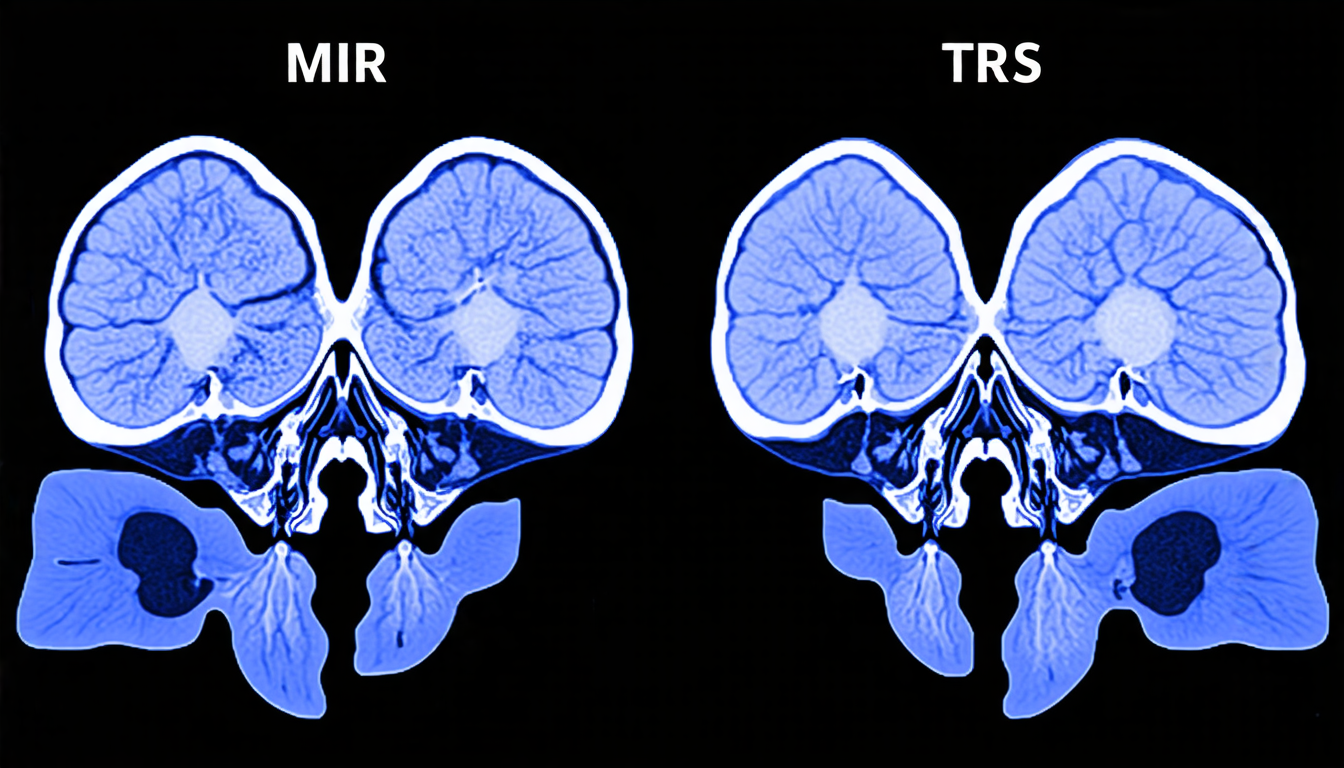
A recent study published in a leading medical imaging journal proposes a novel approach that tackles this issue by incorporating both structure and intensity information into a single registration framework. The researchers developed a salient region matching framework for fully automated magnetic resonance (MR) to transrectal ultrasound (TRUS) registration, with the goal of enhancing diagnostic accuracy and improving targeted interventions in prostate cancer treatment.
The framework consists of three main components: prostate segmentation, rigid alignment, and deformable registration. First, the team used two separate neural networks to segment the prostate gland from MR and TRUS images, respectively. This step efficiently localizes the prostate region, allowing for subsequent rigid and deformable registration. Next, they applied a rigid alignment technique using ANTS, which unifies the multi-modality images into the same global coordinate system.
The deformable registration network is the heart of the framework, employing a dual-stream encoder with cross-modal spatial attention modules to capture both modality-specific features and shared information between them. The attention mechanism allows the network to focus on relevant regions within each image, enhancing feature correspondence and reducing noise. To further constrain the registration process, the team introduced a salient region matching loss that considers both intensity and structure similarity within the prostate region.
The results of this study are promising, with the proposed framework outperforming state-of-the-art methods in terms of Dice similarity coefficient (DSC) and target registration error (TRE). The framework’s ability to effectively handle large deformations between MR and TRUS images demonstrates its potential for real-world applications. Furthermore, the ablation study reveals the importance of each component, highlighting the significance of rigid alignment, cross-modal attention, and salient region matching in achieving accurate registrations.
This research has significant implications for the field of medical imaging, particularly in prostate cancer diagnosis and treatment. Accurate registration of MR and TRUS images can improve tumor localization, enable targeted biopsies, and enhance overall treatment outcomes. As AI continues to play a vital role in healthcare, this study showcases the potential for deep learning-based solutions to revolutionize medical imaging workflows.
Cite this article: “Automated Medical Imaging Registration Framework for Prostate Cancer Diagnosis and Treatment”, The Science Archive, 2025.
Medical Imaging, Artificial Intelligence, Radiology, Prostate Cancer, Magnetic Resonance, Transrectal Ultrasound, Image Registration, Deep Learning, Salient Region Matching, Cross-Modal Attention





