

Monday 03 March 2025
Medical imaging has long been a crucial tool in diagnosing and treating diseases, but it’s often plagued by the problem of limited training data. This can lead to inaccurate diagnoses and a lack of precision in treatment plans. Recently, researchers have turned to artificial intelligence (AI) to bridge this gap, and their latest efforts show promising results.
The team behind Bridged Semantic Alignment (BrgSA), a new framework for medical image analysis, has made significant strides in overcoming the limitations of traditional AI-based approaches. By leveraging a large language model to perform semantic summarization of reports and designing a cross-modal knowledge interaction module, BrgSA is able to effectively bridge the gap between visual and textual modalities.
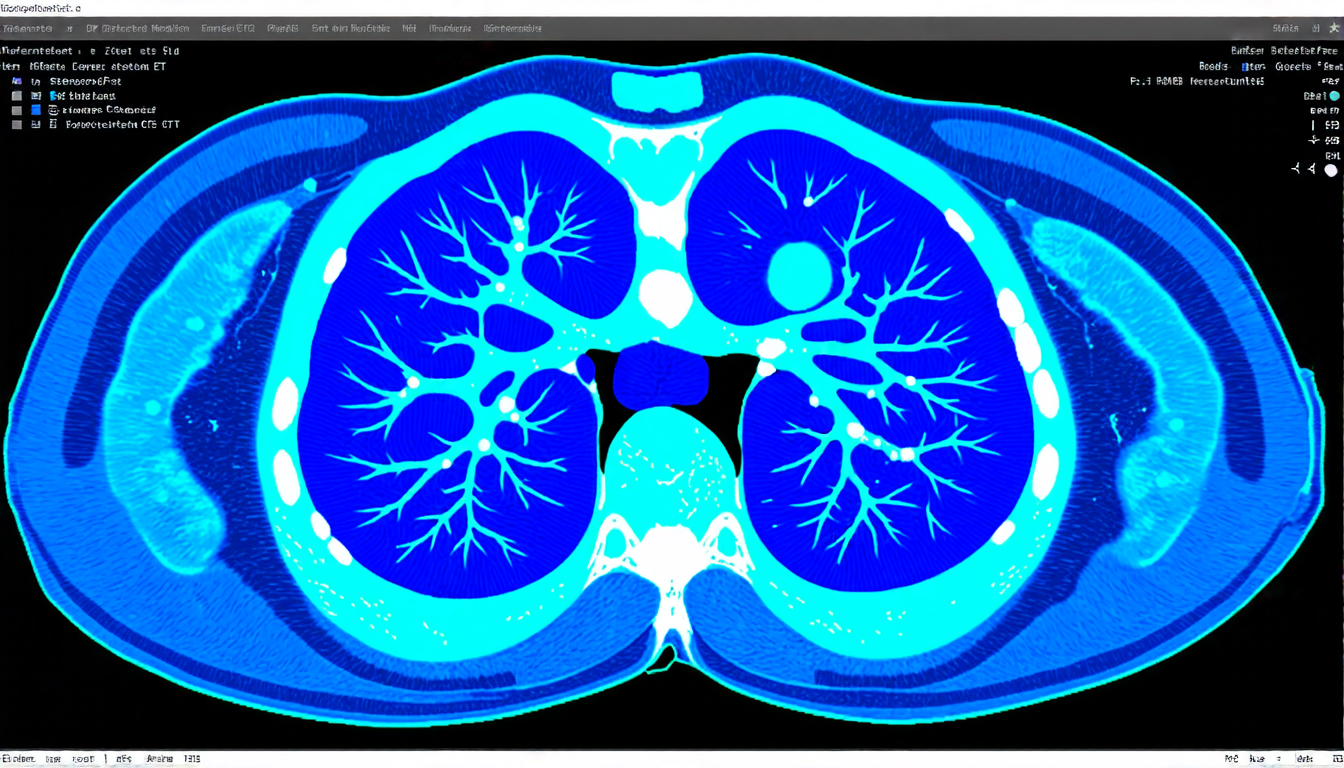
The result is a system that can accurately detect and diagnose a range of abnormalities from CT scans, including pneumonia, atherosclerosis, and lung cancer. The framework’s performance was tested on a dataset of over 15,000 images, with impressive results. On average, BrgSA outperformed existing methods by a significant margin, achieving an AUC of 85.62% compared to the next best approach at 78.14%.
One key advantage of BrgSA is its ability to generalize across different abnormalities and image types. This is due in part to its use of semantic summarization, which enables the system to extract high-level information from reports that can be applied across a wide range of scenarios.
The framework’s cross-modal knowledge interaction module also plays a critical role in its success. By leveraging a cross-modal knowledge bank as a semantic bridge, BrgSA is able to facilitate interaction between visual and textual modalities, narrowing the gap and improving alignment between them.
While BrgSA represents a significant advancement in medical image analysis, it’s not without its limitations. The system still requires large amounts of labeled training data, which can be time-consuming and expensive to obtain. Additionally, there may be situations where the framework struggles to generalize or adapt to new scenarios.
Despite these challenges, the potential implications of BrgSA are significant. By providing a more accurate and precise means of diagnosing diseases from medical images, this technology could help reduce errors and improve patient outcomes. It could also enable doctors to develop more targeted treatment plans, leading to better health outcomes for patients.
As researchers continue to refine and expand upon the framework, it’s likely that we’ll see even greater advancements in the field of medical image analysis.
Cite this article: “Breakthrough in Medical Image Analysis: Bridged Semantic Alignment Framework Shows Promising Results”, The Science Archive, 2025.
Medical Imaging, Artificial Intelligence, Diagnosis, Treatment, Diseases, Semantic Alignment, Language Model, Ct Scans, Abnormalities, Precision Medicine





