

Monday 03 March 2025
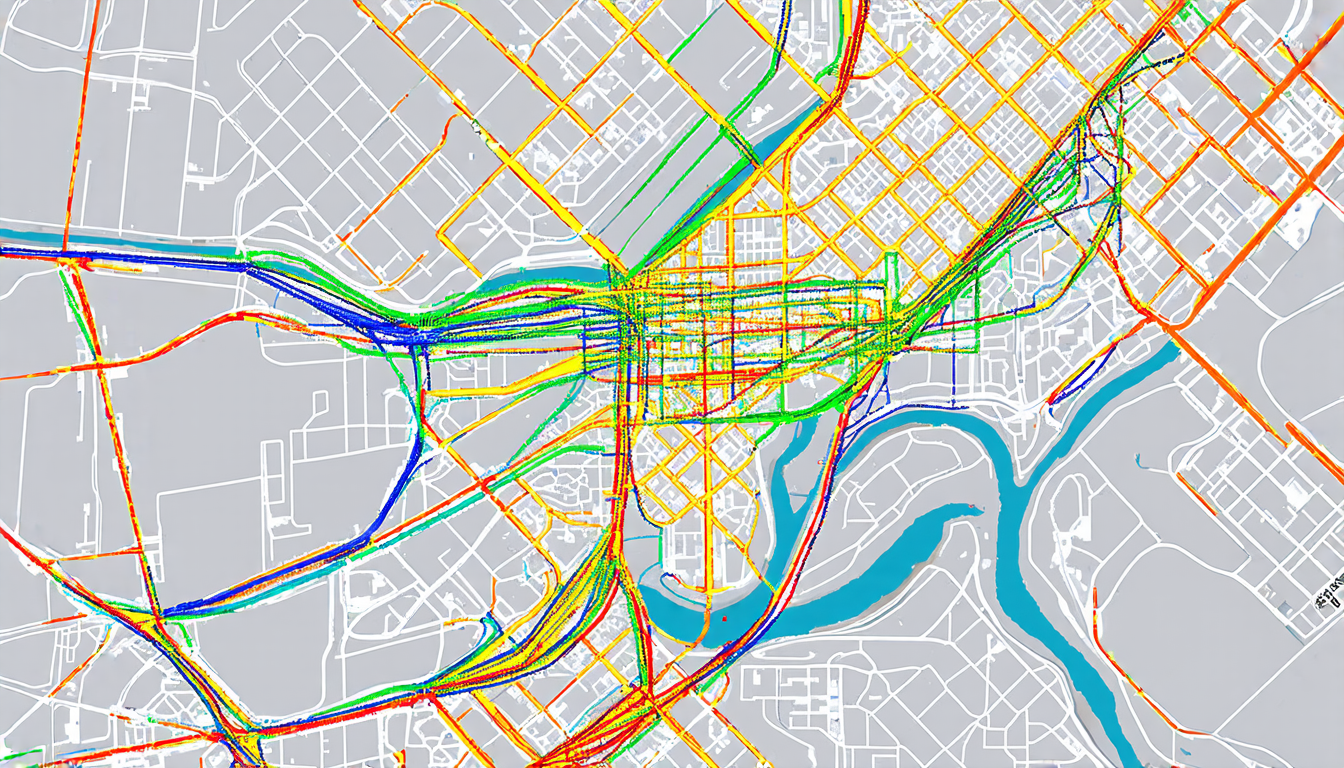
The quest for more accurate mobility predictions has led researchers to develop a novel approach that combines machine learning, social network analysis, and visual analytics. This innovative system, dubbed InclusiViz, is designed to better understand urban segregation patterns by analyzing human mobility data from various sources.
At its core, InclusiViz is an extension of the original Deep Gravity model, which was initially developed for predicting traffic flow. By incorporating additional features and techniques, such as social network analysis and visual analytics, InclusiViz aims to provide a more comprehensive understanding of urban segregation patterns. These patterns can be attributed to various factors, including socioeconomic status, race, and political beliefs.
The system uses a combination of data sources, including SafeGraph’s Places dataset, which provides information on human mobility patterns, as well as other datasets that capture social network interactions and community characteristics. This integrated approach allows InclusiViz to analyze not only the physical movement of individuals but also their social connections and community affiliations.
One key aspect of InclusiViz is its ability to identify and visualize segregation patterns at multiple scales. By examining mobility data across various geographic areas, from small neighborhoods to entire cities, researchers can gain a deeper understanding of how different factors contribute to urban segregation. This information can be used to develop targeted interventions aimed at reducing segregation and promoting more inclusive communities.
In addition to its analytical capabilities, InclusiViz also features a user-friendly interface that enables researchers to explore and visualize the data in real-time. This interactive element allows for a more intuitive understanding of complex mobility patterns and their relationships with urban segregation.
To evaluate the effectiveness of InclusiViz, researchers conducted experiments using datasets from two cities: Houston and Boston. The results showed that the system outperformed traditional models in predicting mobility flows and identifying segregation patterns. Specifically, InclusiViz demonstrated better performance in regions with moderate population densities, where traditional models struggled to accurately capture mobility patterns.
In further testing, InclusiViz was applied to datasets grouped by population density. The results indicated that the system performed comparably well across different population density ranges, suggesting its potential for widespread application.
The development of InclusiViz represents a significant step forward in understanding and addressing urban segregation. By combining machine learning, social network analysis, and visual analytics, this innovative system provides researchers with a powerful tool for analyzing complex mobility patterns and identifying targeted interventions to promote more inclusive communities.
Cite this article: “InclusiViz: A Novel Approach to Understanding Urban Segregation Patterns”, The Science Archive, 2025.
Machine Learning, Social Network Analysis, Visual Analytics, Urban Segregation, Human Mobility Data, Deep Gravity Model, Safegraph’S Places Dataset, Community Characteristics, Population Density, Inclusive Communities





