

Monday 03 March 2025
The humble smartphone, once relegated to mere communication and entertainment purposes, has evolved into a formidable tool for scientific inquiry. Researchers have been exploiting its various sensors to create innovative experiments that can be conducted in the comfort of one’s own home or classroom. The latest development in this space is the use of smartphones to study the magnetic field created by an oscillating magnet.
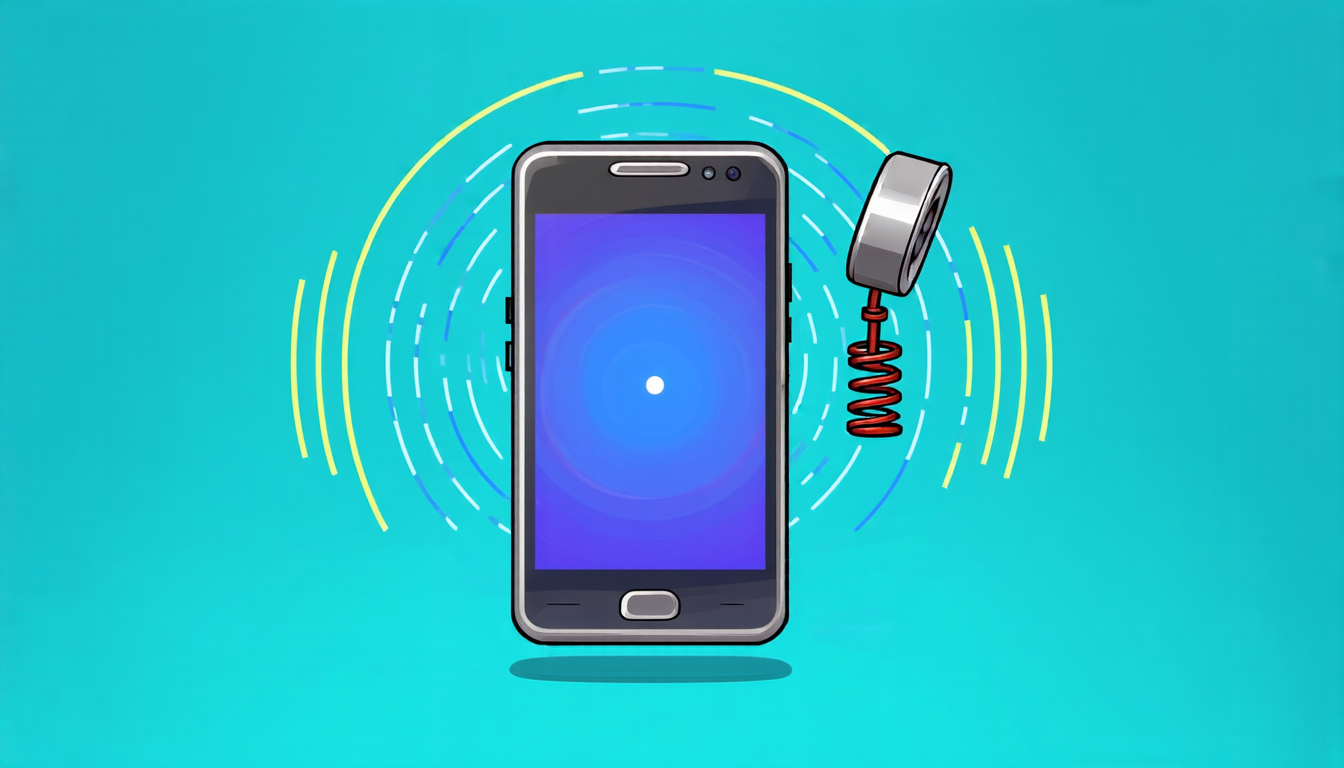
The experiment involves attaching a small permanent magnet to a spring and allowing it to oscillate, creating a dynamic magnetic field that can be measured using the smartphone’s built-in magnetometer sensor. By analyzing the data collected from the sensor, researchers can gain insights into the behavior of the magnetic field as it changes in response to the oscillations.
One of the key findings is that the magnetic field created by the oscillating magnet exhibits a cubic dependence on distance, meaning that the strength of the field decreases rapidly with increasing distance from the source. This was demonstrated using a simple Taylor series expansion of the magnetic field function, which showed that only two terms were necessary to accurately model the behavior of the field in the far-field regime.
However, when the magnet is brought closer to the sensor, the situation becomes more complex, and higher-order terms are required to capture the nuances of the magnetic field. This was achieved by using a smartphone app called Phyphox, which allowed researchers to collect data and perform calculations on the fly.
The implications of this study are significant, as it paves the way for the development of low-cost, portable experiments that can be used in educational settings or even at home. The use of smartphones as scientific tools has the potential to democratize access to science education, making it more accessible to a wider range of people.
Furthermore, this experiment highlights the importance of interdisciplinary collaboration between physicists and mathematicians. By combining theoretical knowledge with practical experimentation, researchers can gain a deeper understanding of complex phenomena and develop new technologies that can be applied in various fields.
In addition to its educational value, this study also has potential applications in industries such as manufacturing and materials science. For example, the ability to measure magnetic fields with high accuracy could be used to optimize the design of magnetic sensors or to develop new materials with specific magnetic properties.
Overall, the use of smartphones to study the magnetic field created by an oscillating magnet is a fascinating example of how technology can be leveraged to advance our understanding of the world around us.
Cite this article: “Smartphones Unleash New Frontiers in Scientific Inquiry”, The Science Archive, 2025.
Smartphones, Scientific Inquiry, Magnetic Field, Oscillating Magnet, Magnetometer Sensor, Taylor Series Expansion, Phyphox App, Educational Settings, Interdisciplinary Collaboration, Materials Science.





