

Monday 03 March 2025
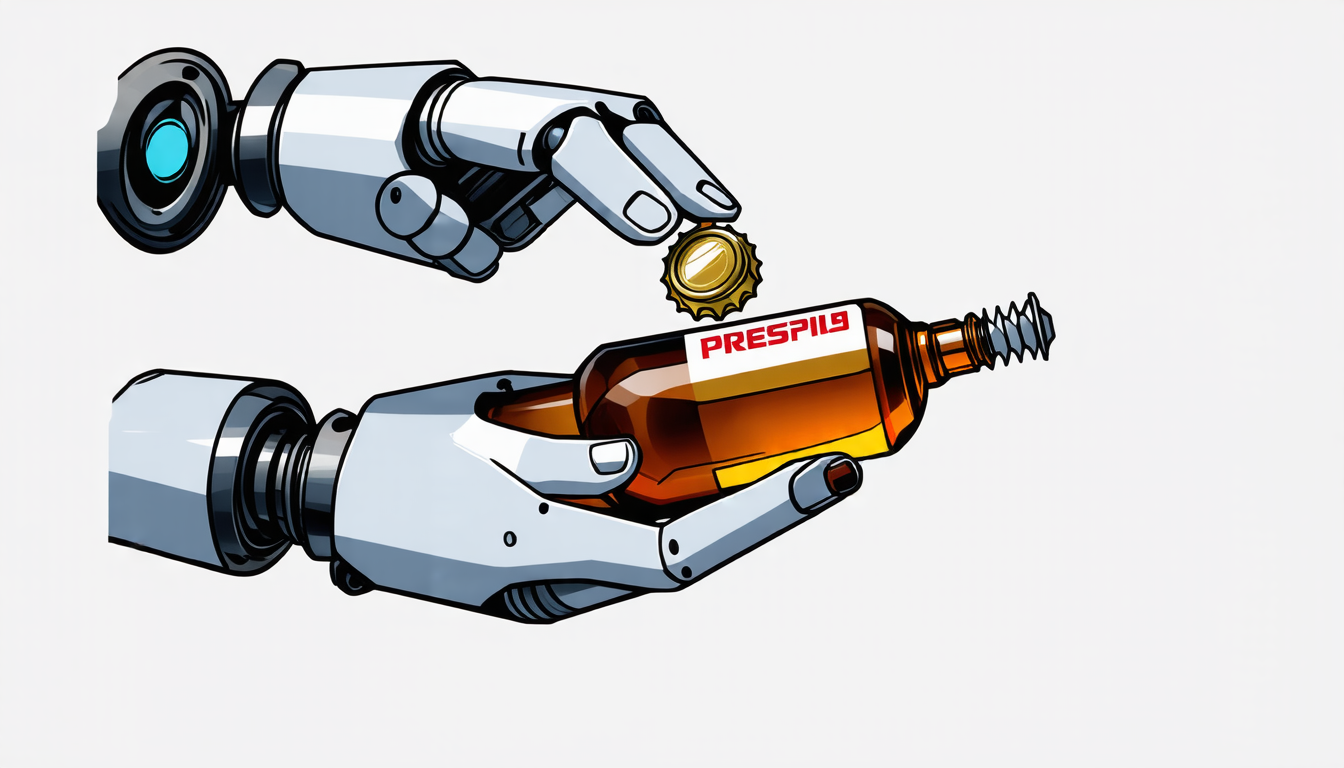
Scientists have made a significant breakthrough in developing robots that can perform dexterous tasks, such as turning bottle caps and unscrewing jars, with human-like precision. This achievement is a major step forward in the field of robotics, as it enables machines to mimic the complex movements of the human hand.
The researchers created a pre-training framework called VTAO-BiManip, which combines visual, tactile, and action data from both hands to learn how to perform manipulation tasks. The model is trained using human demonstrations, allowing it to learn from observations rather than through trial and error.
One of the key innovations of this study is the use of multimodal fusion pre-training, where the model learns to process and integrate information from different sensory inputs. This allows it to develop a more comprehensive understanding of the environment and the objects within it.
The researchers tested their framework on a variety of tasks, including bottle cap turning and jar unscrewing. They found that the robot was able to successfully complete these tasks with high accuracy, even when the objects were moved or rotated during the process.
This achievement has significant implications for robotics and artificial intelligence. It could enable robots to perform complex tasks in real-world environments, such as assembly lines, hospitals, and homes. Additionally, it could lead to the development of more advanced prosthetic limbs that can mimic the natural movements of human hands.
The study also highlights the importance of multimodal fusion pre-training in robotics. By combining visual, tactile, and action data, the model is able to learn a more comprehensive understanding of the environment and objects within it. This approach could be applied to a wide range of robotic tasks, from assembly line work to search and rescue operations.
In order to improve the performance of their framework, the researchers plan to explore new methods for integrating multimodal sensory data. They also aim to expand the scope of their research to include more complex tasks, such as cooking and surgery.
Overall, this study represents a significant milestone in the development of robots that can perform dexterous tasks with human-like precision. The use of multimodal fusion pre-training has the potential to revolutionize the field of robotics, enabling machines to perform a wide range of complex tasks in real-world environments.
Cite this article: “Advances in Robotics: Developing Dexterous Robots with Human-Like Precision”, The Science Archive, 2025.
Robots, Dexterous, Human-Like, Precision, Manipulation, Robotics, Artificial Intelligence, Multimodal Fusion, Pre-Training, Robotic Tasks





