

Monday 03 March 2025
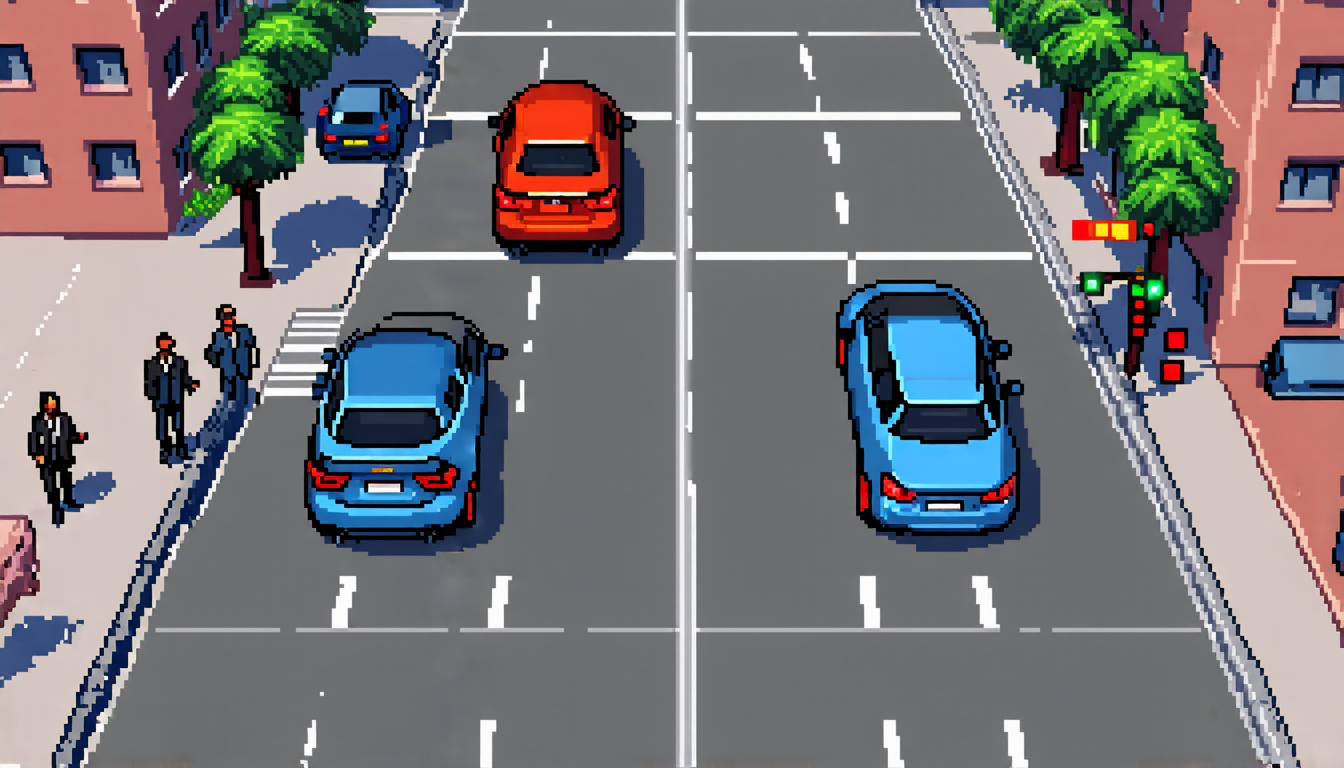
Scientists have long been working on developing autonomous vehicles that can drive safely and efficiently, but one major hurdle has remained: predicting where other cars will go next. This is a crucial step in avoiding accidents and maintaining smooth traffic flow. Now, researchers from Germany have made a significant breakthrough in this area by creating a new type of artificial intelligence (AI) model that can accurately predict the movements of multiple vehicles at once.
The key innovation behind this achievement is the integration of two different AI approaches: deep learning and kinematic motion models. Deep learning involves training a neural network on large amounts of data to recognize patterns and make predictions, while kinematic motion models use mathematical equations to simulate the physical behavior of moving objects.
In this study, the researchers combined these two approaches by using deep learning to predict the actions of individual vehicles, such as acceleration and steering, and then using kinematic motion models to integrate those actions into a single, cohesive prediction of how all the vehicles will move. This allowed them to create a more realistic and accurate picture of what might happen on the road.
To test their model, the researchers used data from a real-world driving scenario, collected by sensors mounted on a vehicle as it navigated through traffic. They then compared their predictions with the actual movements of the surrounding vehicles, and found that their model was able to accurately predict where those vehicles would go next.
This achievement is significant because it could enable autonomous vehicles to better respond to complex traffic situations, such as merging lanes or navigating intersections. By being able to anticipate the actions of other cars, autonomous vehicles can make more informed decisions about when to accelerate, brake, or turn, reducing the risk of accidents and improving overall traffic flow.
The researchers are optimistic that their model could be used in a variety of applications, from self-driving cars to intelligent transportation systems. They believe that by combining deep learning with kinematic motion models, they can create more accurate and realistic predictions of vehicle movements, which could ultimately lead to safer and more efficient transportation systems.
In the future, the researchers plan to continue refining their model by incorporating additional data sources and testing it in a variety of different scenarios. They also hope to collaborate with other experts in the field to explore new applications for this technology.
The development of this AI model is an important step towards creating autonomous vehicles that are not only capable of driving themselves, but also able to safely interact with other cars on the road.
Cite this article: “AI Model Predicts Vehicle Movements with High Accuracy”, The Science Archive, 2025.
Artificial Intelligence, Autonomous Vehicles, Deep Learning, Kinematic Motion Models, Traffic Prediction, Vehicle Movement, Road Safety, Intelligent Transportation Systems, Machine Learning, Self-Driving Cars





