

Monday 03 March 2025
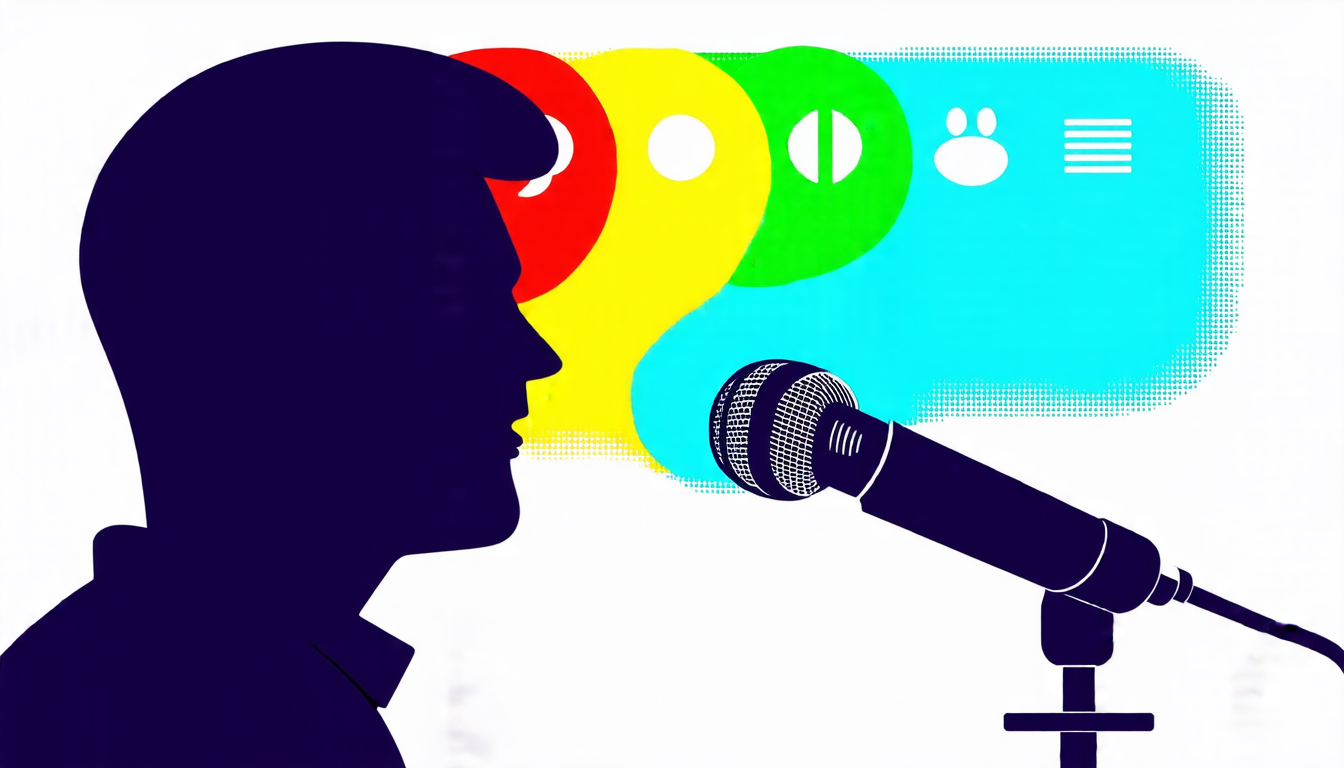
Have you ever tried to listen in on a conversation between two people, only to find it difficult to follow because of background noise or multiple speakers? Speech segmentation, the process of breaking down spoken language into individual sound units, is crucial for understanding and analyzing speech. However, traditional approaches often focus on spectral changes in the input signal, such as phone segmentation, which can be limited.
Recently, researchers have been exploring a new approach to speech segmentation using speech language models (SLMs). These models represent speech and audio signals as discrete acoustic units, allowing them to be used for applications that traditional methods are not well-equipped to handle. For example, SLMs can capture higher levels of acoustic-semantic style in speech signals, which may also be unique properties of speech.
The researchers developed a simple and efficient unsupervised method for segmenting spoken utterances into chunks with differing acoustic-semantic styles. This approach uses a combination of spectral and prosodic features to identify changes in the signal that are not easily captured by traditional methods. The model is trained on a dataset of audio files, each consisting of a speaker’s voice with varying levels of emotional expression.
The results show that the proposed method outperforms traditional approaches in terms of boundary detection, segment purity, and over-segmentation. The model is able to accurately identify changes in the signal, even when multiple speakers are present or background noise is significant.
One of the key advantages of this approach is its ability to handle multiple acoustic-semantic style changes. Unlike traditional methods that focus on a single style change, such as emotion diarization, the proposed method can detect and segment speech based on different styles, including emotional expression and speaker identity.
The researchers also explored the effect of various parameters on the model’s performance, including the number of segments, span selector, and threshold. They found that increasing the number of segments improved boundary detection but decreased purity, while changing the span selector had a significant impact on performance.
The potential applications of this approach are vast. For example, it could be used to improve automatic speech recognition systems or to analyze spoken language for emotional intelligence. It could also be used in speaker diarization, where identifying individual speakers is crucial.
Overall, this new approach to speech segmentation using SLMs offers a promising solution for breaking down spoken language into meaningful units. By capturing higher levels of acoustic-semantic style in speech signals, it has the potential to improve our understanding and analysis of human communication.
Cite this article: “Speech Segmentation using Speech Language Models: A New Approach to Understanding Human Communication”, The Science Archive, 2025.
Here Are The Keywords: Speech Segmentation, Speech Language Models, Acoustic Units, Unsupervised Method, Boundary Detection, Segment Purity, Over-Segmentation, Emotional Expression, Speaker Identity, Automatic Speech Recognition





