

Monday 03 March 2025
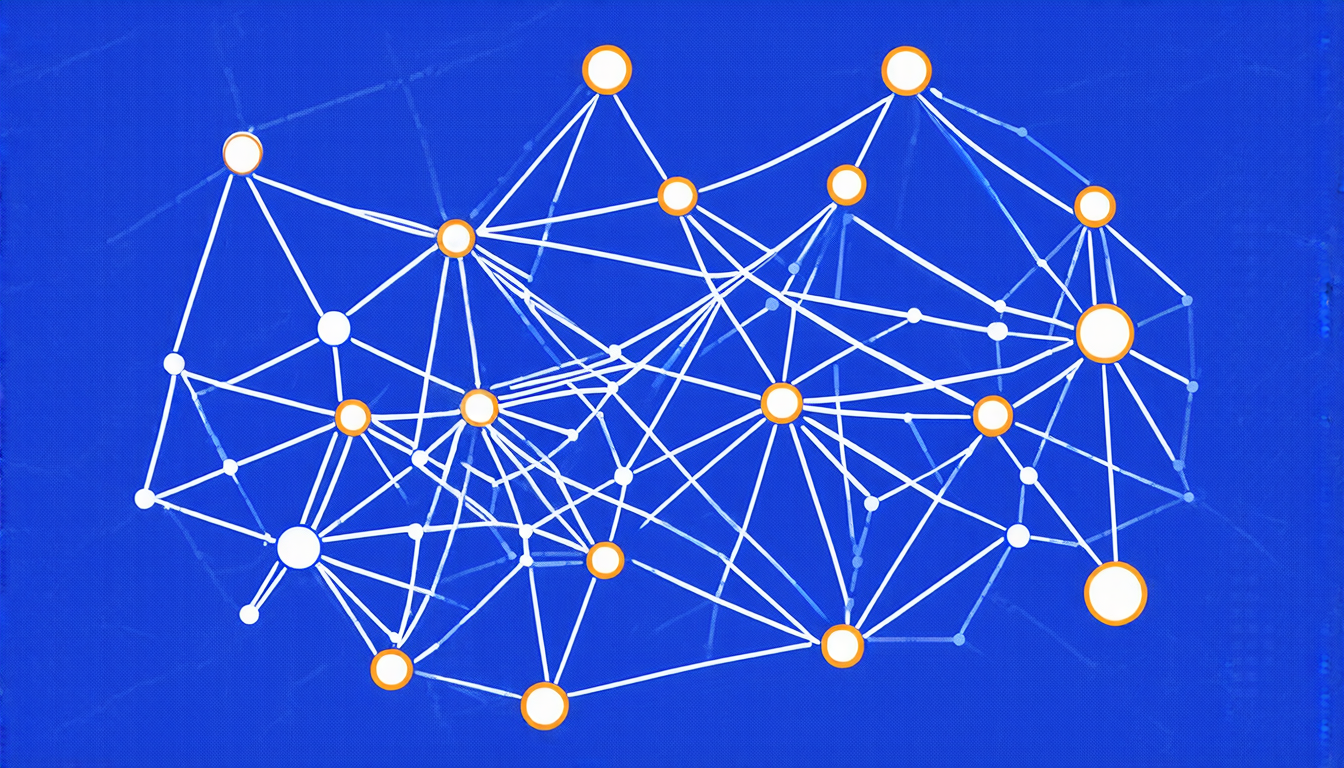
Mathematicians have been on a quest to understand the intricacies of graphs, which are visual representations of relationships between objects or nodes. Graph theory has far-reaching applications in fields such as computer science, physics, and engineering, but it’s also fascinating in its own right.
Researchers have made significant progress in recent years, particularly in the area of eigenvalues – a measure of how much a graph is affected by its structure. The smallest and largest eigenvalues are particularly important, as they can reveal information about the graph’s connectivity and robustness.
A team of mathematicians has now taken a major step forward in understanding these eigenvalues. They’ve developed new bounds for the smallest and largest eigenvalues of a matrix called Aα, which combines elements of the adjacency matrix and degree diagonal matrix of a graph. This matrix is crucial for analyzing graphs, as it captures their structure and properties.
The researchers’ work builds on previous studies that focused on individual aspects of Aα matrices. By combining these insights, they’ve created a comprehensive framework for understanding the eigenvalues of Aα matrices. Their findings have significant implications for various fields, including computer science, physics, and engineering.
One of the key benefits of their approach is its ability to provide upper and lower bounds for the smallest and largest eigenvalues. These bounds can be used to analyze graphs and make predictions about their behavior in different scenarios. For example, understanding the robustness of a network – such as a social media platform or a power grid – relies on knowing how it responds to changes in its structure.
The team’s work also has implications for the study of graph theory itself. By developing new bounds and insights into Aα matrices, researchers can gain a deeper understanding of the fundamental properties of graphs and their eigenvalues.
The study’s findings are not only important for theoretical mathematicians but also have practical applications in various fields. For instance, computer scientists can use these insights to develop more efficient algorithms for analyzing and processing graph data. Physicists may apply this knowledge to better understand complex systems, such as networks of interacting particles or molecules.
In summary, the researchers’ work has shed new light on the eigenvalues of Aα matrices, providing a comprehensive framework for understanding the structure and properties of graphs. Their findings have significant implications for various fields, from computer science to physics and engineering, and will likely inspire further research into the fascinating world of graph theory.
Cite this article: “New Bounds on Eigenvalues Unlock Graph Theory Secrets”, The Science Archive, 2025.
Graph Theory, Eigenvalues, Matrix Analysis, Computer Science, Physics, Engineering, Network Analysis, Robustness, Connectivity, Algebraic Graph Theory





