

Monday 03 March 2025
The quest for a deeper understanding of how species spread and adapt in different environments has long fascinated scientists. A new study published recently has shed light on this complex phenomenon, revealing that even seemingly small changes in an environment’s spatial structure can have a profound impact on the way species disperse.
Researchers have long known that the movement patterns of individual organisms play a crucial role in shaping the distribution and abundance of species within ecosystems. However, until now, the majority of studies have focused on the effects of environmental factors such as temperature, humidity, and topography on these movements. The new study, however, takes a different approach by examining the impact of spatial structure on movement patterns.
The researchers used mathematical models to simulate the spread of species in environments with varying levels of spatial structure. They found that even small changes in the spatial arrangement of environmental features such as habitat patches, corridors, and barriers can significantly alter the way species disperse.
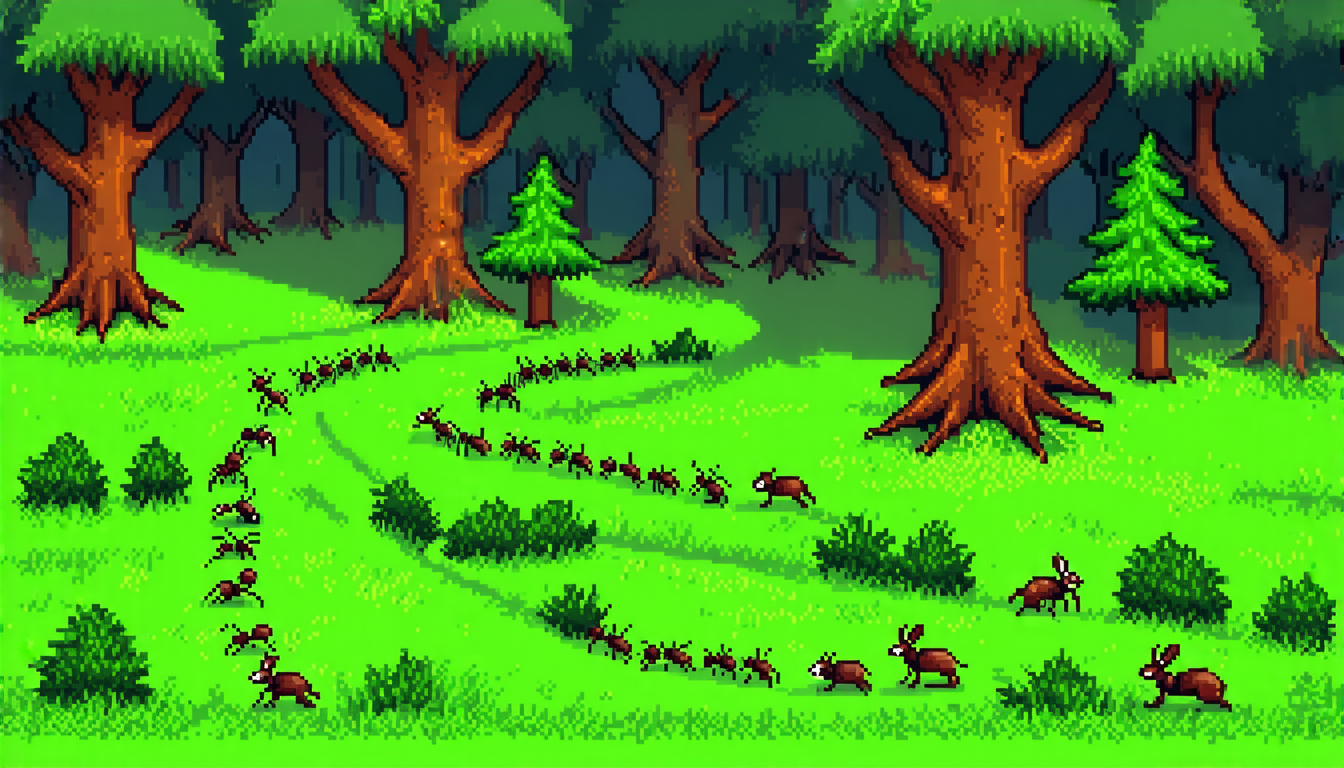
For example, they discovered that when habitats are arranged in a periodic pattern, the movement patterns of individual organisms become more predictable and focused, leading to increased spreading rates. Conversely, when habitats are randomly distributed, movement patterns become more erratic and dispersal rates decrease.
The study also found that the directionality of movement patterns plays a critical role in shaping the distribution of species. When movement is primarily directional, species tend to spread faster and farther than they would if movement were random or non-directional.
These findings have significant implications for our understanding of ecosystem dynamics and conservation efforts. By recognizing the importance of spatial structure in shaping movement patterns, scientists can develop more effective strategies for managing ecosystems and conserving biodiversity.
The study’s authors suggest that their research could be applied to a wide range of ecosystems, from forests to oceans, and that it may even have implications for human societies. For example, understanding how spatial structure influences the spread of invasive species could inform efforts to prevent or mitigate their impact.
Overall, this research represents an important step forward in our understanding of the complex interactions between organisms and their environments. By shedding light on the role of spatial structure in shaping movement patterns, scientists can gain a deeper appreciation for the intricate web of relationships that underlies ecosystem functioning and develop more effective strategies for conserving biodiversity.
Cite this article: “Spatial Structure Shapes Species Spread and Adaptation”, The Science Archive, 2025.
Species Dispersal, Spatial Structure, Movement Patterns, Ecosystem Dynamics, Conservation Efforts, Habitat Patches, Corridors, Barriers, Biodiversity, Environmental Factors





