

Monday 03 March 2025
Regularized regression, a statistical technique used to model complex relationships between variables, has been found to be sensitive to the way in which data is normalized before analysis. Normalization involves scaling and shifting the data to ensure that all features are on the same scale, but researchers have discovered that different normalization methods can significantly impact the accuracy of the models.
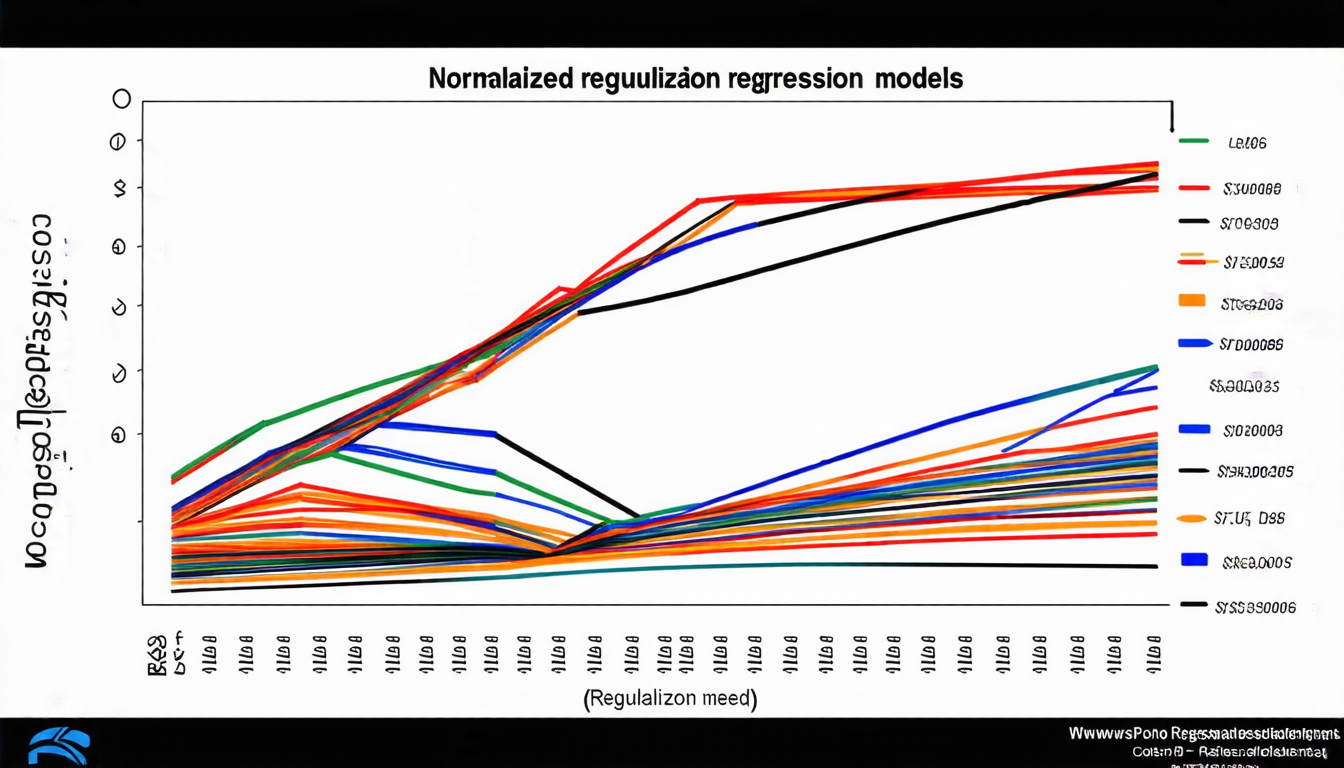
In a recent study, researchers explored how normalization affects regularized regression models, such as lasso and ridge regression, which are commonly used in fields like economics and biology. They found that the choice of normalization method can influence not only the size of the model’s coefficients but also the features that are selected as important by the model.
The researchers used simulated data to test how different normalization methods affected the performance of regularized regression models. They discovered that when the data is highly imbalanced, with some features having a much higher frequency than others, the choice of normalization method can have a significant impact on the accuracy of the model. In particular, they found that using a normalization method that takes into account the class imbalance in the data can improve the performance of the model.
The study’s findings have important implications for researchers who use regularized regression models to analyze complex data sets. By selecting the appropriate normalization method, they may be able to improve the accuracy and interpretability of their results. For example, in medical research, where patient outcomes are often imbalanced due to differences in demographics or health status, using a normalization method that accounts for class imbalance could help researchers identify more accurate risk factors for disease.
The study’s authors also explored how different regularization parameters affect the performance of regularized regression models. They found that the choice of regularization parameter can influence not only the size of the model’s coefficients but also the features that are selected as important by the model.
Overall, the study highlights the importance of careful consideration when choosing normalization and regularization methods for regularized regression models. By taking into account the specifics of their data and research question, researchers may be able to improve the accuracy and interpretability of their results.
The study’s findings have significant implications for a wide range of fields, from economics and biology to medicine and social sciences. As data sets continue to grow in size and complexity, it is increasingly important that researchers use statistical techniques that are robust and reliable. By choosing the right normalization and regularization methods, researchers can ensure that their results are accurate and meaningful.
Cite this article: “Normalization Techniques Impact Regularized Regression Models Accuracy”, The Science Archive, 2025.
Regularized Regression, Normalization, Data Scaling, Shifting, Lasso, Ridge Regression, Class Imbalance, Regularization Parameters, Statistical Techniques, Accuracy, Interpretability





