

Monday 03 March 2025
Scientists have made a significant breakthrough in understanding how tiny molecules can change shape and function in response to light, a phenomenon that could lead to the development of new materials and technologies.
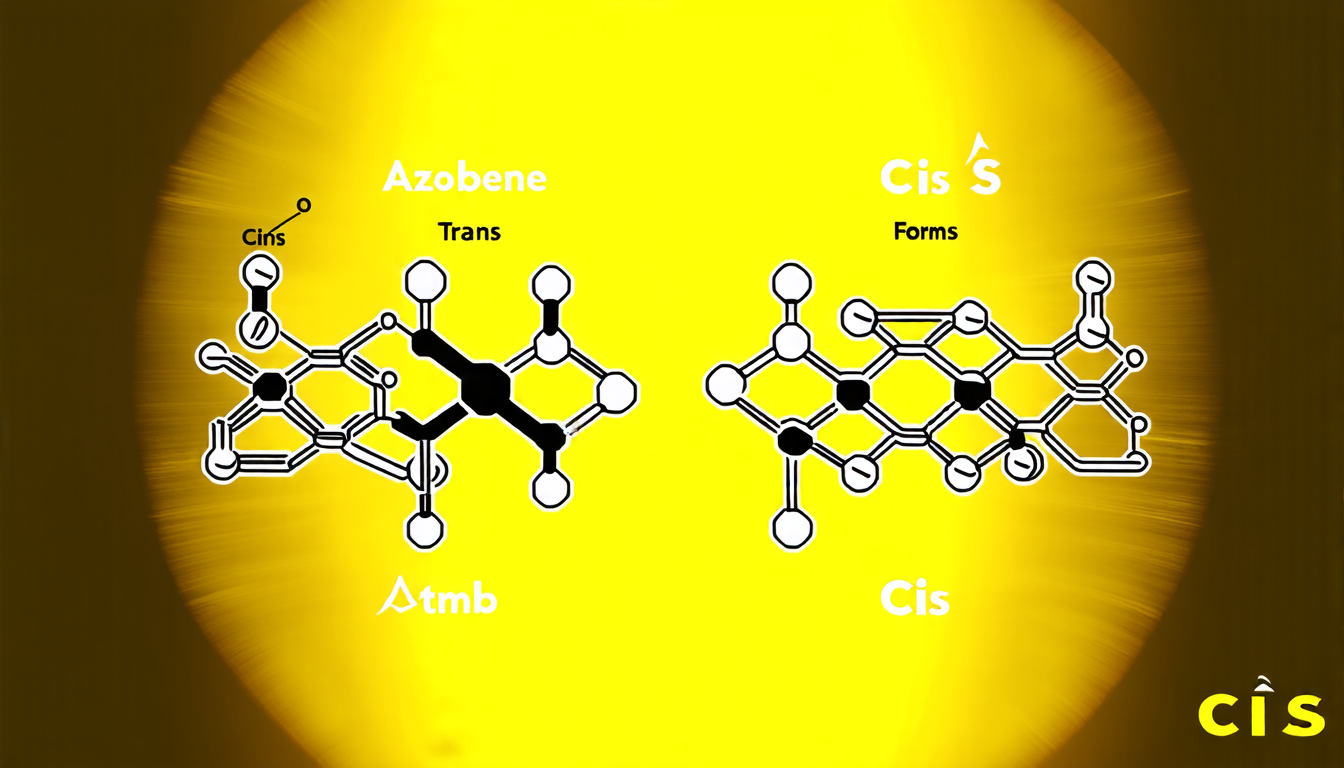
The study focused on azobenzene, a type of molecule that can switch between two different forms – trans and cis – when exposed to light. This property has potential applications in fields such as electronics, medicine, and optics.
Researchers used a technique called scanning tunneling microscopy (STM) to observe the behavior of individual azobenzene molecules on a gold surface. STM involves using a sharp probe to scan the surface of a material at the atomic level, allowing scientists to visualize the arrangement of atoms and molecules.
The team found that when they shone light on the azobenzene molecules, they could induce a rapid switching between the trans and cis forms. This process occurred in just a few seconds, which is incredibly fast for a chemical reaction.
One of the most fascinating aspects of this study was the way the researchers were able to control the switching process using an electric field. By applying a voltage bias to the STM probe, they could manipulate the molecule’s shape and function in real-time.
This ability to control the molecular structure has significant implications for the development of new materials and technologies. For example, it could be used to create switchable surfaces that can change their properties in response to light or other stimuli. This could have applications in fields such as medicine, where a surface that changes color or texture in response to certain conditions could be used to detect diseases.
The study also sheds light on the fundamental physics of molecular switching, providing new insights into how these processes occur at the atomic level. This knowledge could be used to design and develop new materials with specific properties, such as superconductors or nanomaterials.
Overall, this research demonstrates the potential for azobenzene molecules to play a key role in the development of new technologies and materials. The ability to control their shape and function using light and electric fields opens up exciting possibilities for applications in fields ranging from electronics to medicine.
Cite this article: “Unlocking the Secrets of Shape-Shifting Molecules”, The Science Archive, 2025.
Molecules, Azobenzene, Light, Shape, Function, Switching, Materials, Technology, Scanning Tunneling Microscopy, Stm





