

Monday 03 March 2025
In the world of aircraft design, uncertainty is a constant companion. Small changes in wind patterns, air density, and structural integrity can have significant effects on an airplane’s performance and safety. To better understand and mitigate these uncertainties, researchers have developed advanced methods for modeling and simulating complex aerospace systems.
One such method is known as uncertainty quantification (UQ), which involves using statistical techniques to predict the range of possible outcomes in a system. By accounting for the various factors that can affect an aircraft’s behavior, UQ allows engineers to design more robust and reliable machines.
Recently, a team of researchers from the University of California, San Diego, has made significant strides in this field by developing a new UQ method specifically designed for use in aerospace engineering. The approach combines advanced mathematical techniques with high-performance computing to rapidly evaluate complex systems under varying conditions.
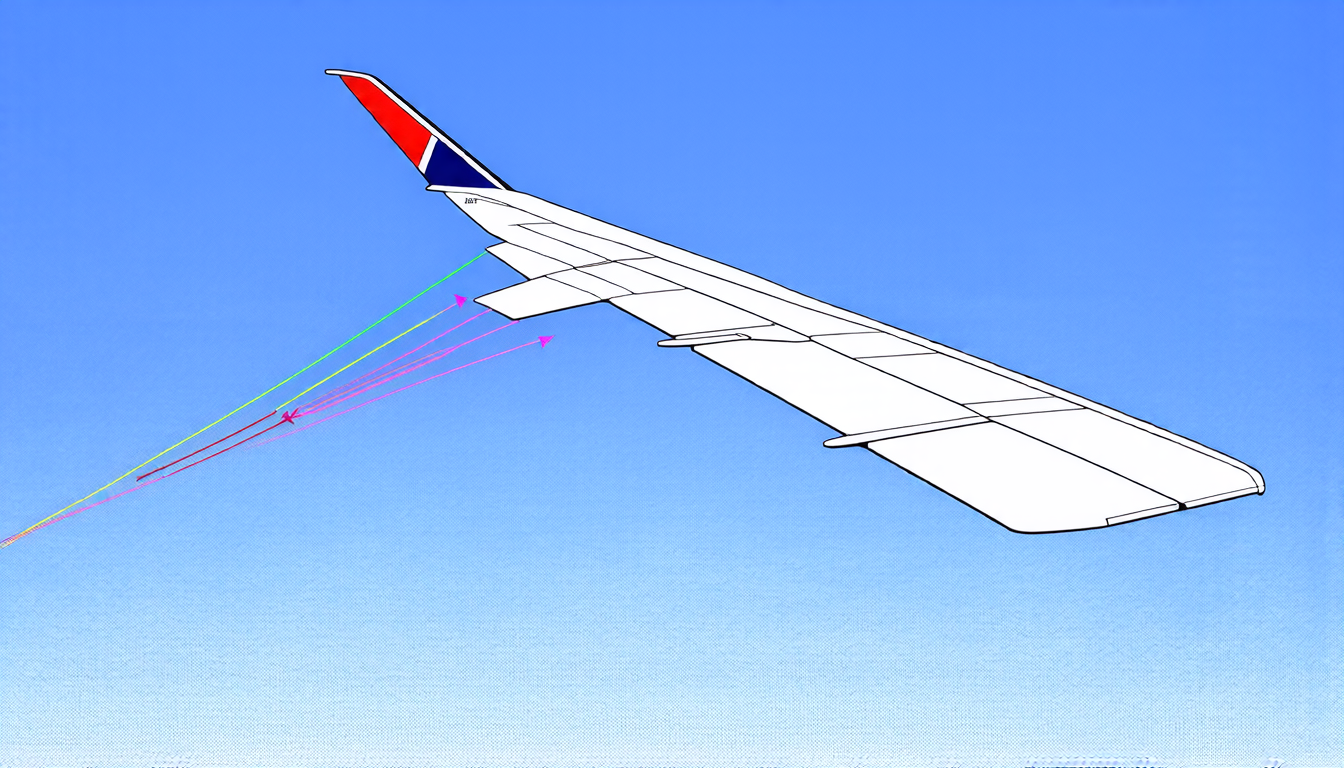
The researchers used their method to study the response of an eVTOL (electric vertical takeoff and landing) aircraft wing to gust loads, which are sudden changes in air pressure that can occur during flight. By modeling the wing’s behavior using a combination of aerodynamic simulations and structural analysis, they were able to estimate the range of possible outcomes under different conditions.
The results showed that even small variations in wind patterns and air density could have significant effects on the wing’s performance. For example, a change of just 1 mph in wind speed could result in a 10% increase or decrease in the wing’s structural response.
This level of detail is crucial for designing safe and efficient aircraft. By understanding how small changes can affect an airplane’s behavior, engineers can develop more robust designs that are better equipped to handle unexpected challenges during flight.
The researchers’ method has several advantages over traditional UQ approaches. For one, it allows for the rapid evaluation of complex systems under varying conditions, which is essential for aerospace engineering where time and cost are critical factors. Additionally, the approach is highly scalable, meaning it can be applied to large-scale systems without becoming unwieldy.
The implications of this research are significant. By developing more robust and reliable aircraft designs, engineers can improve safety, reduce costs, and increase efficiency. This could have a major impact on the aerospace industry as a whole, enabling companies to develop more advanced and capable machines that can meet the demands of an increasingly complex world.
In short, the researchers’ UQ method represents a significant step forward in the field of aerospace engineering, offering a powerful tool for designing safer, more efficient aircraft.
Cite this article: “Uncertainty Quantification: A New Method for Safer and More Efficient Aircraft Design”, The Science Archive, 2025.
Aerospace Engineering, Uncertainty Quantification, Evtol, Gust Loads, Wind Patterns, Air Density, Structural Integrity, Aerodynamic Simulations, High-Performance Computing, Robust Design





