

Monday 03 March 2025
Researchers have made a significant discovery that sheds new light on the complex interactions between the Earth’s magnetic field and the ionosphere, the layer of the atmosphere where solar winds interact with our planet.
Using advanced radar technology, scientists have identified a previously unknown connection between electromagnetic waves in the magnetosphere and the appearance of meter-scale plasma turbulence in the lower ionosphere. This finding has major implications for our understanding of how energy from the sun affects our planet’s magnetic field and ultimately influences weather patterns on Earth.
The research team used data from radar observations of the ionospheric E-region, a layer about 100 kilometers above the Earth’s surface, and satellite observations from the magnetosphere to make their discovery. They found that when electromagnetic waves in the magnetosphere are particularly active, they scatter electrons in the lower ionosphere, causing them to precipitate deep into the atmosphere.
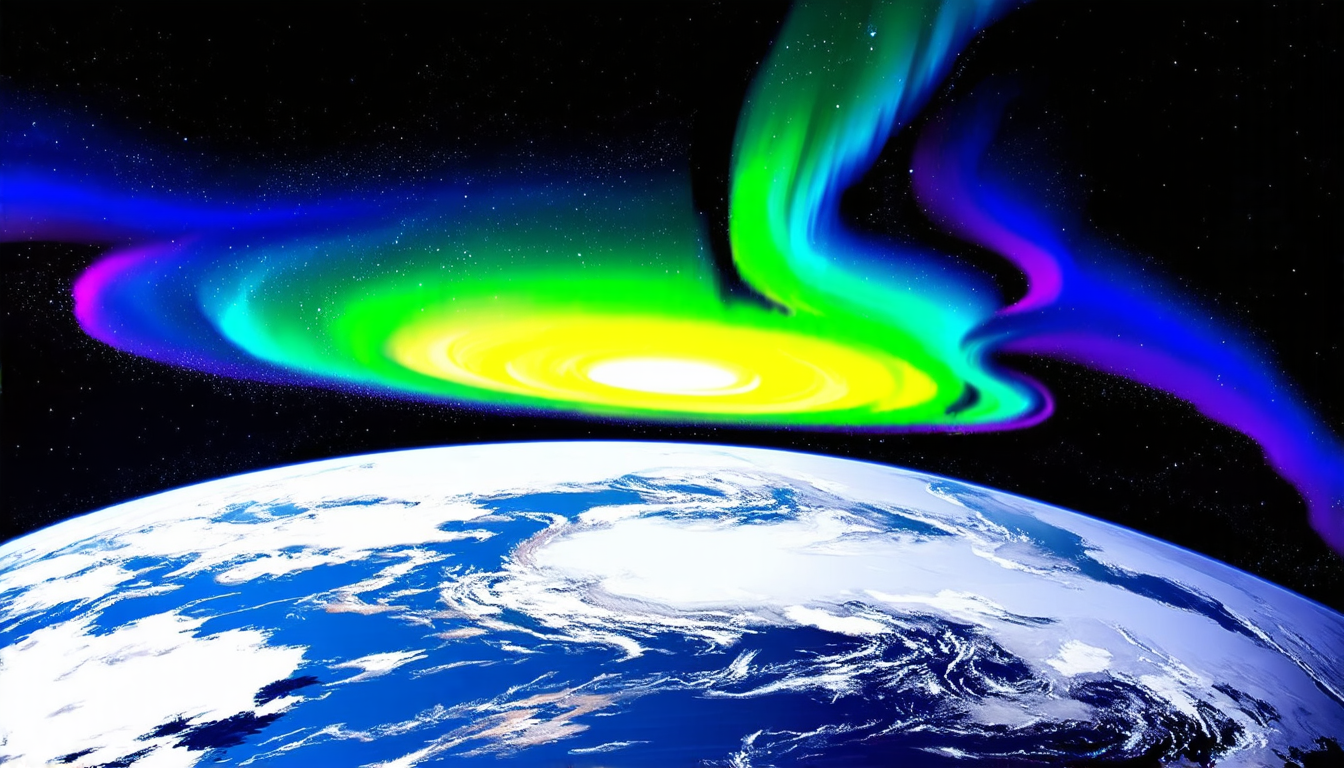
This phenomenon is known as radar aurora, and it’s been observed before, but scientists have never fully understood what triggers it. The new study shows that electromagnetic waves in the magnetosphere play a crucial role in initiating this process.
The researchers used advanced algorithms to analyze the data and found that the radar aurora was closely linked to the presence of electrostatic cyclotron harmonic waves in the magnetosphere. These waves are thought to be generated by the interaction between solar winds and the Earth’s magnetic field.
When these waves interact with the ionosphere, they cause electrons to become excited and move towards the lower atmosphere, where they can influence weather patterns on Earth. The radar aurora is essentially a visible manifestation of this process, providing scientists with valuable insights into how energy from the sun affects our planet’s magnetic field and ultimately influences weather patterns.
The study also highlights the importance of turbulence in the ionosphere, which plays a crucial role in shaping the path that energetic particles take as they interact with the Earth’s magnetic field. Turbulence can amplify or dampen these interactions, affecting the distribution of energy throughout the magnetosphere and ionosphere.
This research has significant implications for our understanding of space weather and its impact on our planet’s magnetic field and atmosphere. It also highlights the importance of continued monitoring of space weather events to better understand how they affect our planet and potentially disrupt critical infrastructure such as power grids and communication systems.
The study provides a new perspective on the complex interactions between the Earth’s magnetic field, the ionosphere, and solar winds.
Cite this article: “Unlocking the Secrets of Solar Wind-Ionosphere Interactions”, The Science Archive, 2025.
Magnetic Field, Ionosphere, Solar Winds, Electromagnetic Waves, Radar Aurora, Magnetosphere, Turbulence, Space Weather, Earth’S Atmosphere, Weather Patterns





