

Monday 03 March 2025
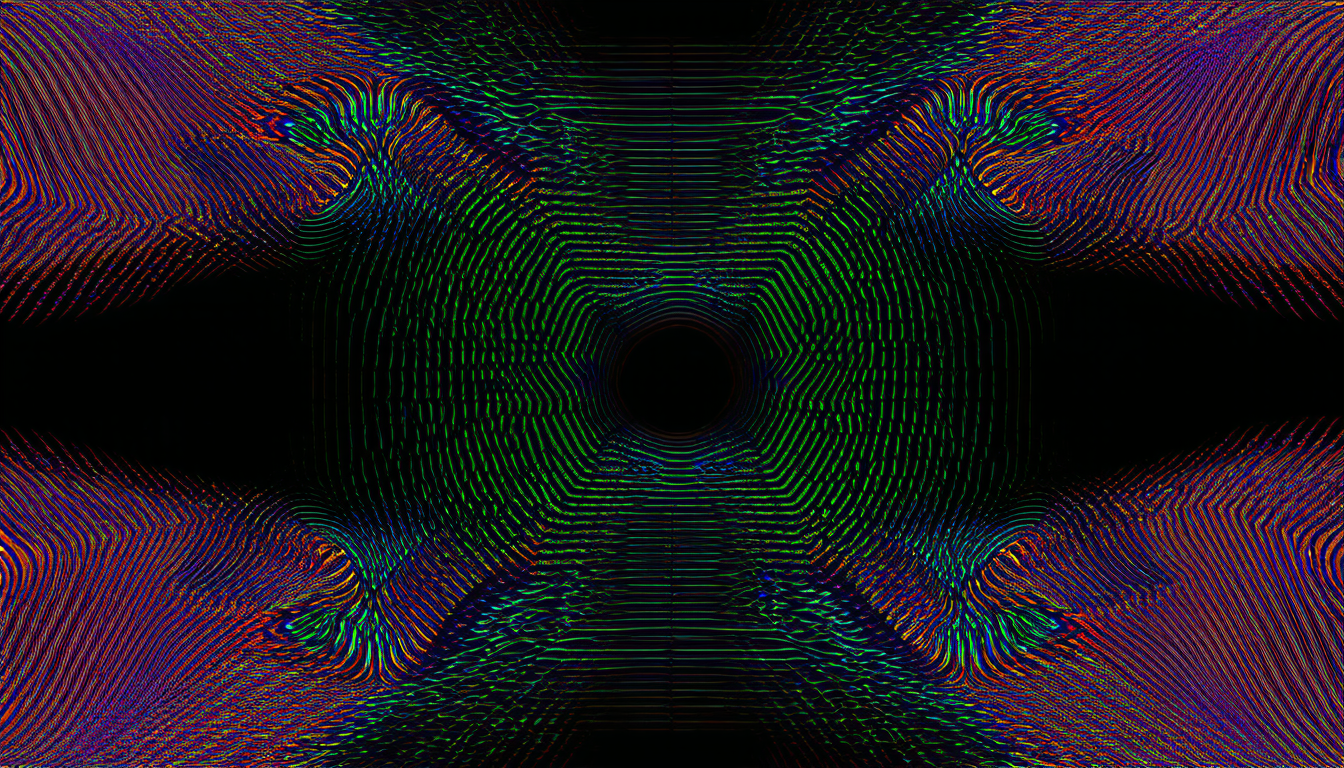
For decades, mathematicians have been fascinated by the intricate patterns that emerge when simple rules are applied repeatedly. These self-similar structures can be found in everything from the branching of trees to the flow of rivers, and they’ve even inspired the design of fractal artworks.
But what happens when these self-similar patterns are applied to a mathematical construct called a C*-algebra? The answer lies at the intersection of topology, algebra, and geometry, where researchers have been studying the properties of these abstract structures for years.
In the latest issue of the Journal of Operator Theory, mathematician K. Ito has made significant strides in understanding the relationship between self-similar sets and C*-algebras. Specifically, he’s shown that under certain conditions, a C*-algebra associated with an iterated function system can have a Cartan subalgebra – a fundamental concept in operator algebra theory.
For those unfamiliar with the terminology, an iterated function system is simply a set of functions that map a space onto itself. Think of it like a game of telephone, where each player passes a message to the next one, and the message is transformed in some way. In this case, the transformations are continuous functions that preserve certain properties of the space.
When these functions are applied repeatedly, they create a self-similar pattern on the space – a set that looks like itself at different scales. This process can be repeated indefinitely, resulting in an infinite hierarchy of patterns.
The C*-algebra associated with this iterated function system is a way to encode the geometric and topological properties of the space into an algebraic structure. Think of it like a blueprint for building the space, where each element represents a piece of the construction process.
In his paper, Ito shows that under certain conditions, this C*-algebra can have a Cartan subalgebra – a subset that contains all the essential information about the algebra’s properties. This is important because Cartan subalgebras play a crucial role in many areas of mathematics and physics, from quantum mechanics to number theory.
Ito’s work provides new insights into the relationship between self-similar sets and C*-algebras, shedding light on the intricate patterns that emerge when simple rules are applied repeatedly. His findings have significant implications for our understanding of these abstract structures and their applications in fields such as signal processing, image compression, and cryptography.
Cite this article: “Unraveling the Relationship Between Self-Similar Patterns and C-Algebras”, The Science Archive, 2025.
Mathematics, Fractals, C*-Algebra, Operator Theory, Iterated Function Systems, Self-Similar Patterns, Algebraic Structure, Geometric Properties, Topological Properties, Signal Processing.
Reference: Kei Ito, “Cartan subalgebras of C*-algebras associated with iterated function systems” (2025).





