

Monday 03 March 2025
Scientists have long sought to harness the power of dielectric elastomers, materials that can change shape in response to electrical stimuli. These flexible materials have the potential to revolutionize fields like robotics and medicine, but they often require high voltages to achieve significant deformation. A team of researchers has now discovered a way to overcome this limitation, enabling large and controlled shape changes at much lower voltages.
The key to their success lies in exploiting an electromechanical instability known as the Treloar-Kearsley (TK) instability. This phenomenon occurs when an electric field is applied across a dielectric elastomer, causing it to change shape in a non-linear way. The researchers found that by carefully controlling the electrical stimulus, they could nudge the material into this unstable regime, allowing for large deformations at much lower voltages.
To demonstrate their approach, the team created a series of simulations using advanced computational models. They applied small electric fields to dielectric elastomers with different geometries and properties, watching as the materials responded in dramatic fashion. In some cases, they observed shape changes exceeding 100%, making these materials potentially useful for applications like soft robotics and biomedical devices.
The researchers also used a technique called finite element analysis to simulate the behavior of dielectric elastomers with patterned electrodes. This allowed them to study how different electrode configurations affected the material’s response to electrical stimuli. They found that by carefully designing the electrode patterns, they could optimize the performance of the material and achieve even larger shape changes.
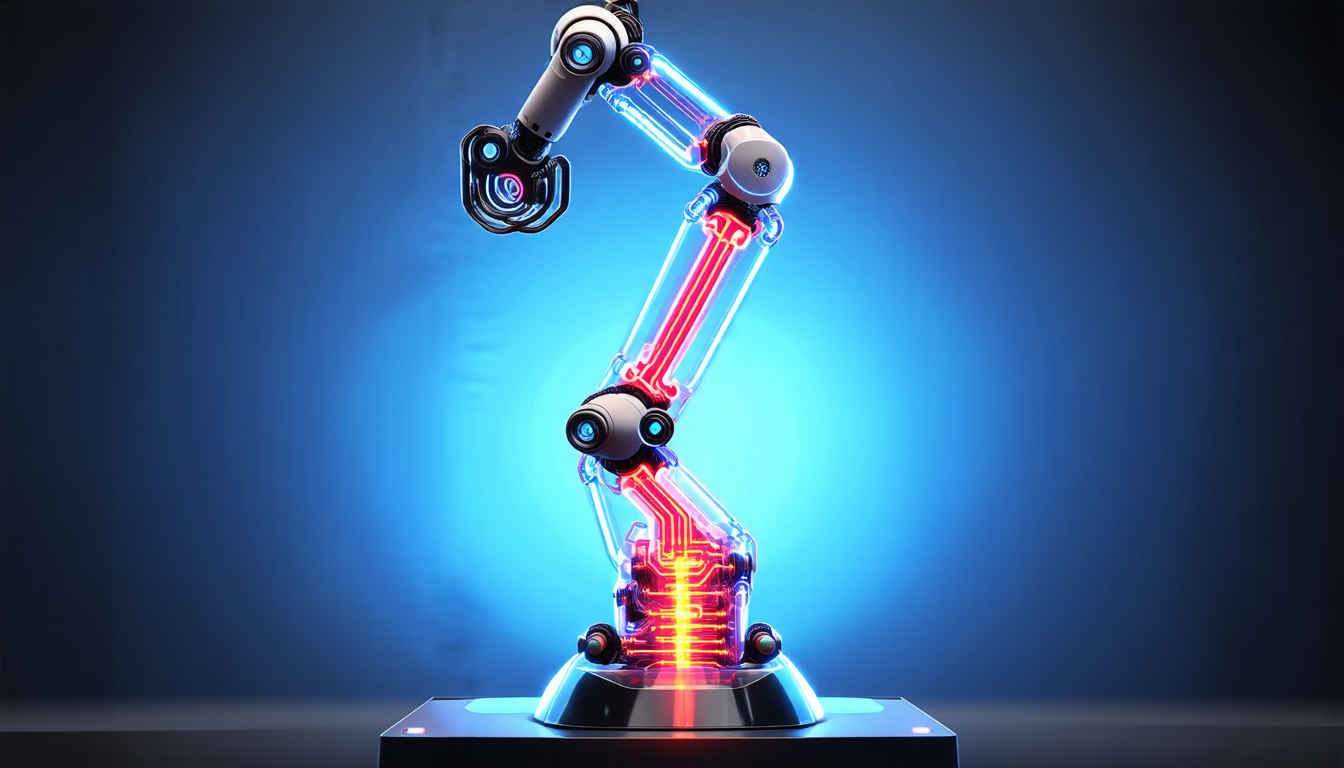
One of the most promising aspects of this research is its potential for applications in soft robotics. Traditional robots often rely on rigid materials like metals or plastics, which can be heavy and inflexible. Soft robots, on the other hand, are made from flexible materials that can change shape in response to their environment. This allows them to move more efficiently and adapt to changing situations.
Dielectric elastomers could play a key role in soft robotics, enabling the creation of lightweight, flexible robots that can manipulate objects with precision. They could also be used to create prosthetic limbs or exoskeletons that can mimic the natural movements of human joints.
The researchers’ approach is not without its challenges, however. One of the biggest hurdles will be scaling up their simulations to larger materials and more complex systems. They will also need to develop new manufacturing techniques to produce dielectric elastomers with the desired properties.
Despite these challenges, the potential rewards are significant.
Cite this article: “Unlocking the Power of Dielectric Elastomers: A Breakthrough in Soft Robotics and Medicine”, The Science Archive, 2025.
Dielectric Elastomers, Electromechanical Instability, Treloar-Kearsley Instability, Shape Memory, Soft Robotics, Biomedical Devices, Finite Element Analysis, Patterned Electrodes, Flexible Robots, Prosthetic Limbs.





