

Monday 03 March 2025
Scientists have made a major breakthrough in understanding complex biological systems by developing a new method for automatically partitioning networks of interacting molecules. This innovation could revolutionize the way researchers study and predict the behavior of cells, tissues, and organs.
The problem that scientists faced was that many biological processes involve thousands of molecules interacting with each other in intricate ways. These interactions can lead to complex behaviors, such as the formation of patterns or the emergence of new properties. However, current methods for studying these systems are often limited by their ability to handle large amounts of data and simulate complex behavior.
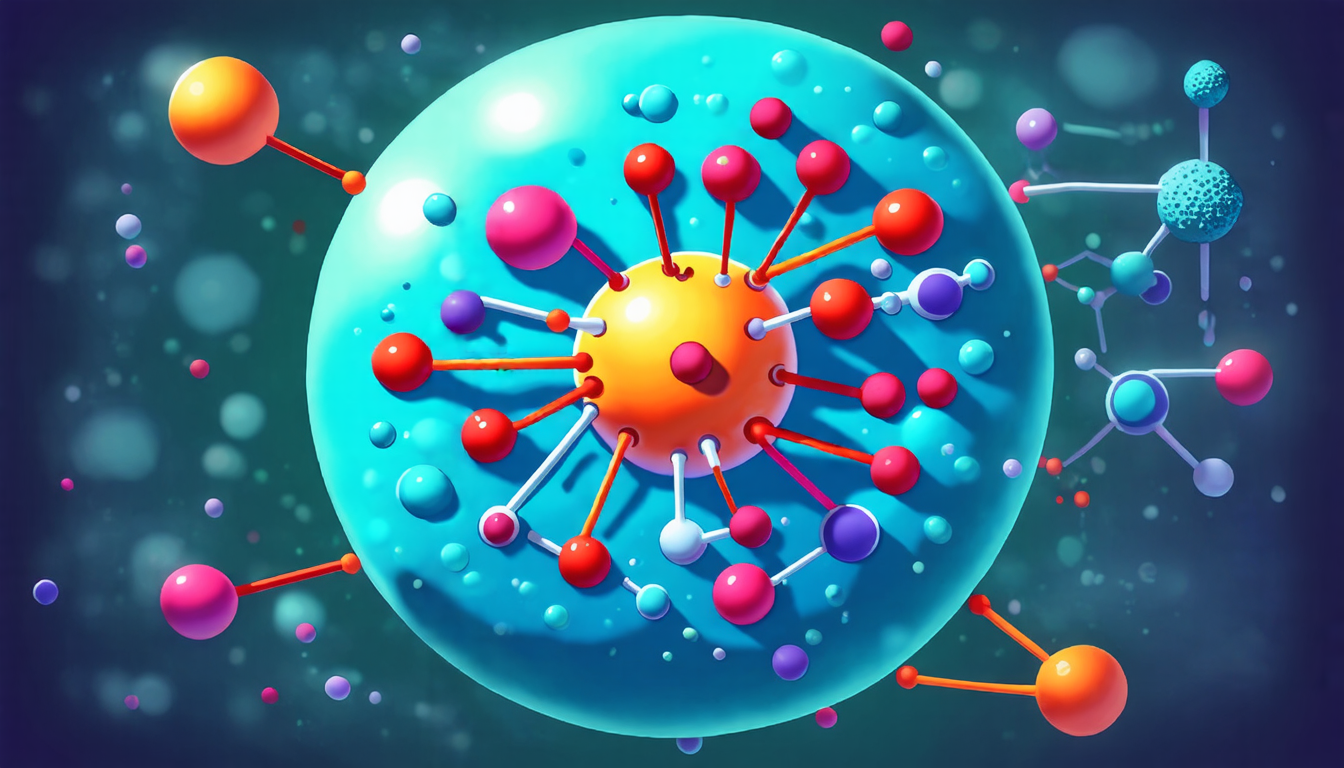
The new method, developed by a team of researchers, uses a combination of computer algorithms and mathematical techniques to automatically partition networks of interacting molecules into smaller, more manageable pieces. This allows scientists to study each piece individually, making it easier to understand how the entire system behaves.
One of the key challenges in developing this method was finding a way to balance the need for detail with the need for simplicity. If the partitions are too small, they may not capture important patterns or behaviors, while if they are too large, they may oversimplify the complex interactions between molecules.
To overcome this challenge, the researchers used a combination of machine learning techniques and mathematical methods to automatically determine the optimal size and shape of each partition. This allowed them to create a system that is both detailed enough to capture the complexities of biological systems and simple enough to be easily understood.
The implications of this breakthrough are vast. For example, it could allow scientists to study the behavior of entire cells or even organs at a level of detail previously impossible. It could also enable researchers to predict how different molecules will interact with each other, potentially leading to new treatments for diseases.
The next step is to test this method on real-world biological systems and see if it can accurately predict their behavior. If successful, this innovation could revolutionize the field of biology and have a major impact on our understanding of life itself.
Cite this article: “Automated Network Partitioning Revolutionizes Biological Research”, The Science Archive, 2025.
Biological Systems, Network Partitioning, Machine Learning, Mathematical Techniques, Molecular Interactions, Computational Biology, Complex Behavior, Pattern Formation, Disease Treatment, Cellular Biology





