

Monday 03 March 2025
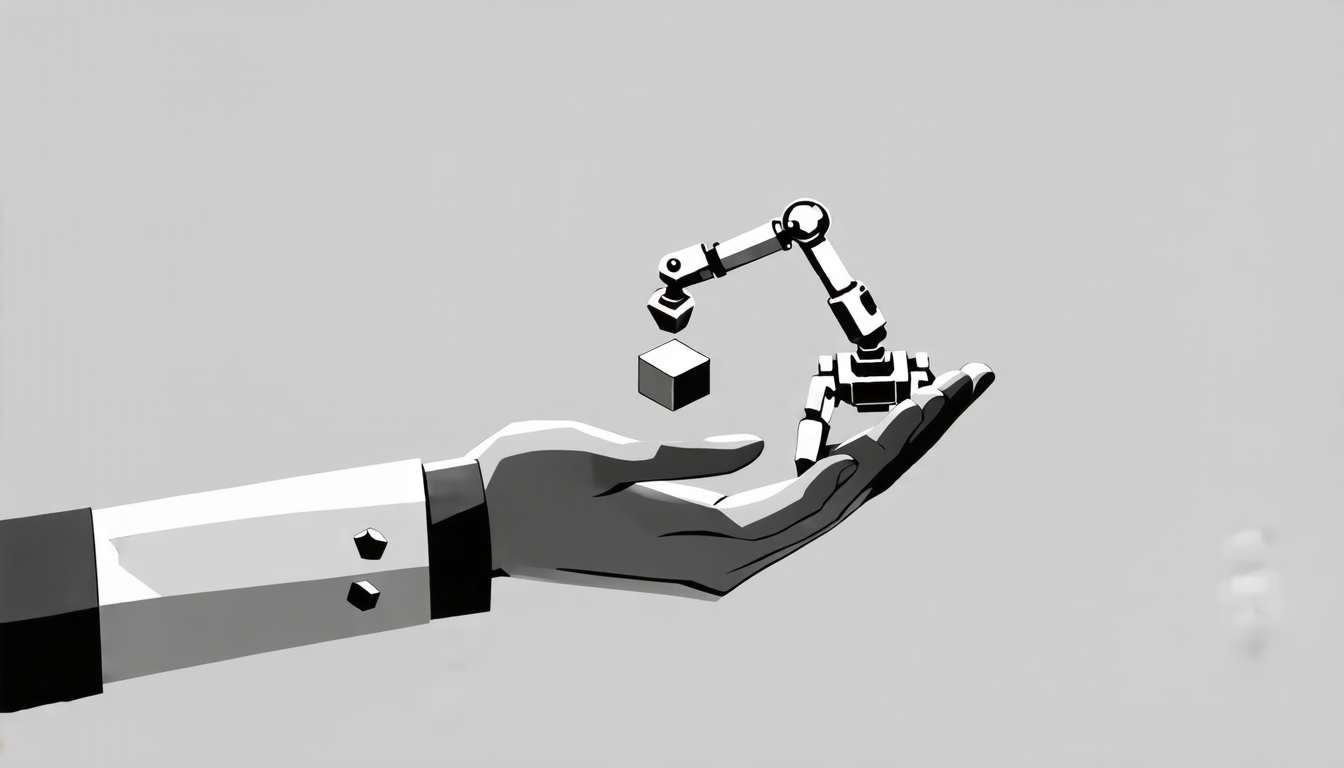
A team of researchers has made significant progress in developing a system that can translate human hand movements into robotic actions, allowing for more precise and dexterous manipulation tasks.
The system, which uses machine learning algorithms to learn patterns in human motion data, is designed to overcome the limitations of traditional teleoperation methods. These methods typically rely on visual feedback from cameras or sensors, which can be slow and unreliable, especially in situations where there are multiple objects or complex environments.
In contrast, the new system focuses on learning the subtle movements and interactions between the human hand and object, allowing for more accurate and precise control. The researchers used a combination of data from motion capture systems and robotic teleoperation to train their model, which can then be applied to a wide range of tasks, from grasping and manipulating objects to performing complex surgical procedures.
One of the key challenges in developing this system was dealing with the complexity of human hand movements. Human hands are capable of making incredibly fine-grained movements, allowing for precise control over objects. However, these movements can also be difficult to translate into robotic actions, as they often involve subtle changes in finger and wrist position.
To address this challenge, the researchers developed a system that uses a combination of machine learning algorithms and motion capture data to learn patterns in human hand movement. This allows the system to accurately predict the movement of the robot’s hands and fingers, even in complex situations where there are multiple objects or changing environments.
The researchers also developed a novel approach to retargeting human motion data to robotic actions. Traditionally, this process involves aligning the human and robotic hands based on their kinematics, but this can result in inaccurate movements if the robot’s hand is larger or smaller than the human hand. The new system uses a machine learning model to learn the mapping between human and robotic hand movements, allowing for more accurate retargeting.
The results of the study are impressive, with the system able to accurately translate human hand movements into robotic actions in a variety of tasks. The researchers believe that this technology has significant potential for applications in areas such as manufacturing, healthcare, and search and rescue, where precise and dexterous manipulation is critical.
Overall, this research represents an important step towards developing more advanced robotics systems that can perform complex tasks with precision and accuracy. By better understanding the subtle movements and interactions between human hands and objects, researchers are able to develop more sophisticated algorithms for controlling robotic arms and hands, with significant potential for real-world applications.
Cite this article: “Hand in Hand: A New System for Translating Human Motion into Robotic Action”, The Science Archive, 2025.
Robotics, Hand Movements, Machine Learning, Teleoperation, Motion Capture, Robotic Arms, Dexterous Manipulation, Precise Control, Human-Robot Interaction, Translation Systems





