

Monday 03 March 2025
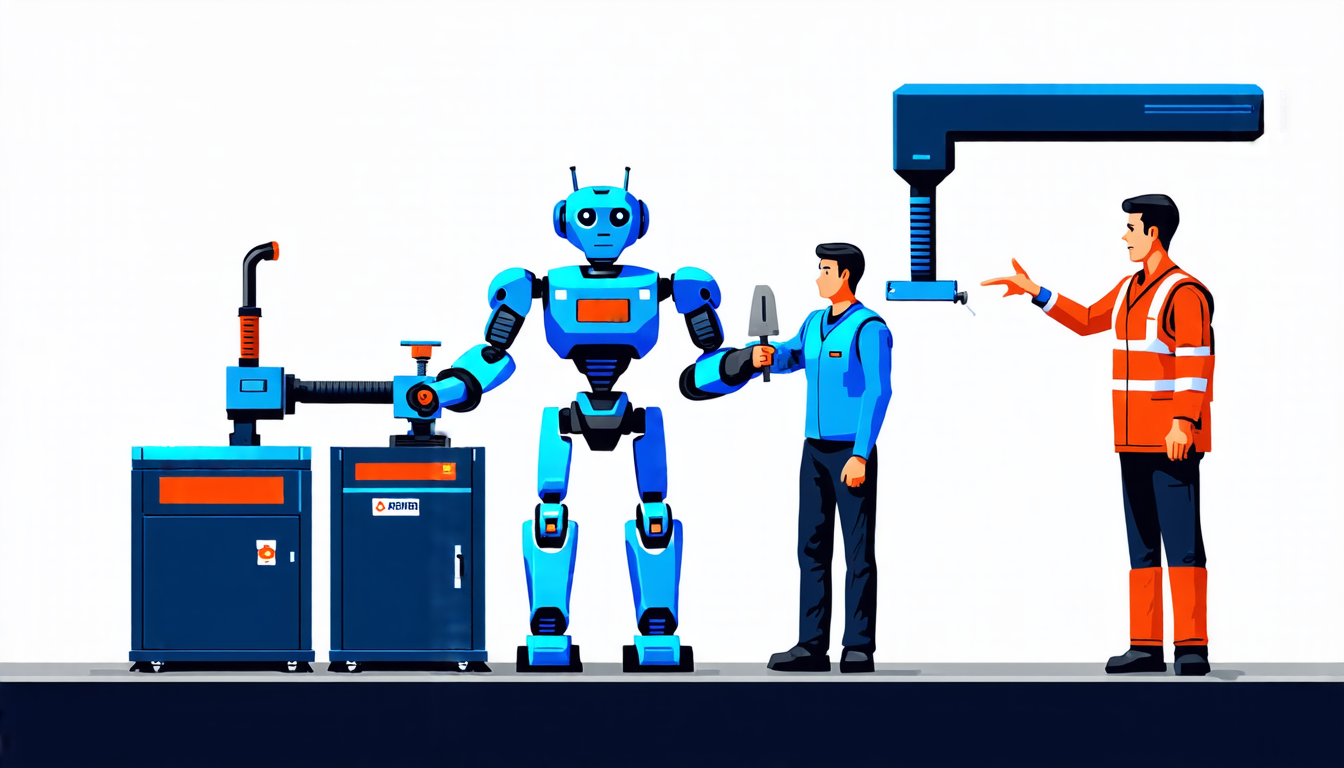
Scientists have made a significant breakthrough in developing a system that enables robots to work together and predict human actions in industrial settings. This innovative technology has the potential to revolutionize the way humans and robots collaborate, improving efficiency, safety, and productivity.
The system uses a combination of spatial and temporal information to understand the environment and anticipate the actions of humans working alongside the robots. The robots share their observations with each other, creating a collective understanding of the situation that is more accurate than any individual robot’s perception.
One of the key challenges in developing this system was designing an algorithm that could effectively integrate the data from multiple robots. The researchers used graph neural networks to create a spatial graph representation of the environment, which allowed the robots to share information and collaborate effectively.
The team also developed a consensus mechanism that enables the robots to agree on a unified interpretation of human actions. This is achieved by weighting each robot’s prediction based on its confidence and visibility in the scene. The resulting predictions are more accurate and reliable than those made by individual robots.
The system was tested in a simulated industrial environment, where it successfully predicted the actions of humans working alongside the robots. The results showed that increasing the number of robots observing the scene improved the accuracy of the predictions, but only up to a point. After a certain threshold, adding more robots did not significantly improve performance.
This technology has significant implications for industries such as manufacturing and logistics, where humans and robots work together to complete tasks. By enabling robots to better understand human actions, this system can improve safety, reduce errors, and increase productivity.
The researchers are now working to refine the algorithm and test it in real-world environments. They hope that their technology will be used in a variety of industries, from manufacturing and logistics to healthcare and transportation.
One of the most exciting aspects of this technology is its potential to enable robots to work alongside humans more effectively. By understanding human actions and intentions, robots can better support humans and improve collaboration. This could lead to significant improvements in productivity, safety, and overall efficiency.
Overall, this innovative system has the potential to revolutionize the way humans and robots collaborate in industrial settings. Its ability to predict human actions and enable robots to work together more effectively makes it a game-changer for industries that rely on human-robot collaboration.
Cite this article: “Robots Learn to Predict Human Actions in Industrial Settings”, The Science Archive, 2025.
Robots, Humans, Industrial Settings, Collaboration, Prediction, Graph Neural Networks, Spatial Information, Temporal Information, Consensus Mechanism, Productivity.





