

Monday 03 March 2025
Scientists have been working tirelessly to develop a new method for studying complex chemical reactions, and their efforts have finally paid off. A team of researchers has successfully used a technique called diagrammatic multiplet-sum method density-functional theory (MSM-DFT) to accurately predict the behavior of molecules in strong correlation.
For decades, scientists have struggled to understand how molecules interact with each other at the atomic level. This is because these interactions involve complex chemical reactions that are difficult to study using traditional methods. MSM-DFT offers a new approach by allowing researchers to analyze these reactions using density-functional theory (DFT), which is a widely used method for studying molecular behavior.
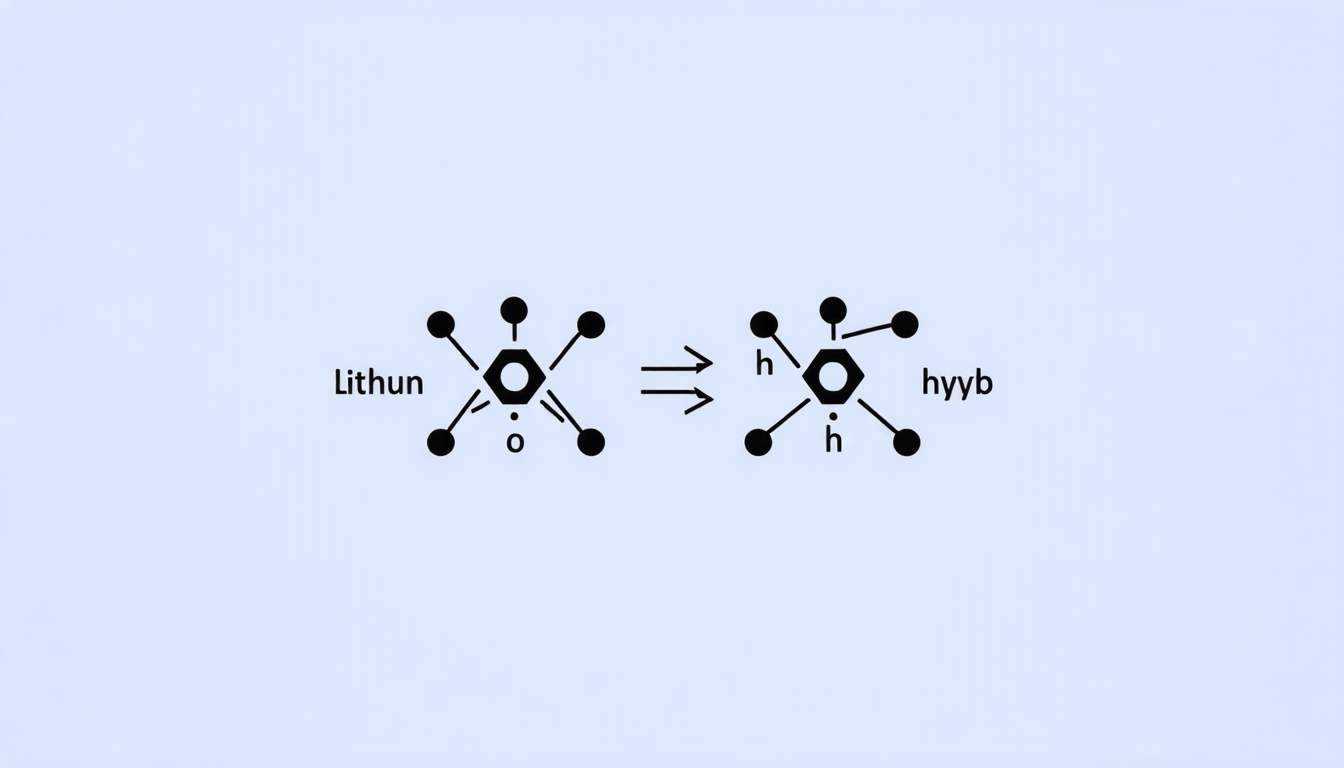
In DFT, molecules are represented as clouds of electrons and nuclei, rather than individual particles. This allows researchers to focus on the overall behavior of the molecule, rather than the intricate details of each atom. MSM-DFT takes this approach one step further by using diagrammatic representations of chemical reactions to analyze complex interactions between molecules.
The team used MSM-DFT to study a molecule called lithium hydride (LiH), which is made up of a lithium atom and a hydrogen atom. LiH is an ideal molecule for testing the new method because it has strong correlation, meaning that the electrons in the molecule are highly attracted to each other. This makes it difficult to study using traditional methods.
Using MSM-DFT, the researchers were able to accurately predict the behavior of LiH at different distances between the lithium and hydrogen atoms. They found that as the distance increases, the molecule becomes less stable and eventually breaks apart into individual atoms. This is a key feature of chemical reactions, and MSM-DFT was able to capture it with remarkable accuracy.
The team also tested MSM-DFT on other molecules, including diatomic molecules like H2 and O2. They found that the method was accurate for these molecules as well, and that it could be used to study a wide range of chemical reactions.
MSM-DFT is an exciting development in the field of chemistry because it offers a new way to analyze complex chemical reactions. It has the potential to revolutionize our understanding of molecular behavior and could lead to major advances in fields like materials science and pharmaceuticals.
In practical terms, MSM-DFT could be used to design new materials with specific properties, such as superconductors or nanomaterials. It could also be used to develop new drugs that target specific molecules in the body.
Cite this article: “Breakthrough in Chemical Reaction Analysis: Introducing MSM-DF”, The Science Archive, 2025.
Chemistry, Density Functional Theory, Molecular Behavior, Diagrammatic Method, Chemical Reactions, Lithium Hydride, Atomic Level, Materials Science, Pharmaceuticals, Nanomaterials





