

Tuesday 04 March 2025
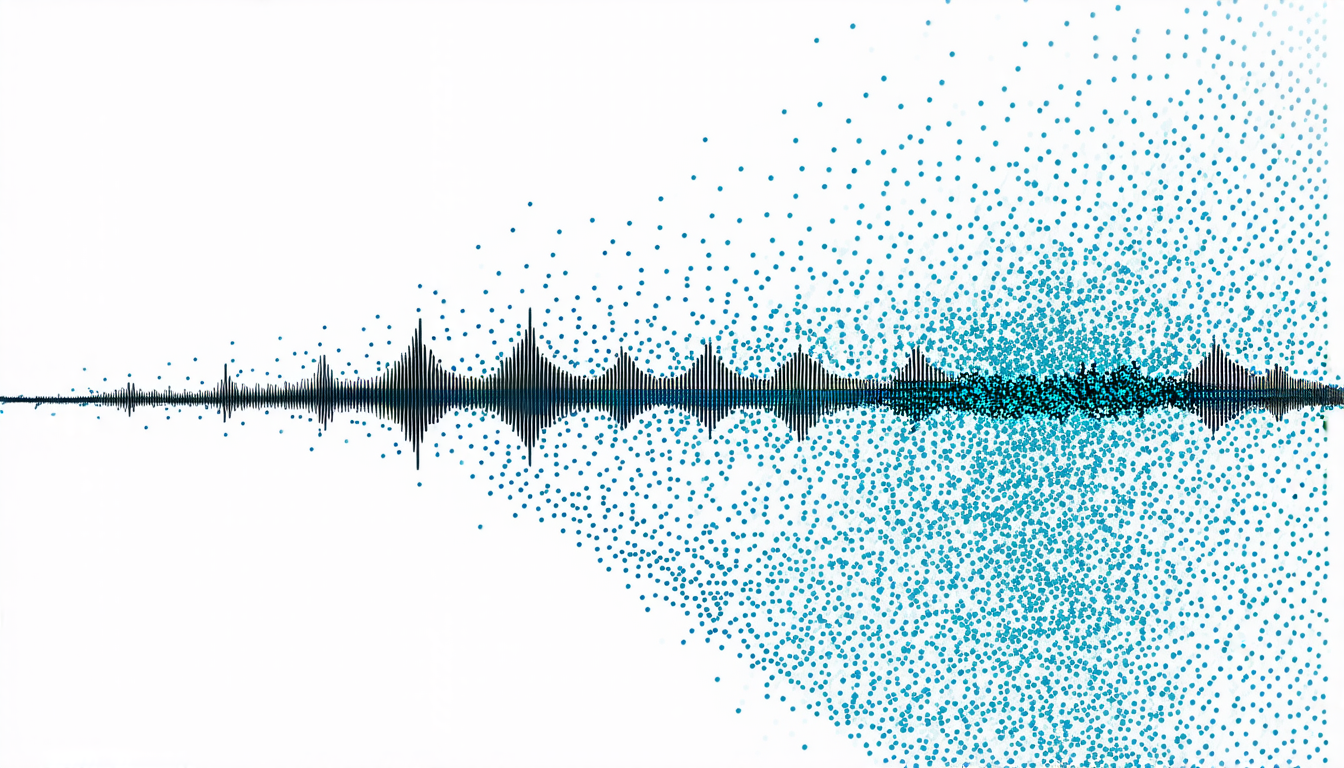
The pursuit of precision has led scientists to develop a novel method for sorting particles based on their size and resonance frequency. By harnessing the power of acoustic waves, researchers have created a system that can efficiently separate tiny objects with varying properties.
Traditionally, particle separation techniques rely on physical forces such as gravity or surface tension. However, these methods often struggle when dealing with small particles or those with similar properties. Acoustic sorting offers a promising solution by utilizing the unique properties of sound waves to manipulate and sort particles.
The process begins with the creation of acoustic waves with specific frequencies and wavelengths. These waves interact with the particles, exerting forces on them that depend on their size and resonance frequency. By carefully tuning the wave characteristics, researchers can control the direction and strength of these forces, allowing for precise sorting.
One of the key advantages of this approach is its scalability. Unlike traditional methods, which may be limited to small sample sizes or require extensive processing times, acoustic sorting can handle large volumes of particles with remarkable efficiency. This makes it an attractive option for industries that rely on mass production and quality control.
The technology has already shown promise in various applications, including the separation of nanoparticles, microbeads, and even biological cells. Researchers are optimistic about its potential to revolutionize fields such as medicine, biotechnology, and materials science.
While there is still much work to be done to refine the technique, the implications are significant. Acoustic sorting has the potential to streamline production processes, improve product quality, and unlock new discoveries in a wide range of scientific disciplines.
In the pursuit of precision, scientists have discovered a novel way to harness the power of sound waves to sort particles with remarkable accuracy. By tuning the characteristics of acoustic waves to interact with particles of varying sizes and resonance frequencies, researchers have created a system that can efficiently separate tiny objects based on their unique properties.
Cite this article: “Acoustic Sorting: A Novel Approach to Particle Separation”, The Science Archive, 2025.
Particles, Acoustic Waves, Size, Resonance Frequency, Sorting, Precision, Nanoparticles, Microbeads, Biological Cells, Materials Science.





