

Tuesday 04 March 2025
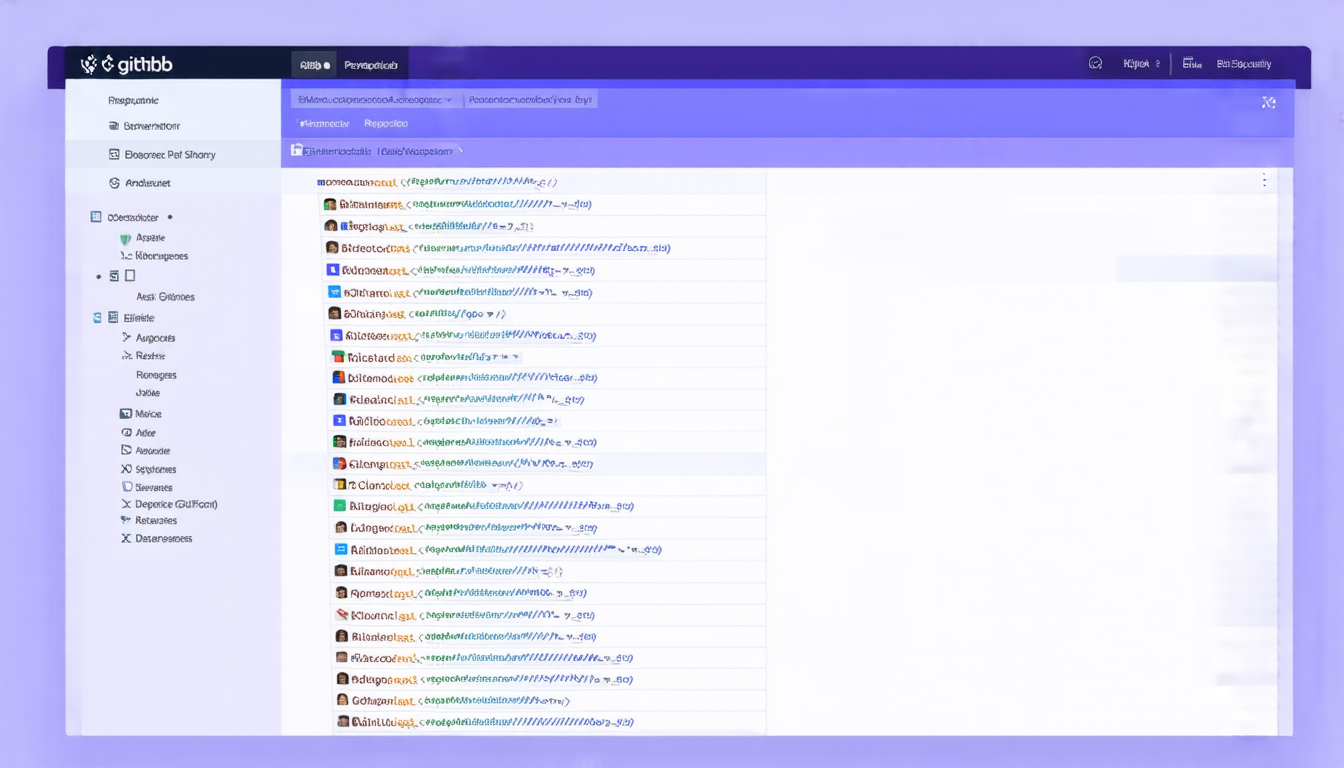
A recent study has shed light on the limitations of using Large Language Models (LLMs) for tasks that require precision and recall, such as identifying and classifying URLs in GitHub repositories. The researchers found that while LLMs are capable of detecting URLs, they struggle to accurately extract and classify them, particularly when it comes to distinguishing between different types of URLs.
The study focused on using two popular LLMs, LLaMA 2 and Mistral 7B, to identify and categorize URLs in GitHub repositories. The researchers created a dataset of 811 repositories containing over 1,400 URLs, which they used to train the models. They then evaluated the models’ performance using precision, recall, and F1-score metrics.
The results were disappointing, with the LLMs struggling to achieve high precision and recall rates. In fact, the study found that even when prompted with dynamic examples, the models performed poorly. This suggests that LLMs may not be well-suited for tasks that require a deep understanding of context and nuance.
One potential reason for this poor performance is the lack of parsing capabilities in LLMs. Unlike traditional machine learning algorithms, LLMs are designed to generate text rather than parse it, which can make them less effective at extracting specific information from complex datasets.
The study’s findings have important implications for researchers and developers who rely on LLMs for tasks such as knowledge graph construction and natural language processing. While LLMs may be useful for certain applications, they are not a silver bullet solution for all machine learning challenges.
Instead of relying solely on LLMs, researchers may need to consider combining them with other techniques, such as traditional machine learning algorithms or rule-based systems, to achieve better results. This could involve using LLMs to generate initial hypotheses, which can then be refined and validated through more traditional methods.
The study’s authors also suggest that further research is needed to improve the performance of LLMs on tasks that require precision and recall. This may involve developing new architectures or training techniques that are better suited to these types of challenges.
In short, while LLMs have shown great promise in certain areas, they are not yet a panacea for all machine learning problems. By acknowledging their limitations and continuing to innovate, researchers can create more effective solutions that harness the best of both worlds – human ingenuity and artificial intelligence.
Cite this article: “Limitations of Large Language Models in Precision-Recall Tasks”, The Science Archive, 2025.
Large Language Models, Github Repositories, Url Identification, Classification, Precision, Recall, F1-Score, Machine Learning, Natural Language Processing, Knowledge Graph Construction





