

Tuesday 04 March 2025
The quest for a deeper understanding of the intricate dance between materials and their interactions has led researchers down a winding path, filled with twists and turns. Now, scientists have made significant strides in mapping out this complex landscape, shedding light on the behavior of ternary phase diagrams.
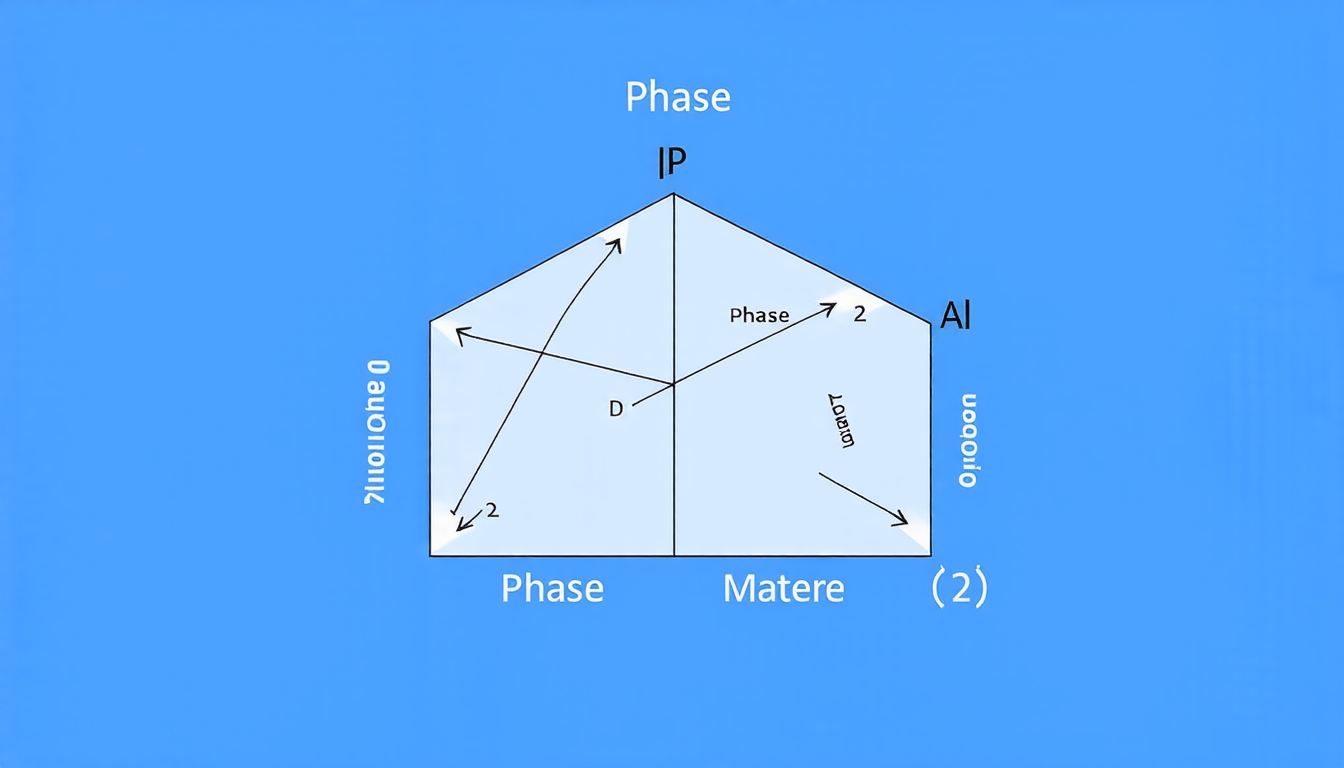
Ternary phase diagrams are the graphical representations of how different materials interact with each other when combined in various proportions. They’re crucial for understanding the properties of materials, from their melting points to their ability to conduct electricity. However, as the number of components increases, so does the complexity of these diagrams, making it challenging to predict and understand their behavior.
The researchers behind this study employed a novel approach, using computational methods to generate an unprecedented library of over 80,000 ternary phase diagrams for amorphous systems. These systems are representative of polymers, small organic molecules, and solvents – materials that are commonly used in everyday products like plastics, textiles, and pharmaceuticals.
By analyzing this vast dataset, the researchers were able to identify 21 distinct types of phase diagrams, each with its unique characteristics. They found that certain patterns emerged, such as the likelihood of three-phase regions forming when specific interaction parameters were above a critical threshold.
One intriguing aspect of this research is the discovery of uncommon phase diagram types, which occur when materials with larger molar sizes interact with each other. These systems are less common in nature, but they could have significant implications for the development of new materials and technologies.
The study’s findings also highlight the importance of understanding the relationship between interaction parameters and the properties of materials. By fine-tuning these parameters, researchers can create materials with tailored properties, such as improved thermal conductivity or enhanced optical clarity.
The practical applications of this research are vast and varied. For instance, it could inform the design of more efficient solar panels or the development of new biomaterials for medical implants. Moreover, this work paves the way for a deeper understanding of complex systems, where multiple components interact in intricate ways.
As researchers continue to explore the intricacies of ternary phase diagrams, they’re likely to uncover even more surprising patterns and relationships. This study serves as a testament to the power of computational modeling in advancing our knowledge of materials science and its many practical applications.
Cite this article: “Unraveling the Complexity of Ternary Phase Diagrams”, The Science Archive, 2025.
Materials Science, Ternary Phase Diagrams, Computational Modeling, Amorphous Systems, Polymers, Organic Molecules, Solvents, Interaction Parameters, Materials Properties, Thermodynamics





