

Tuesday 04 March 2025
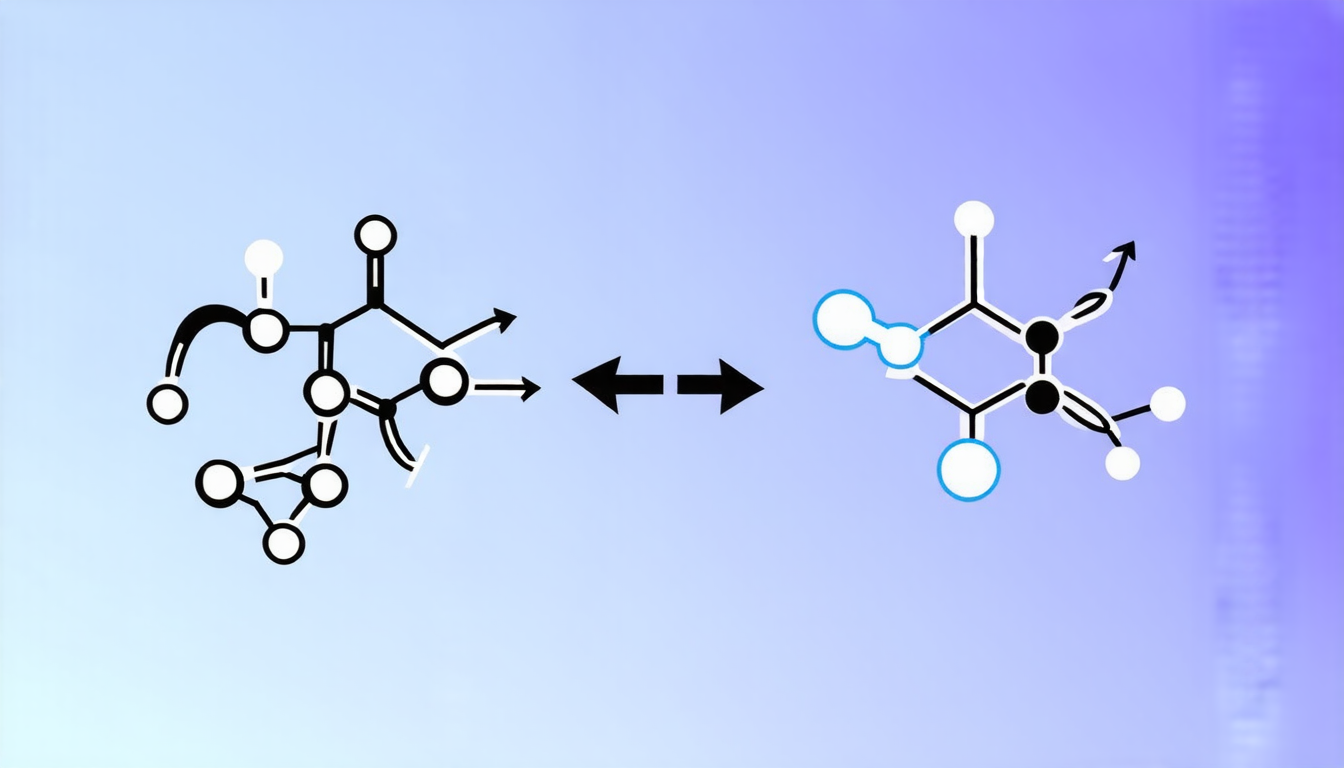
Scientists have long been fascinated by the intricacies of chemical reactions, where tiny molecules interact and change shape in a delicate dance. One key aspect of these reactions is the transition path, or TP, which refers to the specific trajectory that particles take as they shift from one state to another. Understanding TPs is crucial for predicting how reactions will unfold, but it’s also notoriously difficult.
A team of researchers has made significant strides in this area by studying the relationship between TPs and a phenomenon called non-Markovianity. Markovian dynamics refers to systems where particles move randomly and independently, whereas non-Markovianity arises when particles interact with each other and their environment in more complex ways.
The scientists found that for non-Markovian systems, the transition path probability (TPP) – a measure of how likely it is for particles to follow a certain TP – increases significantly. This means that the paths taken by particles become less random and more predictable when they interact with each other and their environment in complex ways.
The researchers used simulations to study TPs in a system called the generalized Langevin equation (GLE), which describes the movement of particles under the influence of various forces. They found that as the level of non-Markovianity increased, the TPP also increased, eventually exceeding its maximum value in Markovian systems.
This result has significant implications for our understanding of chemical reactions and other complex processes. By accounting for non-Markovian effects, scientists can develop more accurate models of these reactions and better predict how they will unfold. This could lead to breakthroughs in fields such as materials science, biology, and pharmaceutical development.
The study also highlights the importance of considering the intricacies of particle interactions when studying complex systems. By acknowledging the non-Markovian nature of these interactions, researchers can gain a more nuanced understanding of the underlying dynamics at play.
One interesting aspect of this research is its connection to the concept of transmission coefficients. Transmission coefficients describe how easily particles can pass through barriers or transition states in a reaction. The scientists found that as non-Markovianity increases, the transmission coefficient also increases, allowing particles to more easily navigate these transition states.
This study has opened up new avenues for research in this field, and its findings have far-reaching implications for our understanding of complex systems. By continued exploration of non-Markovian dynamics, scientists can gain a deeper insight into the intricate dance of particle interactions that underlies many natural processes.
Cite this article: “Unlocking the Secrets of Non-Markovian Chemical Reactions”, The Science Archive, 2025.
Chemical Reactions, Transition Paths, Non-Markovianity, Markovian Dynamics, Particle Interactions, Complex Systems, Langevin Equation, Materials Science, Biology, Pharmaceutical Development





