

Tuesday 04 March 2025
In a recent study, mathematicians have made significant progress in understanding how certain types of equations behave when dealing with non-standard boundary conditions. These boundary conditions are different from the traditional ones we’re familiar with, where the solution is required to satisfy specific values at the edges or surfaces.
The researchers focused on a specific type of equation known as parabolic partial differential equations, which describe various physical phenomena such as heat transfer and fluid flow. They showed that under certain circumstances, these equations can exhibit unexpected behavior when subjected to non-standard boundary conditions.
One of the key findings is that even though the solution may not be unique, it’s possible to determine a specific range within which the solution lies. This is crucial in understanding complex physical systems where small changes in boundary conditions can have significant effects on the overall outcome.
The study also highlights the importance of considering different types of norms when dealing with non-standard boundary conditions. Norms are mathematical constructs that help measure the size or magnitude of a function. In this case, the researchers showed that using the right norm can greatly simplify the solution and provide valuable insights into the behavior of the equation.
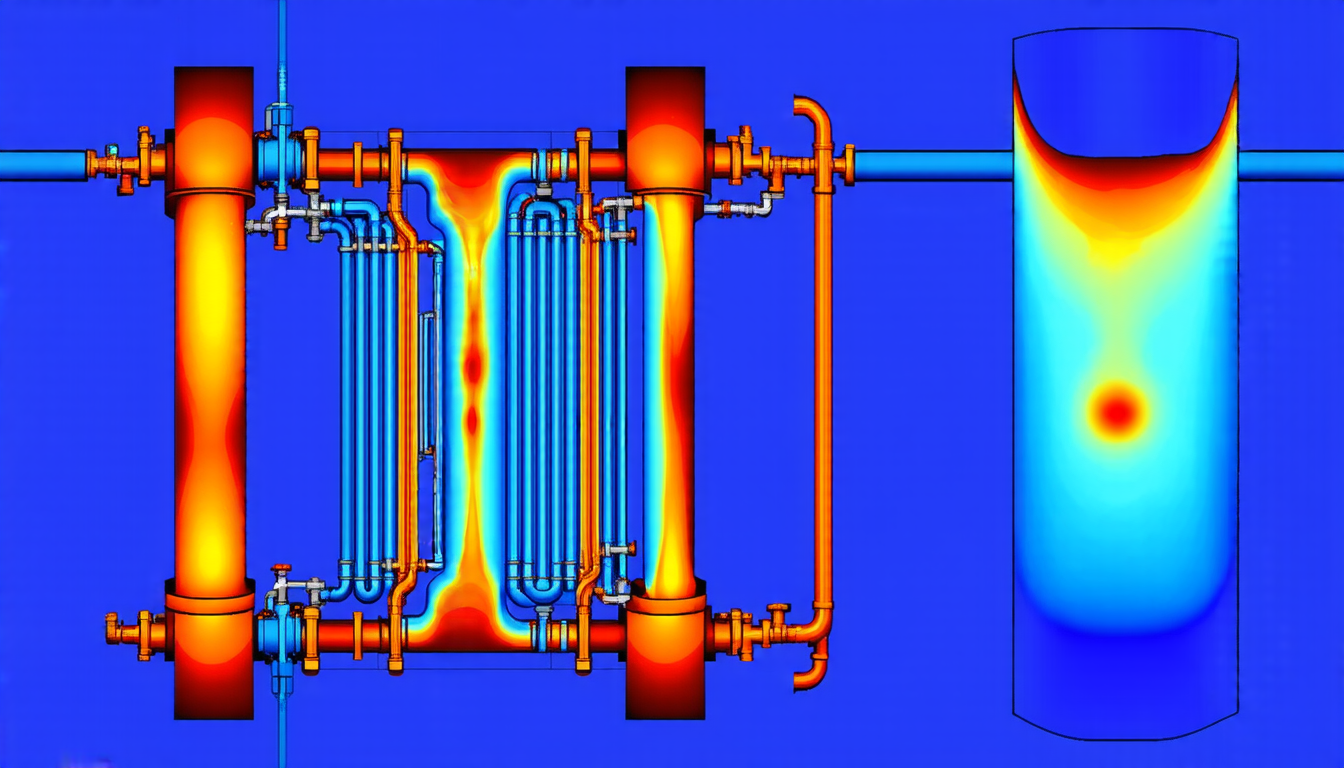
Another significant aspect of the study is its application to real-world problems. The findings have implications for fields such as engineering and physics, where accurate modeling of complex systems is crucial. For instance, in the design of heat exchangers or fluid flow systems, non-standard boundary conditions can arise due to changes in temperature or pressure.
The researchers used a combination of analytical and numerical methods to explore these equations and their behavior under non-standard boundary conditions. This involved developing new mathematical tools and techniques to tackle the complex problems that arose.
The study’s results have far-reaching implications for our understanding of complex systems and their behavior under different conditions. It highlights the importance of considering non-standard boundary conditions in modeling real-world phenomena and demonstrates the power of mathematics in uncovering new insights into these systems.
Cite this article: “Mathematical Breakthroughs in Modeling Complex Systems with Non-Standard Boundary Conditions”, The Science Archive, 2025.
Parabolic Partial Differential Equations, Non-Standard Boundary Conditions, Heat Transfer, Fluid Flow, Norms, Mathematical Modeling, Complex Systems, Engineering, Physics, Numerical Methods





