

Tuesday 04 March 2025
The art of video editing has long been a tedious and time-consuming process, requiring hours of manual tweaking and refinement to produce a seamless and engaging final product. But what if technology could simplify this process, allowing creators to effortlessly generate high-quality videos in mere minutes? A new study suggests that this may soon be possible, thanks to the development of advanced diffusion models that can automatically edit video footage.
These models, known as generative adversarial networks (GANs), have been around for a few years now, but their capabilities have only recently begun to expand beyond simple image generation. By leveraging the power of machine learning, GANs can now be trained on vast amounts of data to recognize and mimic the intricate details of video footage.
In this latest study, researchers explored the potential of using diffusion models to generate videos that are not only visually stunning but also temporally coherent. To achieve this, they developed a novel framework that combines the strengths of both image and video processing techniques.
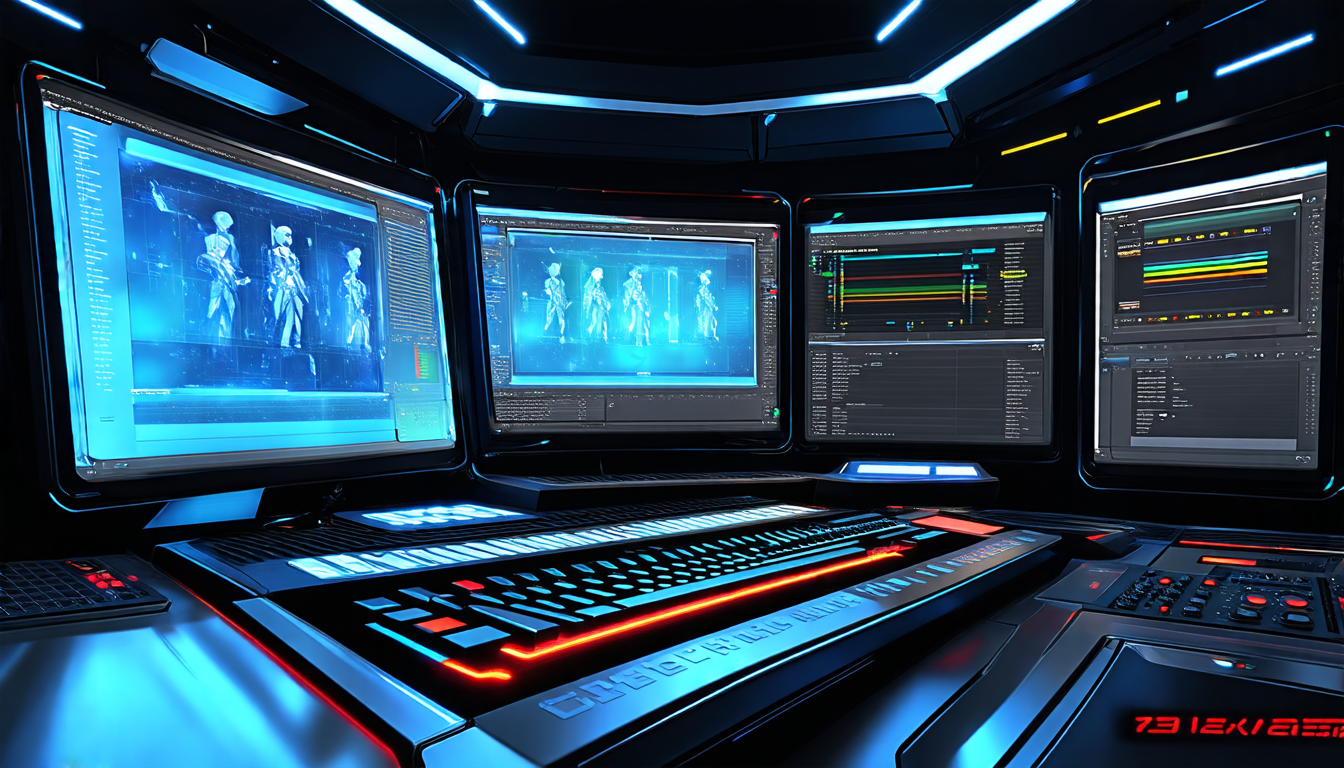
The resulting system is capable of automatically editing video footage in real-time, using a combination of AI-powered algorithms and advanced computer vision techniques. This allows creators to input a starting point, such as a rough outline or even just a few key frames, and then let the algorithm do the rest.
One of the most impressive aspects of this technology is its ability to adapt to different styles and genres. Whether you’re looking to create a fast-paced action sequence or a slow-burning drama, the AI-powered editor can seamlessly adjust its approach to suit your needs.
But how does it work, exactly? The secret lies in the algorithm’s ability to learn from vast amounts of data, including both images and videos. By analyzing these patterns and relationships, the AI can identify key elements such as motion, lighting, and color, and then use this information to generate new footage that seamlessly integrates with the existing material.
The implications of this technology are enormous, with potential applications ranging from film and television production to music videos, advertisements, and even educational content. No longer will creators be limited by their own technical skills or the constraints of traditional editing software.
Of course, there are still some limitations to consider. For one thing, the algorithm’s ability to adapt to different styles is impressive, but it’s not yet perfect. There may still be a need for human oversight and fine-tuning to ensure that the final product meets the creator’s vision.
Despite these challenges, the potential of this technology is undeniable.
Cite this article: “Revolutionizing Video Editing with AI-Powered Algorithms”, The Science Archive, 2025.
Video Editing, Machine Learning, Generative Adversarial Networks, Gans, Diffusion Models, Ai-Powered Algorithms, Computer Vision Techniques, Film Production, Television Production, Music Videos.





