
Tuesday 04 March 2025
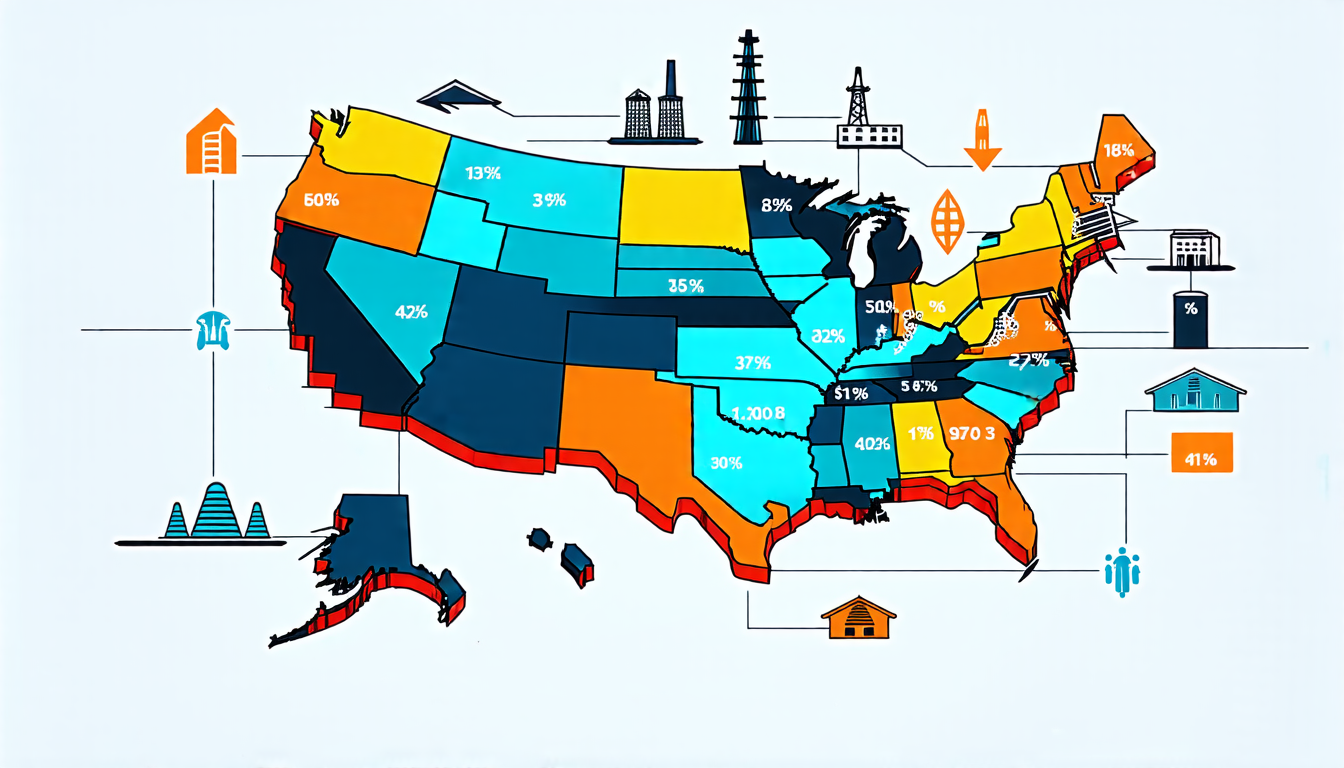
A team of economists has developed a new model that can accurately predict state-level GDP growth in real-time, providing valuable insights for policymakers and businesses alike. The mixed-frequency vector autoregressive (MF-VAR) model uses a combination of monthly and quarterly data to forecast GDP growth at the state level, taking into account various economic indicators such as inflation, employment, and consumer spending.
The model’s authors used a unique approach by incorporating both high-frequency (monthly) and low-frequency (quarterly) data into their analysis. This allowed them to capture the nuances of local economies, which can be influenced by factors such as regional trade agreements or weather patterns.
The results show that the MF-VAR model is able to accurately predict state-level GDP growth, with an average log predictive score of 0.14. This means that the model was able to correctly forecast GDP growth for each state, on average, by about 14%. The model’s performance was particularly strong in states with diverse economies, such as California and Texas.
One of the key advantages of this model is its ability to provide real-time forecasts, allowing policymakers to respond quickly to changing economic conditions. For example, if a state experiences an unexpected decline in GDP growth, the MF-VAR model can quickly identify the factors contributing to this decline and provide recommendations for policy intervention.
The model also has implications for businesses looking to expand into new markets or diversify their portfolios. By having access to accurate and timely forecasts of state-level GDP growth, companies can make more informed decisions about where to invest their resources.
However, the authors acknowledge that there are limitations to their model. For example, it does not account for factors such as government policy changes or external shocks like natural disasters. Additionally, the model’s performance may vary depending on the specific economic conditions of each state.
Despite these limitations, the MF-VAR model has significant potential to improve our understanding of regional economies and inform decision-making at both the local and national levels. As the global economy continues to evolve, having access to accurate and timely data on state-level GDP growth will be increasingly important for policymakers and businesses alike.
Cite this article: “Predicting State-Level GDP Growth: A New Model with Real-Time Insights”, The Science Archive, 2025.
Economic Indicators, Gdp Growth, Mixed-Frequency Vector Autoregressive Model, State-Level Data, Real-Time Forecasting, Policy-Making, Business Decisions, Regional Economies, Government Policy Changes, External Shocks.