

Tuesday 04 March 2025
Artificial intelligence has long been touted as a potential game-changer in the field of medicine, and a new study has taken a significant step towards realizing that promise. Researchers have developed a revolutionary new model capable of generating highly realistic synthetic medical images, which could transform the way doctors diagnose and treat patients.
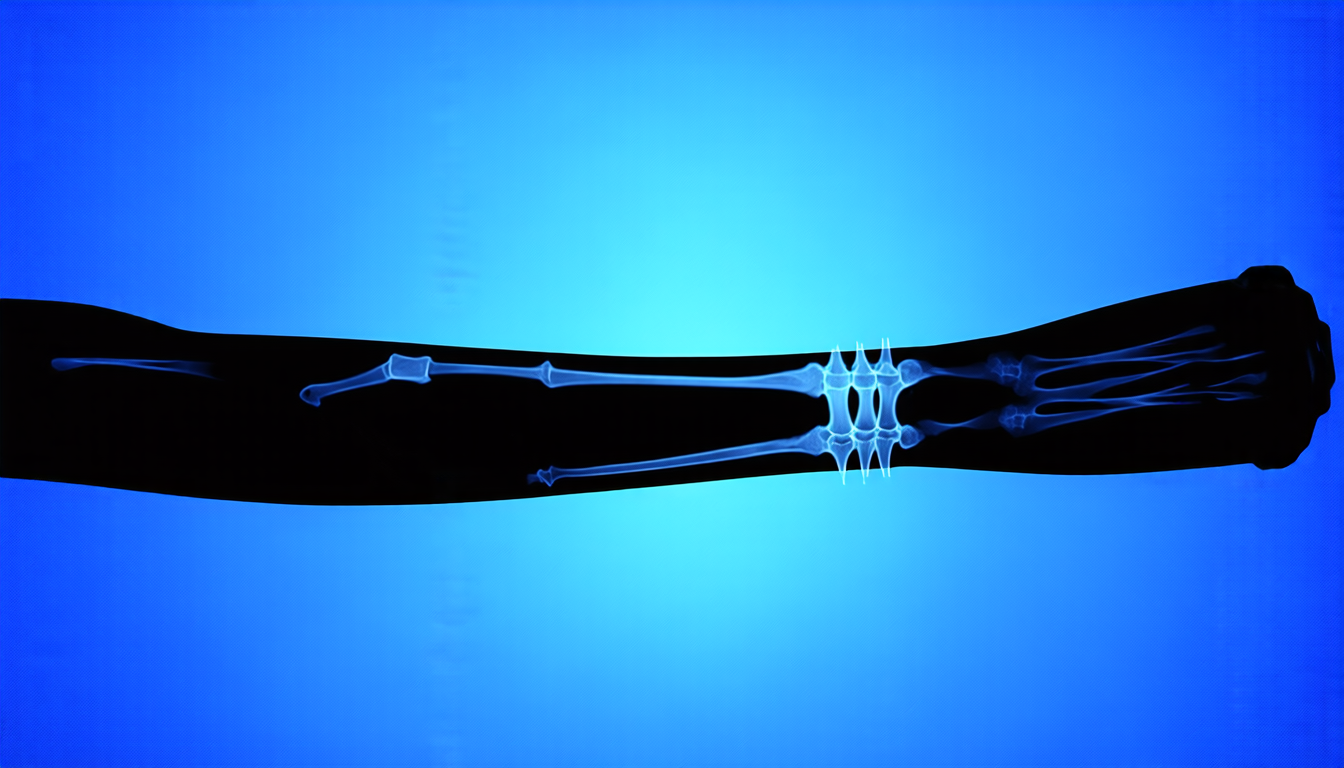
The model, dubbed MedCoDi- M, uses a combination of machine learning algorithms and large datasets to create X-ray images that are virtually indistinguishable from real ones. This has major implications for medical imaging, where the ability to generate high-quality synthetic data could revolutionize everything from disease diagnosis to treatment planning.
One of the key challenges facing medical researchers is the scarcity of high-quality medical images. Real-world data is often limited and biased, which can lead to inaccurate diagnoses and ineffective treatments. By generating synthetic images that mimic real-world conditions, MedCoDi-M offers a solution to this problem.
But how does it work? The model uses a technique called contrastive learning, which involves training the AI on a large dataset of X-ray images and then using that knowledge to generate new images that are similar in style and content. This process is repeated multiple times, allowing the model to learn and improve with each iteration.
The results are nothing short of remarkable. When tested against real-world data, MedCoDi-M was able to generate images that were almost indistinguishable from the real thing. The AI was even able to simulate subtle variations in X-ray appearance, such as changes in lighting or patient positioning, which could be crucial for accurate diagnosis.
The potential applications of MedCoDi-M are vast and varied. For one, it could help address the shortage of medical images by providing a reliable source of high-quality data. This could be particularly valuable in areas where real-world data is scarce or biased, such as developing countries or underserved communities.
Another major benefit is that synthetic images can be generated quickly and easily, without the need for expensive equipment or lengthy scanning procedures. This could revolutionize the way doctors diagnose and treat patients, allowing them to make more informed decisions and provide better care.
Of course, there are also potential downsides to consider. One concern is that synthetic images might not accurately reflect real-world conditions, which could lead to inaccurate diagnoses or treatments. Another issue is that relying too heavily on AI-generated data could undermine the importance of human expertise in medicine.
Despite these concerns, MedCoDi-M represents a major step forward for medical imaging and artificial intelligence.
Cite this article: “Revolutionary AI Model Generates Realistic Synthetic Medical Images”, The Science Archive, 2025.
Medical Imaging, Artificial Intelligence, Synthetic Data, X-Ray Images, Machine Learning, Diagnosis, Treatment Planning, Disease Detection, Medical Research, Healthcare





