

Tuesday 04 March 2025
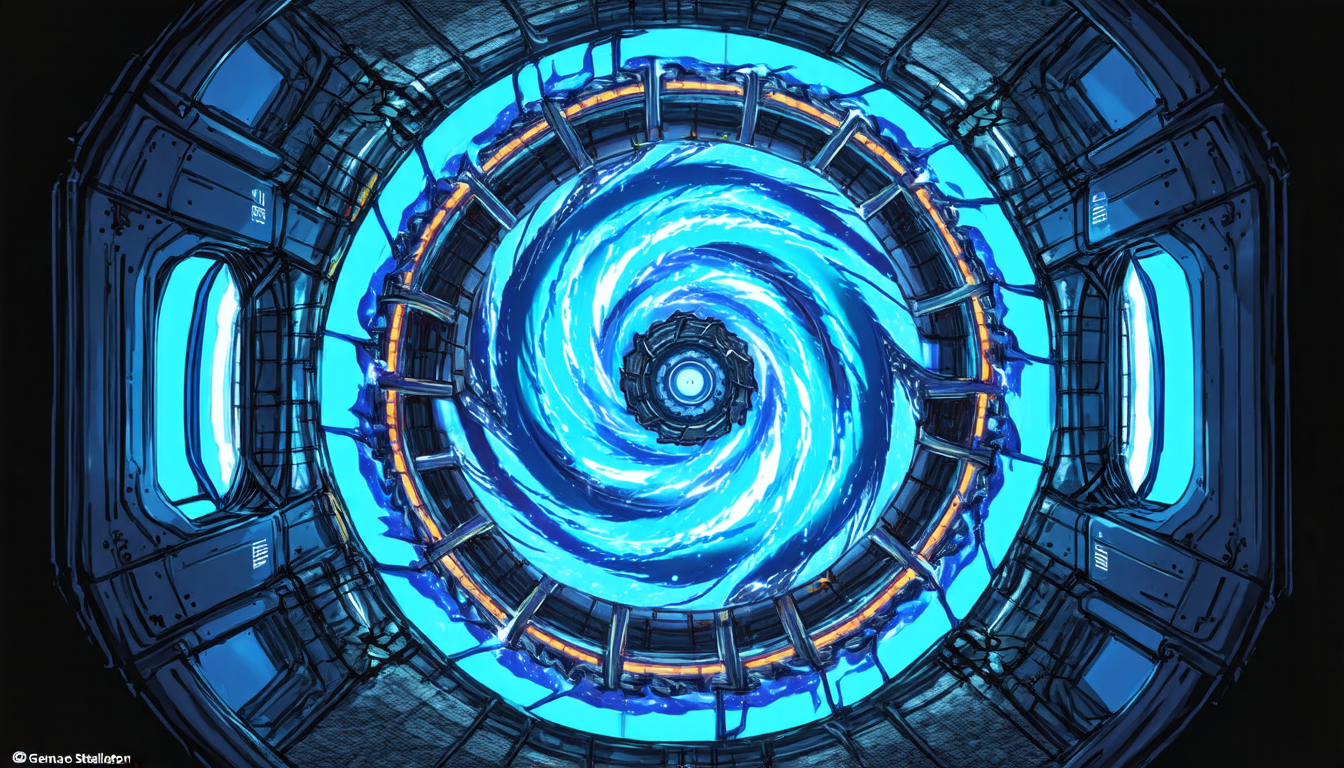
Scientists have been working on a new design for a type of nuclear fusion reactor called a stellarator, which could potentially provide a nearly limitless source of clean energy. The latest development involves creating large openings in the coil geometry to allow for easier maintenance and replacement of components.
The idea behind a stellarator is to use magnetic fields to confine and heat plasma, a hot gas made up of charged particles, until it reaches incredibly high temperatures, similar to those found at the core of the sun. This process creates energy through nuclear fusion reactions, which are the same reactions that power the sun.
One of the challenges with building a stellarator is that the reactor needs to be designed in such a way that allows for easy maintenance and replacement of components, known as blanket modules, which are responsible for absorbing and converting the energy produced by the plasma. These modules need to be replaced periodically due to neutron damage and erosion.
The new design addresses this challenge by creating large openings in the coil geometry, allowing for easier access to the blanket modules. The coils are designed to be located far from the plasma at the outboard region of the straight-like sector of the plasma, creating natural openings that can be used to extract or introduce blanket modules as needed.
The researchers used a combination of computer simulations and analytical calculations to optimize the design and ensure that it meets the necessary requirements for maintaining the stability and confinement of the plasma. The results show that the new design is capable of achieving better neoclassical confinement, which refers to the ability of the plasma to maintain its shape and structure, than previous designs.
The implications of this development are significant, as it could potentially lead to the creation of a more efficient and cost-effective stellarator reactor. With a focus on ease of maintenance and replacement, the new design could also reduce the shutdown time and costs associated with remote maintenance operations.
In addition to its potential for generating clean energy, the stellarator has other benefits that make it an attractive option for nuclear fusion research. For example, it is capable of achieving higher temperatures than other types of reactors, which makes it more efficient at producing energy. The reactor also has a smaller footprint than some other designs, making it more suitable for deployment in urban areas.
While there are still many challenges to overcome before the stellarator can become a viable source of energy, this latest development is an important step forward in the quest for a new and sustainable energy source.
Cite this article: “Stellarator Design Advancements Enable Easier Maintenance and Replacement”, The Science Archive, 2025.
Stellarator, Nuclear Fusion, Clean Energy, Plasma Confinement, Magnetic Fields, Neutron Damage, Blanket Modules, Maintenance, Replacement, Reactor Design





