

Tuesday 04 March 2025
Robot safety is a major concern in the field of robotics, as robots are increasingly being used in environments where they may interact with humans and other objects. Ensuring that robots can operate safely without causing harm to themselves or others requires careful consideration of many factors, including their programming, sensors, and ability to respond to changing situations.
One approach to ensuring robot safety is to use machine learning algorithms to learn from human feedback, such as flags indicating safe or unsafe behavior. In a recent paper, researchers presented a method for using conformal prediction to identify regions of states where a robot’s policy is likely to make errors, allowing the robot to avoid these areas and operate more safely.
Conformal prediction is a statistical technique that allows for uncertainty quantification in machine learning models. In this case, the researchers used conformal prediction to analyze the behavior of a robotic system over time, identifying regions where the system was most likely to make mistakes. By highlighting these areas, the system can avoid them and operate more safely.
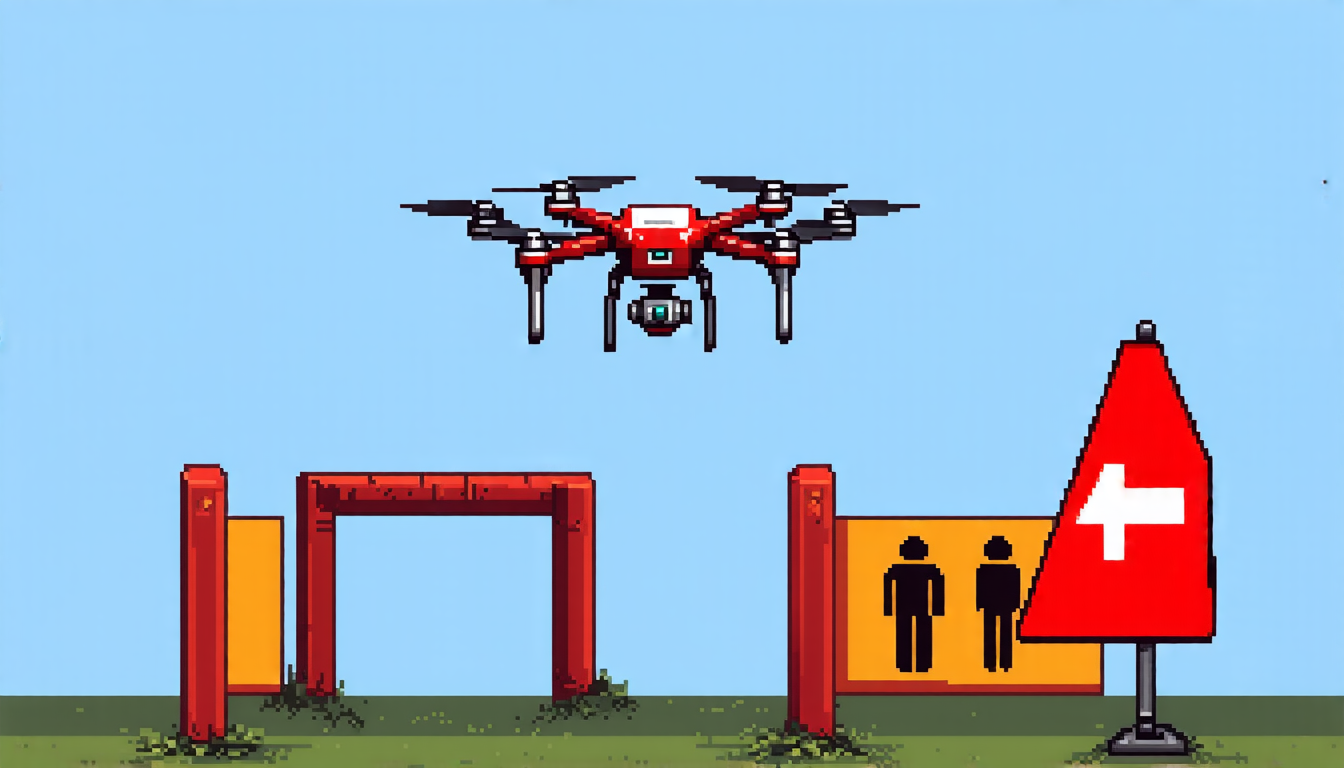
The researchers tested their method on a quadcopter robot, using video labeling to flag instances where the robot’s policy would fail to steer through a designated gate. They found that their approach improved the robot’s safety by allowing it to avoid areas where it was likely to make mistakes.
This work has significant implications for the development of safe and reliable robotic systems. By integrating conformal prediction into robotic control systems, developers can create robots that are better equipped to handle uncertain or changing situations, reducing the risk of accidents or harm to people or property.
The researchers’ method also offers potential benefits for other areas of robotics, such as navigation and manipulation. By using conformal prediction to analyze the behavior of a robot in different scenarios, developers can identify areas where the robot is likely to make mistakes and adjust its programming accordingly.
Overall, this work demonstrates the potential of conformal prediction to improve robotic safety by identifying areas where a robot’s policy is likely to make errors. As robotics continues to play an increasingly important role in our lives, developing safer and more reliable robotic systems will be critical for ensuring public trust and confidence in these technologies.
Cite this article: “Enhancing Robot Safety with Conformal Prediction”, The Science Archive, 2025.
Robotics, Safety, Machine Learning, Conformal Prediction, Uncertainty Quantification, Robotic Control Systems, Quadcopter, Video Labeling, Navigation, Manipulation





