

Tuesday 04 March 2025
The ancient Ottoman Empire’s linguistic legacy is getting a modern makeover, thanks to advances in artificial intelligence and natural language processing.
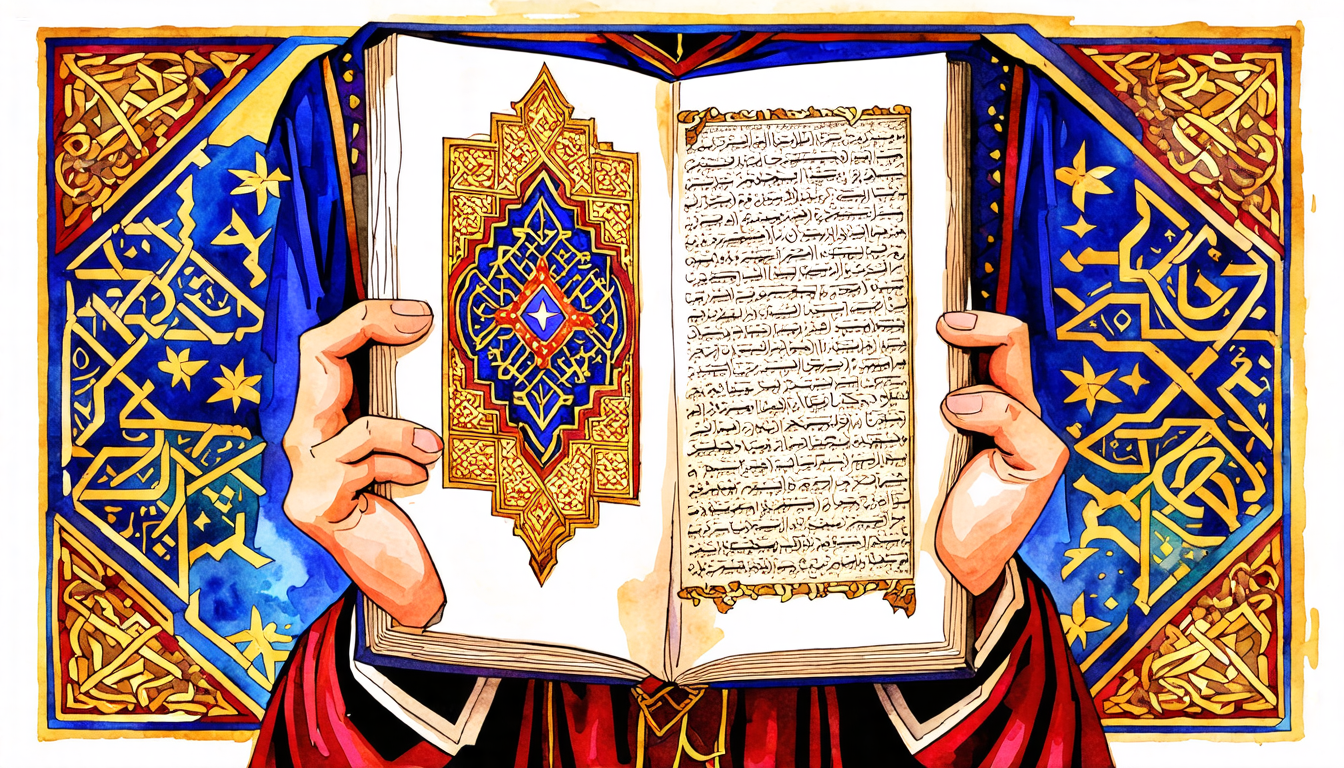
For centuries, Turkish has been a dominant force in the region, with the Ottoman Empire once stretching from the Balkans to the Middle East. But as languages evolve, so do writing systems, and the script used during the empire’s heyday is now mostly relegated to historical texts and dusty archives.
Researchers have long sought to unlock the secrets of these ancient texts, but the challenges are significant: the language has undergone significant changes over time, and the script itself is a complex blend of Arabic, Persian, and native Turkish influences. Add in the fact that many of these texts were written by hand, with varying levels of skill and attention to detail, and you’ve got a recipe for linguistic chaos.
Enter the world of deep learning and neural networks, where researchers are using AI-powered tools to transcribe and translate historical Ottoman texts. The goal is nothing short of revolutionary: to create a digital archive that can be used by scholars, students, and anyone else interested in understanding this rich cultural heritage.
The key innovation here lies in the use of transformer-based models, which have proven incredibly effective at tackling complex language tasks like machine translation and text generation. By training these models on large datasets of annotated Ottoman texts, researchers hope to create a system that can accurately transcribe and translate historical documents with unprecedented accuracy.
But this isn’t just about digitizing dusty old books – it’s also about unlocking new insights into the history and culture of the Ottoman Empire. With access to previously inaccessible texts, scholars will be able to delve deeper into the empire’s politics, literature, and daily life, painting a more nuanced picture of this fascinating civilization.
The implications extend far beyond academia, too. By making these historical texts more accessible, researchers hope to inspire new generations of students and scholars to explore the rich cultural heritage of the Ottoman Empire. And who knows – maybe one day, we’ll even see AI-powered chatbots that can converse with us in ancient Turkish dialects.
Of course, there are still many challenges ahead: the sheer volume of texts to be transcribed is staggering, not to mention the need for rigorous quality control and validation. But as researchers continue to push the boundaries of what’s possible with AI and natural language processing, it’s clear that this project has the potential to revolutionize our understanding of the Ottoman Empire – and the languages that shaped its culture.
Cite this article: “Reviving the Ottoman Empires Lingua Franca”, The Science Archive, 2025.
Artificial Intelligence, Natural Language Processing, Ottoman Empire, Turkish Language, Historical Texts, Deep Learning, Neural Networks, Transformer-Based Models, Machine Translation, Text Generation.





