

Tuesday 04 March 2025
Researchers have made a significant breakthrough in the field of materials science, discovering a way to modify the properties of disordered elastic networks through a process called directed aging.
Disordered elastic networks are complex systems that consist of nodes connected by springs, and they exhibit unusual mechanical behaviors. One of their most fascinating properties is the ability to adapt to changing conditions, allowing them to change shape in response to external stimuli. This property has led researchers to explore ways to harness it for a wide range of applications, from soft robotics to biomedical devices.
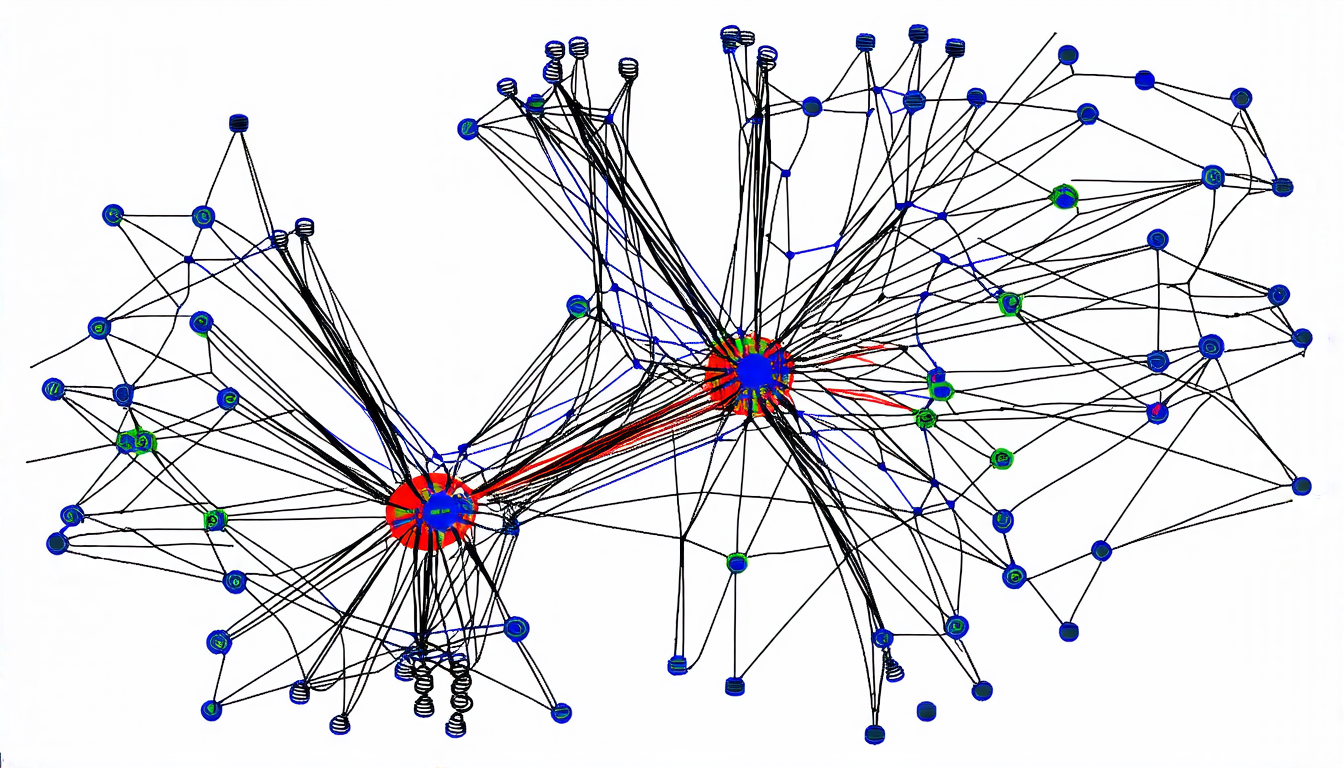
Directed aging is a process that involves applying stress to specific nodes within the network, causing the material to adapt and change its properties over time. In this study, researchers used disordered foam networks as their test subject, creating complex structures by laser-cutting them from solid sheets of EVA foam.
The team discovered that by applying stress to specific nodes, they could modify the material’s mechanical coupling between distant pairs of nodes. This allowed them to reduce the coupling between nodes that were already interacting, or even induce new interactions between nodes that weren’t previously connected.
The researchers used a combination of experimental and computational methods to study the phenomenon. They created networks with different geometries and constrained them in various ways to simulate real-world scenarios. By analyzing the stress-strain responses of the materials, they were able to understand how directed aging affects the material’s properties.
One of the most striking findings was that the process of directed aging could be used to induce long-range interactions between nodes that were initially uncoupled. This has significant implications for the development of new materials and devices that can adapt to changing conditions.
The study also highlighted the importance of understanding the viscoelastic nature of the foam material, which played a crucial role in the adaptation process. The researchers found that the material’s ability to change shape over time was influenced by its internal stress distribution, which in turn affected its mechanical properties.
The discovery of directed aging has significant implications for the development of new materials and devices that can adapt to changing conditions. It could potentially be used to create soft robotics systems that can adapt to complex environments, or biomedical devices that can respond to changes in the body.
The study’s findings also shed light on the fundamental mechanisms underlying disordered elastic networks, providing valuable insights into their behavior under different conditions. As researchers continue to explore the properties of these materials, they may uncover even more surprising and useful phenomena.
Cite this article: “Directed Aging: A New Pathway for Shaping Disordered Elastic Networks”, The Science Archive, 2025.
Materials Science, Directed Aging, Disordered Elastic Networks, Soft Robotics, Biomedical Devices, Viscoelasticity, Stress-Strain Responses, Mechanical Coupling, Long-Range Interactions, Adaptive Materials.





