

Tuesday 04 March 2025
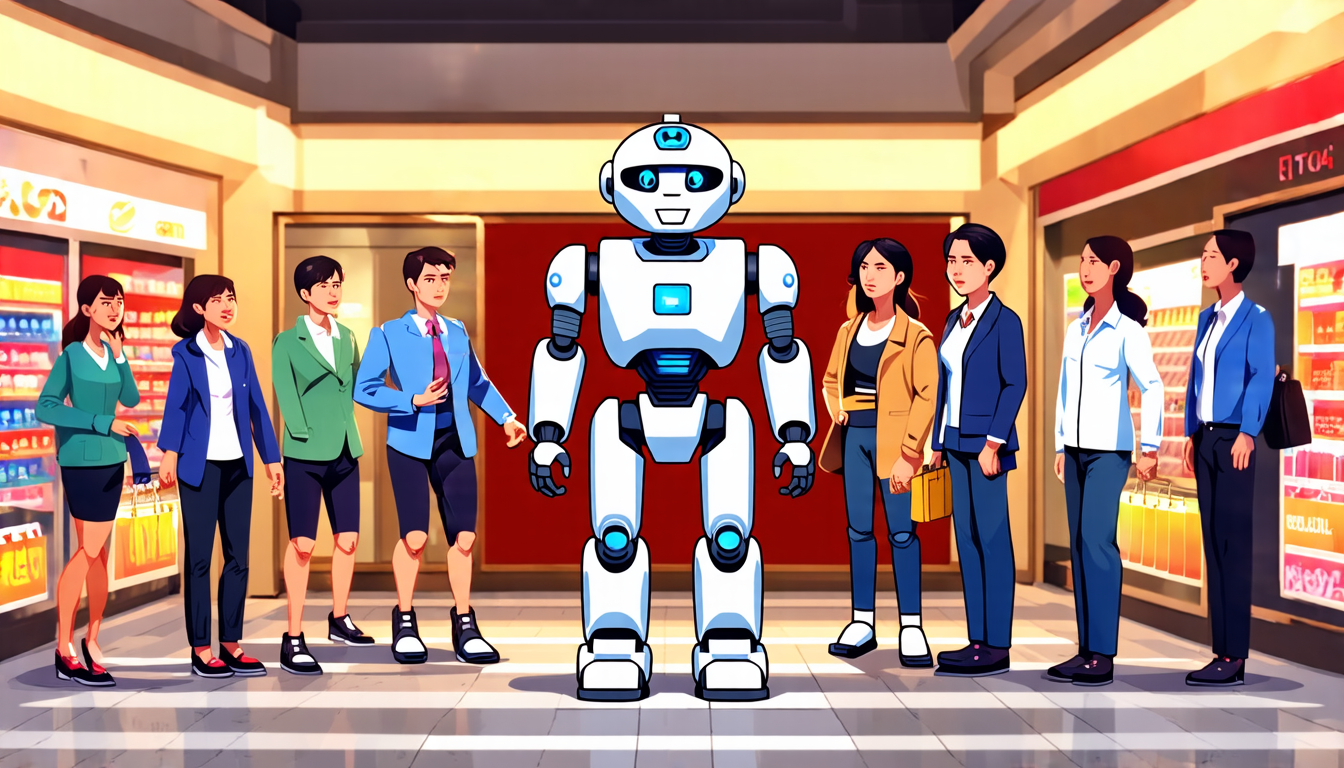
The researchers at CyberAgent, Osaka University, and the University of Wisconsin-Madison have been studying human-robot interaction (HRI) in the wild, deploying a fully autonomous conversational robot in a shopping mall to observe how people interact with it. The results are fascinating, revealing that user motivation plays a crucial role in shaping these interactions.
The team analyzed 14 hours and 45 minutes of video footage from two days of observation, identifying five patterns of interaction fluency: smooth, awkward, active, messy, and quiet. They also categorized users’ motivations into four types: functional (e.g., asking for directions), experimental (curiosity-driven exploration), curious (seeking information), and educational (learning about the robot).
One key finding is that incorporating users’ motivation types into the design of robot behavior can significantly enhance interaction fluency, engagement, and user satisfaction. For instance, when users are motivated by curiosity or experimentation, they tend to engage more with the robot, leading to more fluent interactions.
The study also highlights the importance of understanding how users position themselves in relation to the robot. When users approach the robot with a sense of familiarity or comfort, they are more likely to interact smoothly and effectively. In contrast, when users display signs of hesitation or uncertainty, their interactions become more awkward or messy.
Another notable finding is that the robot’s behavior can influence user motivation and positioning. For example, if the robot provides clear and concise responses to users’ questions, it can encourage users to approach the robot with confidence and curiosity, leading to more engaging interactions.
The researchers also observed various conflict types during the study, including overlapping speech, misrecognizing input, guiding incorrect routes, and system errors. However, they found that recovery actions like waiting for the robot to finish speaking or enhancing audibility can help resolve these conflicts and maintain interaction fluency.
This research provides valuable insights into designing more effective human-robot interactions in real-world settings. By understanding user motivation and positioning, as well as incorporating these factors into robot behavior design, developers can create more engaging and satisfying experiences for users. As robots become increasingly integrated into our daily lives, this study’s findings will be crucial in shaping the future of HRI.
Cite this article: “Unlocking Effective Human-Robot Interactions: Insights from Real-World Observations”, The Science Archive, 2025.
Human-Robot Interaction, Autonomous Conversational Robot, User Motivation, Interaction Fluency, Pattern Analysis, Robot Behavior Design, Conflict Resolution, Recovery Actions, Engagement, Satisfaction





